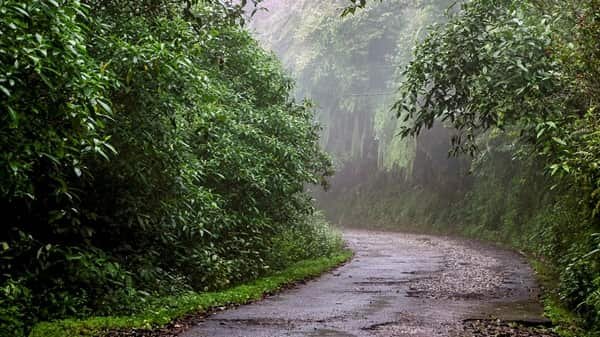
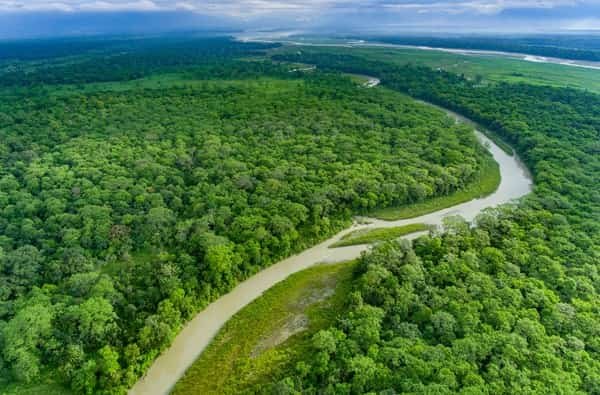
Jaldapara National Park is one of eastern India’s most important rhinoceros habitats and one of the best-known wildlife destinations in the Dooars region of West Bengal. Located in Alipurduar district at the foothills of the Eastern Himalayas, the park is a mosaic of tall elephant grass, riverine forest, sandy riverbanks and perennial streams shaped by the Torsa and several smaller rivers.
The protected area began as a wildlife sanctuary in 1941, primarily to conserve the greater one-horned rhinoceros, and was upgraded to National Park status in 2012. Current central-government notification records show an actual notified National Park area of about 216.34 sq km after exclusions, while the broader land description associated with the notification is 234.51 sq km. For general visitor planning, West Bengal Tourism continues to describe Jaldapara as roughly 216 sq km.
Jaldapara is now the second most important natural home of the greater one-horned rhinoceros in India after Kaziranga. The March 2025 rhino estimation placed the Jaldapara population at an average of about 331 animals, a major rise from 292 in 2022. Visitors can also encounter Asian elephants, gaur, sambar, hog deer, wild boar, leopards and rich birdlife, including the rare Bengal florican. Tourism is centred on authorised jeep safaris and early-morning elephant rides rather than unrestricted private driving.
As of September 6, 2026, Jaldapara is in its annual monsoon closure. The West Bengal State Forest Development Agency states that protected areas remain closed from June 16 to September 15, 2026. Safari operations normally resume after this period, subject to weather, road condition and Forest Department approval.
| Particulars | Details |
| Destination | Jaldapara National Park |
| Where it is located | Alipurduar district, Dooars, West Bengal |
| National Park area | About 216.34 sq km notified area; commonly rounded to 216 sq km |
| National Park status | 2012 |
| Current status on Sep. 6, 2026 | Closed for annual monsoon period until Sep. 15 |
| Jeep safari shifts | Typically 6:00-8:00 AM, 8:30-10:30 AM, 12:30-2:30 PM and 3:00-5:00 PM |
| Elephant safari | Early morning, normally in one-hour slots |
| Indicative 2026 jeep rate | Around ₹1,750 per jeep for up to 6 visitors; final WBSFDA checkout controls |
| Indicative 2026 elephant ride rate | Around ₹1,000 per person; final WBSFDA booking amount controls |
| Main wildlife highlight | Greater one-horned rhinoceros |
| 2025 rhino estimate | Average about 331 in Jaldapara |
| Best time to visit | November to March |
| Nearest practical railheads | Madarihat, Hasimara and Birpara |
| Nearest major airport | Bagdogra Airport |
| Recommended duration | 1-2 days |
Jaldapara National Park Timings
Jaldapara does not operate with a single all-day safari ticket. Forest visits are arranged in fixed safari shifts, and entry after sunset or before sunrise is not permitted except for specifically authorised activities such as scheduled elephant rides.
The park management plan lists four jeep safari shifts: 6:00 AM to 8:00 AM, 8:30 AM to 10:30 AM, 12:30 PM to 2:30 PM and 3:00 PM to 5:00 PM. Exact reporting times can be adjusted by the Forest Department, so the confirmed booking slip should always be treated as the final schedule.
Elephant rides are conducted in the early morning. Historically, the management schedule has used three one-hour windows beginning around 5:30 AM, 7:00 AM and 8:30 AM. The number of rides depends on elephant availability, weather, animal welfare requirements and operational decisions.
The park closes for tourism during the monsoon, traditionally from June 16 to September 15. For 2026, the WBSFDA portal explicitly confirms this closure period. Visitors travelling in mid-September should verify the actual reopening date before leaving for Madarihat.
Jaldapara National Park Ticket Cost
Safari pricing in Jaldapara is made up of more than one component. The official WBSFDA portal handles online car-safari and elephant-ride bookings, while the final payable amount can include the ride or vehicle charge, guide component, entry charges and other applicable fees. Because the park is currently closed for the monsoon, the booking portal is not displaying a simple public tariff table for the new season.
Recent 2026 operating information from accommodation providers handling official safari assistance places the jeep component at about ₹1,750 per jeep for a maximum of six passengers and the elephant safari at about ₹1,000 per person. These should be treated as planning figures only. The amount shown by the WBSFDA booking system when the 2026-27 season reopens should be considered final.
| Safari / Booking Component | 2026 Planning Figure |
| Jeep safari vehicle | Around ₹1,750 per jeep, up to 6 visitors |
| Elephant safari | Around ₹1,000 per person |
| Guide / booking components | May be charged separately or included depending on booking flow |
| Official booking source | West Bengal State Forest Development Agency (WBSFDA) portal |
Advance booking is advisable during winter weekends and holidays. The WBSFDA terms state that safari bookings can be made online up to 90 days in advance, subject to availability, and visitors must carry the original identity document used for booking.
Jeep Safari at Jaldapara
The jeep safari is the most flexible way to explore Jaldapara. Only authorised vehicles are allowed on the tourism routes; ordinary private cars cannot simply enter the forest and follow safari tracks. A forest guide accompanies the vehicle and the route is determined according to the allotted safari circuit.
Routes around Madarihat, Hollong, Titi and Kodalbasti pass through grasslands, woodland and riverine sections. The scenery changes quickly, and a drive may produce rhinos in open grass, gaur near the forest edge, deer, peafowl and elephant herds depending on season and luck.
The smaller group size of a jeep makes it useful for families and photographers. However, Jaldapara is a true wild habitat, so no guide can guarantee a rhinoceros, elephant or leopard sighting on a particular drive.
Elephant Safari
Jaldapara is one of the Indian parks historically known for elephant-back wildlife viewing. The early-morning ride moves through tall grass and wetland edges that are difficult to experience from a vehicle. One-horned rhinoceroses are the main attraction, and gaur, deer and elephants may also be seen.
Availability is far more limited than jeep safari capacity. Elephant rides depend on the number of departmental elephants available and on animal welfare and operational considerations. Travellers who specifically want this experience should not assume that a seat can be purchased after arrival; advance reservation through the authorised system is preferable whenever inventory is released.
Greater One-Horned Rhinoceros
The greater one-horned rhinoceros is the conservation symbol of Jaldapara. In 1985, the population had fallen to only about 14 animals after years of poaching and habitat pressure. Protection, grassland management, anti-poaching patrols and habitat restoration produced a remarkable recovery.
The official 2022 estimation recorded an average of 292 rhinos. A fresh count conducted in March 2025 estimated an average of about 331 animals in Jaldapara, making it the second-largest natural rhino habitat in India after Kaziranga. This strong population is one reason Jaldapara is such an important conservation destination rather than simply another safari park.
Wildlife and Birdlife
Apart from rhinos, Jaldapara supports Asian elephants, gaur, sambar, hog deer, barking deer, spotted deer, wild boar and leopards. Tigers occur in the wider landscape but are rarely encountered by ordinary tourists.
Birdlife is a major attraction. The park is one of the important remaining habitats of the Bengal florican, a highly threatened grassland bird. Visitors may also see crested serpent eagles, Pallas’s fish eagle, shikra, hornbills, peafowl, junglefowl and many wetland species.
The rivers and wet grasslands also support reptiles and amphibians, including pythons, cobras, kraits, monitor lizards and freshwater turtles. For birdwatchers, winter usually provides the broadest mix of resident and migratory species.
How to Reach Jaldapara National Park
By Train
Madarihat is the closest small railway station to the main tourism zone. Hasimara and Birpara are more useful for many long-distance services, while New Jalpaiguri is the major regional rail hub for travellers coming from other parts of India.
By Air
Bagdogra Airport near Siliguri is the nearest major airport. From Bagdogra, travellers continue by road through the Dooars towards Madarihat. The drive generally takes several hours depending on traffic and road conditions.
By Road
Madarihat is the main gateway and lies on the highway corridor through the Dooars. Buses and private vehicles connect the region with Siliguri, Alipurduar and nearby towns. Visitors booked for the first safari of the morning should stay in or around Madarihat the previous night.
Best Time to Visit Jaldapara
November to March is the best overall season. Temperatures are comfortable, humidity is lower and the grasslands are easier to observe than immediately after the monsoon. December and January mornings can be cool, especially in an open jeep.
Late September and October bring a very green landscape after the rains, but tall vegetation can make wildlife harder to spot. April to early June becomes hotter, yet animals may be more visible near water sources. The park is then closed from mid-June to mid-September for the monsoon and breeding season.
How Much Time Is Needed?
One full day is enough for a basic Jaldapara visit if a traveller secures a morning or afternoon jeep safari. Two days are better for anyone hoping to combine jeep and elephant experiences or explore nearby forests such as Chilapata.
Staying overnight in Madarihat also removes the stress of reaching the safari counter before an early-morning reporting time. Wildlife enthusiasts often prefer two separate drives because animal activity and light can differ significantly between morning and afternoon.
FAQs
Q. Is Jaldapara better known for rhinos or tigers?
Rhinos are the defining wildlife attraction. Jaldapara has one of India’s largest populations of greater one-horned rhinoceroses, while tiger sightings are uncommon and should not be the main expectation.
Q. Can private cars enter the safari routes?
No. Visitors must use authorised safari vehicles on the tourism circuits. Private vehicles can reach Madarihat and permitted public areas but cannot replace a licensed safari jeep inside the forest.
Q. Is the elephant safari guaranteed to operate every day?
No. Elephant rides depend on departmental elephant availability, weather, operational requirements and animal welfare decisions. Seats are also much more limited than jeep capacity.
Q. Is Jaldapara open during the monsoon?
No. The annual tourism closure generally runs from June 16 to September 15. For 2026, WBSFDA has specifically announced this closure period.
Q. Is one jeep safari enough?
One safari provides a good introduction, but two drives at different times of day improve the chance of experiencing different wildlife activity and forest conditions.
Q. Is Jaldapara suitable for birdwatchers?
Yes. The grasslands, wetlands and riverine forests support a wide range of birds, and the rare Bengal florican gives the park particular conservation importance.
Q. How is Jaldapara different from Gorumara?
Both are North Bengal rhino habitats, but Jaldapara is larger and supports a much bigger rhino population. The two parks also have different safari circuits and booking systems, so they should be planned as separate visits.
Q. Should visitors stay in Madarihat?
Madarihat is the most practical base for first-time visitors because it is close to the main Jaldapara tourism entry and makes early safari reporting much easier.