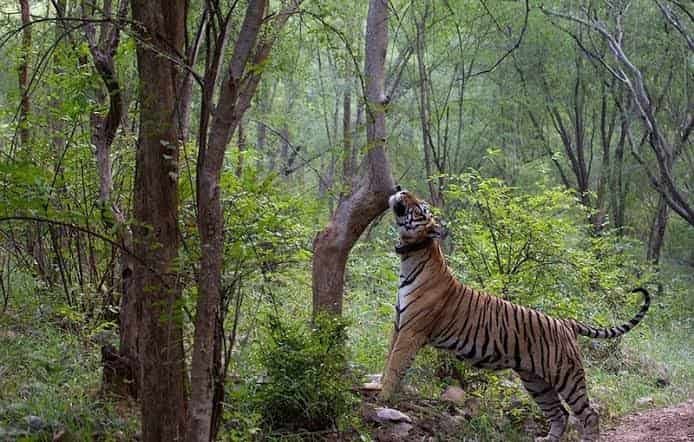
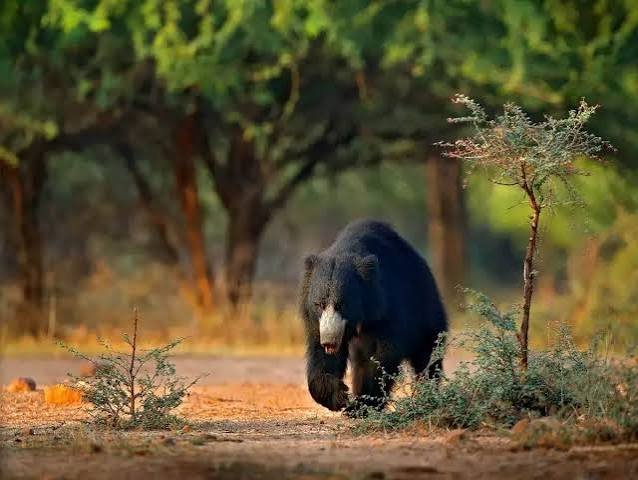
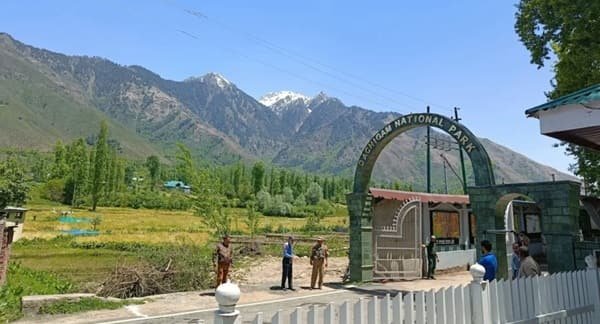
Gorumara National Park is one of the best-known wildlife destinations in the Dooars region of northern West Bengal. Located in the foothills of the eastern Himalayas, the park combines moist forests, riverine vegetation, grasslands and streams and is particularly famous for the Indian one-horned rhinoceros. Elephants, gaur, deer and a rich variety of birds make the relatively compact park rewarding even when a rhino remains out of sight.
The protected area covers about 79.45 sq km. Gorumara was first reserved as forest in the nineteenth century, became a wildlife sanctuary in 1949 and was notified as a National Park in 1994. The Wildlife Institute of India also notes that the park is connected through surrounding forests towards Chapramari and the wider Himalayan foothill landscape, giving the small national park importance beyond its own boundary.
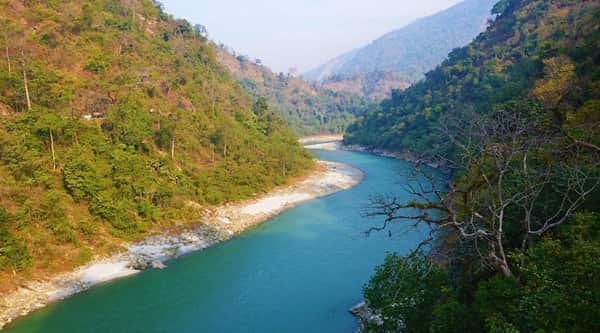
Lataguri is the principal tourism gateway and the most convenient base for first-time visitors. Unlike parks built around a single long jeep route, Gorumara tourism commonly combines a short forest drive with a visit to one of several watchtowers or observation points, including Jatraprasad, Rhino Point, Chukchuki, Chandrachur and Medla.
| Particulars | Details |
| Destination | Gorumara National Park |
| Where it is located | Dooars region, Jalpaiguri district, West Bengal |
| Area | 79.45 sq km |
| National Park status | 1994 |
| Main tourism gateway | Lataguri |
| Safari booking | Official WBSFDA portal; advance booking up to 90 days |
| 2026 seasonal closure | 16 June to 15 September |
| Safari pattern | Four short morning/afternoon shifts, exact times vary by season |
| Popular watchtowers | Jatraprasad, Rhino Point, Chukchuki, Chandrachur and Medla |
| Fixed official 2026 safari tariff | Not publicly displayed before date/slot selection |
| Recent private all-inclusive planning range | Roughly Rs 4,000-Rs 5,200 per jeep, depending on route/package |
| Best known for | One-horned rhinoceros, gaur, elephants, deer and birdlife |
| Recommended visit | 1 night with 1-2 safari/watchtower sessions |
| Best season | November to April |
Gorumara National Park Safari Timings
Gorumara usually operates several short safari and watchtower sessions through the day rather than one long three-hour drive. Exact reporting and safari times change according to the season, daylight and Forest Department instructions.
Current local safari schedules commonly show four shifts. From October to February, the forest drives are generally around 6:30 AM-8:00 AM, 9:00 AM-10:30 AM, 1:00 PM-2:30 PM and 3:30 PM-5:00 PM. From March onward, the first shift starts earlier and the last shift runs later.
The official West Bengal State Forest Development Agency requires visitors to report within the exact reporting time shown on the booking interface and acknowledgement slip. That printed slot should always take priority over a generic timing table.
| Season / Shift | Commonly Published Safari Window |
| October-February, Shift 1 | 6:30 AM-8:00 AM |
| October-February, Shift 2 | 9:00 AM-10:30 AM |
| October-February, Shift 3 | 1:00 PM-2:30 PM |
| October-February, Shift 4 | 3:30 PM-5:00 PM |
| March-June, Shift 1 | Around 6:00 AM-7:30 AM |
| March-June, Shift 2 | Around 8:30 AM-10:00 AM |
| March-June, Shift 3 | Around 2:00 PM-3:30 PM |
| March-June, Shift 4 | Around 4:30 PM-6:00 PM |
Annual Closure in 2026
The official WBSFDA notice for 2026 states that protected areas remain closed from 16 June to 15 September because of ecological, operational and visitor-safety considerations.
West Bengal Tourism similarly describes Gorumara as closed from around mid-June to mid-September. Visitors planning a September trip should check the live booking calendar because the reopening date is the point at which safari slots become available again.
November to April remains the most comfortable and dependable period for most travellers.
Gorumara National Park Safari Cost
The official WBSFDA booking portal is the correct place to book a car safari or elephant ride. It allows bookings up to 90 days in advance, requires original identity proof at the gate and issues a booking acknowledgement slip with the applicable reporting place and time.
Unlike some national parks that publish one simple permit price, the current WBSFDA public pages do not expose a single fixed 2026 Gorumara tariff before a visitor chooses a date and slot. The final official amount should therefore be taken from the live booking screen.
For trip budgeting only, recent private safari operators advertise roughly Rs 4,000 for a standard jeep safari and around Rs 5,200 for some watchtower-based packages for a vehicle carrying up to about six adults. Those package amounts may include the jeep, permit, driver, guide and taxes, so they should not be confused with the underlying Forest Department permit alone.
| Cost Item | Planning Guidance |
| Official Forest Department safari | Price shown during live WBSFDA date/slot booking |
| Recent private standard jeep package | Around Rs 4,000 per jeep |
| Recent private watchtower package | Around Rs 5,200 per jeep |
| Typical jeep capacity | About 6 adults; operator rules may differ |
| Guide | Authorised guide required for forest/watchtower visit |
How the Gorumara Safari Works
A Gorumara visit often combines a drive through forest roads with time at a selected watchtower. The experience is therefore slightly different from a continuous open-jeep safari in a large tiger reserve.
West Bengal Tourism states that safaris must be booked through the Forest Department and that an authorised guide is required for watchtower visits. Visitors should not leave the designated route or enter forest sections without permission.
Because each shift is relatively short, choosing the watchtower or route is important. A first-time visitor can take one safari in the afternoon and another the following morning to experience different light, animal movement and forest conditions.
Jatraprasad and Rhino Point
Jatraprasad is one of Gorumara’s most famous watchtowers and is strongly associated with rhino viewing. West Bengal Tourism describes the Jatraprasad-Rhino Point area as an important observation location for one-horned rhinoceros.
The watchtower is named after a well-known departmental elephant. Open grassland and salt-lick areas around the observation points can attract rhinos, gaur and other herbivores.
Wildlife sightings remain unpredictable, and a visitor should not assume that choosing Jatraprasad guarantees a rhino.
Chukchuki, Chandrachur and Medla Watchtowers
Chukchuki, also known as Chukchuki Birding Point, is particularly useful for visitors interested in birds. West Bengal Tourism highlights hornbills, drongos, minivets, peafowl, woodpeckers and other resident and migratory birds associated with this section.
Chandrachur, also called Khunia Watchtower, overlooks a broad grassland area and can provide views of elephants, gaur and birds. Its more open landscape gives visitors a different experience from the denser forest routes.
Medla Watchtower is another popular option and can be booked through the Lataguri side. The route and viewing area offer forest scenery along with chances of seeing elephants and other wildlife.
Wildlife in Gorumara National Park
The Indian one-horned rhinoceros is Gorumara’s flagship animal. The park was originally given wildlife-sanctuary protection partly because of its breeding rhino population.
Asian elephants and gaur, commonly called Indian bison, are also major attractions. Chital and sambar occur in the park, while leopards and smaller carnivores are much harder to see.
The West Bengal government records around 50 mammal species, 194 bird species, 22 reptile species, seven turtle species and 27 fish species from Gorumara. This diversity makes the park valuable even for visitors whose safari does not produce a close rhino sighting.
Birdwatching at Gorumara
Gorumara is a strong birding destination because grasslands, forest, rivers and wet areas occur within a compact landscape.
Chukchuki is particularly well known for birdwatching. Hornbills, drongos, minivets, peafowl, woodpeckers, pheasants and many smaller forest birds may be encountered depending on season.
Winter is especially pleasant for birding because temperatures are lower and migratory species add to the resident bird population.
Gorumara and Chapramari: Are They the Same?
No. Gorumara National Park and Chapramari Wildlife Sanctuary are separate protected areas, although they lie close to each other in the Dooars and are ecologically connected through surrounding forest.
Some safari itineraries combine Gorumara-based tourism with Chapramari watchtower routes, which can make the names appear interchangeable in travel listings. Visitors should check the exact destination printed on their permit.
The Wildlife Institute of India notes that the wider forest connection from Gorumara towards Chapramari is important for large mammals such as elephants and gaur.
How to Reach Gorumara National Park
Lataguri is the principal gateway for Gorumara and has a large concentration of hotels, homestays and safari-related services.
By Road
Gorumara is well connected by road through the Dooars. Lataguri lies on the main road network linking Siliguri with the forests and tea-growing areas of North Bengal. Taxis and private vehicles are the most convenient option for travellers with luggage or early-morning safari bookings.
By Train
The Jalpaiguri district administration lists New Jalpaiguri (NJP) at about 58 km from Gorumara and identifies Jalpaiguri Road as the nearest railway station. In practice, NJP is the most useful major rail hub because of its extensive long-distance train connections.
By Air
Bagdogra Airport is the nearest major airport. The Jalpaiguri district administration places it at about 78 km from Gorumara. Visitors normally continue from Bagdogra by taxi through the Dooars.
Best Time to Visit Gorumara National Park
November to April is the best overall period. West Bengal Tourism specifically recommends these months, when the weather is relatively dry and comfortable for safari drives and watchtower visits.
December and January can be cool in the early morning, so light warm clothing is useful for the first safari shift.
March and April are warmer but remain good wildlife months. As vegetation changes and water availability becomes more concentrated, large mammals may become easier to observe in some open areas.
The park closes during the main monsoon period from mid-June to mid-September.
How Much Time Is Needed?
A single safari shift can be completed in a few hours, but Gorumara is better experienced with at least one night in Lataguri or the surrounding Dooars.
An afternoon safari followed by an early-morning watchtower visit gives a better sense of the forest than trying to fit everything into one rushed visit.
Travellers with two nights can also combine Gorumara with Chapramari, Murti or other nearby Dooars attractions without sacrificing the best safari hours.
FAQs
Q. Is Gorumara National Park mainly famous for tigers?
No. Gorumara is best known for the Indian one-horned rhinoceros, gaur and elephants. Large-cat sightings are much less central to the normal visitor experience.
Q. Are rhino sightings guaranteed in Gorumara?
No. Gorumara has an important rhino population, but the animals move naturally through grasslands and forest. Jatraprasad and Rhino Point are popular observation areas, not guaranteed sighting locations.
Q. Can a Gorumara safari be booked online?
Yes. The West Bengal State Forest Development Agency provides official online booking for car safaris and elephant rides, subject to availability.
Q. How far in advance can the safari be booked?
The current WBSFDA terms allow booking up to 90 days before the visit, depending on availability.
Q. Does Gorumara close during the monsoon?
Yes. The official 2026 WBSFDA notice lists the protected-area closure from June 16 to September 15.
Q. Is Chapramari part of Gorumara National Park?
No. Chapramari is a separate wildlife sanctuary, although it lies nearby and is connected to the larger Dooars forest landscape.
Q. Which is the best base for visiting Gorumara?
Lataguri is the most convenient first-time base because it is the main gateway and has a large range of accommodation and safari services.