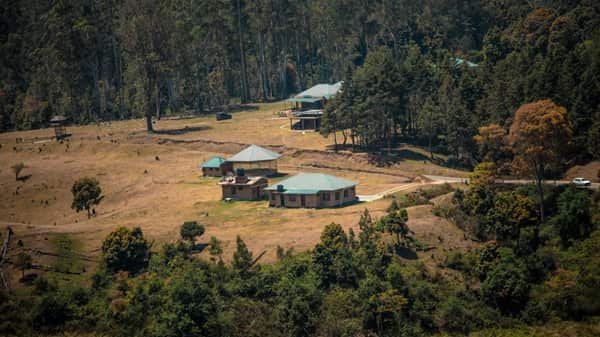
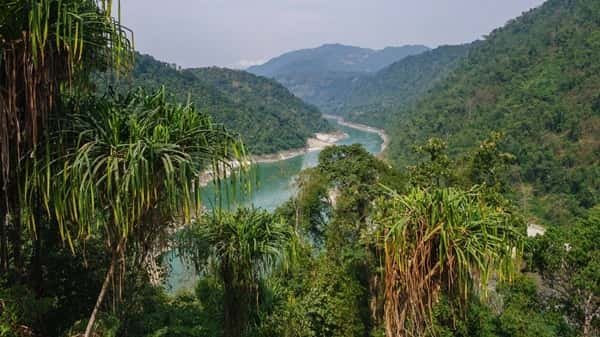
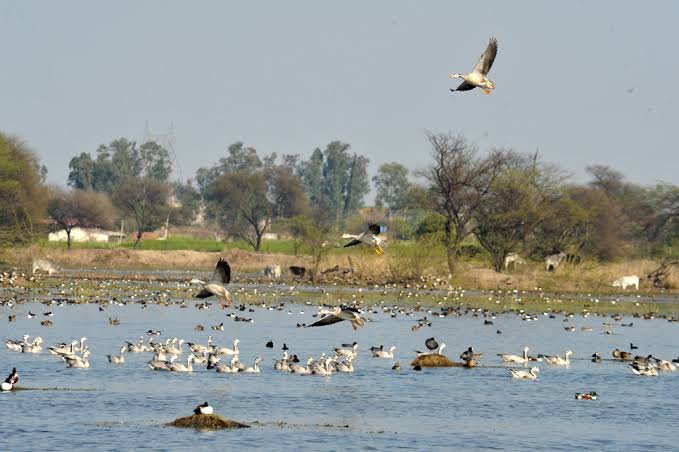
Dachigam National Park is one of Kashmir’s most important protected landscapes and the principal stronghold of the hangul, or Kashmir stag. Located in the Zabarwan mountain range on the outskirts of Srinagar, the park rises from temperate forest in its lower valleys to alpine terrain at higher elevations. This sharp change in altitude gives Dachigam a much more varied character than a conventional lowland wildlife park.
The park covers about 141 sq km and lies roughly 22 km from central Srinagar. The area has been protected since the early twentieth century and was declared a National Park in 1981, although later statutory notifications also record the 141 sq km national-park boundary. The name Dachigam means “ten villages”, recalling the villages that were relocated when the protected landscape was created.
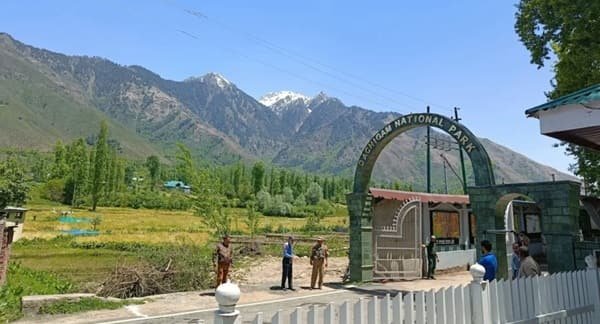
Dachigam is not a jeep-safari destination in the style of Corbett, Pench or Bandipur. Visitor movement is controlled, online permission is required, and the experience is centred on walking through permitted areas, observing the forest and searching quietly for hangul, black bears, birds and other Himalayan wildlife.
| Particulars | Details |
| Destination | Dachigam National Park |
| Where it is located | Zabarwan range, near Srinagar, Jammu and Kashmir |
| Area | About 141 sq km |
| Distance from Lal Chowk | Around 22 km |
| National Park status | 1981 |
| Visitor timings | 9:00 AM to 5:00 PM |
| Weekly closure | Tuesday |
| Online permission | Mandatory before entry |
| Indian entry fee | ₹100 per person |
| Children below 10 | Free entry |
| Indian students/teachers | ₹15 per person |
| Foreign visitor fee | ₹500 per person |
| Still camera – Indian visitor | ₹500 per camera |
| Still camera – foreign visitor | ₹1,000 per camera |
| Maximum regular group size | 15 persons per booking |
| Best known for | Hangul/Kashmir stag, black bear, Himalayan forest and birdlife |
| Recommended visit duration | Around 3–4 hours |
| Best season | April to August for general access; autumn is important for hangul viewing |
Dachigam National Park Timings
The Government of India’s Incredible India visitor page currently lists Dachigam National Park timings as 9:00 AM to 5:00 PM. The official Jammu and Kashmir Wildlife Protection Department booking portal, however, states that the park is closed every Tuesday.
The booking portal should be treated as the final authority for entry because visitors must obtain permission in advance. A booking is tied to the selected date and the portal states that once payment is made, refund or date change is not allowed.
Dachigam remains a year-round protected area, but access to particular sections can depend on weather, snow, wildlife-management requirements and the permit issued for the visit. Upper Dachigam is much more rugged and is not the normal casual-tourist experience.
Dachigam National Park Ticket Cost
The current official Dachigam booking portal publishes a clear entry tariff. Indian visitors pay ₹100 per person, while children below 10 years of age enter free. Indian students and teachers are charged ₹15 per person.
Foreign visitors pay ₹500 per person. Foreign students and teachers are charged ₹100 per person. Still-camera charges are separate and are substantially higher than the basic visitor ticket.
| Category | Current Official Rate |
| Indian visitor | ₹100 per person |
| Indian child below 10 | Free |
| Indian student/teacher | ₹15 per person |
| Foreign visitor | ₹500 per person |
| Foreign student/teacher | ₹100 per person |
| Still camera – Indian | ₹500 per camera |
| Still camera – Foreigner | ₹1,000 per camera |
The standard online booking allows a maximum group size of 15 persons. Schools and colleges can book groups of up to 80 students, but they must upload an official list of students and teachers on institutional letterhead.
Indian and foreign visitors cannot be combined in one booking. Mixed groups must make separate Indian and foreign bookings, and foreign nationals must upload a passport copy.
Online Permission Is Mandatory
Dachigam differs from many tourist attractions because visitors cannot simply depend on reaching the gate and buying an ordinary sightseeing ticket. The Wildlife Protection Department’s portal states that an online permission application is required for a visit.
One booking is allowed per day for a regular group, and identification details must be provided during the application. Visitors should keep the confirmed permission and original identification available at entry.
Because permission controls the number and type of visitors entering the protected area, travellers should complete the process before building other Srinagar sightseeing plans around Dachigam.
Hangul: The Main Wildlife Attraction
The hangul, or Kashmir stag, is the animal most closely associated with Dachigam. The Srinagar district administration describes Dachigam as the only area where the Kashmir stag is found, while the wider conservation programme also monitors adjoining habitats used by the species.
The hangul population has shown an encouraging recovery. Government information released after the 2025 census recorded an estimated 323 animals, up from 127 in 2008. The figure covers Dachigam and adjoining monitored habitat rather than implying that all 323 animals are permanently visible within the tourist area.
Autumn is especially important in the hangul’s annual cycle because it is the rutting period. Males become more vocal and active, although wildlife sightings remain unpredictable and visitors should not expect a close encounter on every trip.
Lower Dachigam and Upper Dachigam
Dachigam is commonly understood in two broad ecological sections: Lower Dachigam and Upper Dachigam. Lower Dachigam lies closer to Srinagar and contains temperate woodland, riverine habitat and much of the area most relevant to ordinary visitors.
Upper Dachigam rises into steep mountain terrain and alpine habitat. The park’s overall elevation ranges from roughly 1,600 metres to more than 4,200 metres above sea level, which explains the large changes in vegetation and wildlife across a relatively compact protected area.
Casual visitors should not assume that a normal entry permission provides unrestricted access across the high-altitude park. Movement is controlled, and difficult or sensitive areas may require specific permission or may remain unavailable to ordinary tourists.
Wildlife in Dachigam National Park
Although the hangul is Dachigam’s flagship species, the park supports a broader Himalayan wildlife community. Asiatic black bears are among the more important mammals of the lower forest, while leopards also occur in the landscape.
Higher and more remote terrain supports additional Himalayan fauna. The park and surrounding mountain system are associated with species such as Himalayan brown bear and, in the wider high-altitude landscape, snow leopard.
Birdwatchers can look for Himalayan monal, koklass pheasant, Kashmir flycatcher, lammergeier, griffon vultures and a range of woodland and mountain birds. The mix of lower forest and alpine habitat makes Dachigam particularly interesting to visitors who enjoy birding and natural history rather than only large mammals.
Forest, Streams and Dal Lake Catchment
Dachigam is important not only as wildlife habitat but also as part of the catchment supporting Srinagar’s water system and the wider Dal Lake landscape. Streams descending through the park connect high mountain slopes with the lower valley.
The vegetation changes markedly with elevation. Lower areas contain temperate broad-leaved and coniferous forest, while higher elevations give way to subalpine scrub, meadows and alpine vegetation.
This variation is one reason a short walk in Lower Dachigam cannot represent the full ecological diversity of the national park. Much of its most rugged terrain remains remote and primarily conservation-oriented.
How to Reach Dachigam National Park
Dachigam lies northeast of Srinagar and is one of the easiest major protected areas to combine with a stay in the Kashmir capital.
By Road
The Srinagar district administration places Dachigam around 22 km from Lal Chowk. Taxis and private vehicles can be used to reach the entry side, but visitors still need the required wildlife permission before entering the protected area.
By Train
Srinagar Railway Station at Nowgam is approximately 32 km from the park according to the district administration. The remaining journey is by road.
By Air
Sheikh ul-Alam International Airport in Srinagar is about 40 km from Dachigam according to the district administration. Depending on traffic and the visitor’s accommodation, the road journey can take considerably longer than the straight-line distance suggests.
Best Time to Visit Dachigam National Park
The Srinagar district administration identifies April to August as the best general visiting period. Spring and summer bring easier weather, greener forest and better access to the lower protected area.
Autumn has a different appeal because it coincides with the hangul rut and changing forest colours. Visitors specifically interested in the Kashmir stag may therefore find the September-October period particularly interesting, subject to permit availability and current wildlife-management rules.
Winter can bring snow and severe cold, especially at higher elevations. Lower Dachigam may still be accessible, but travellers should not assume that all routes or areas remain open after heavy snowfall.
How Much Time Is Needed?
Around three to four hours is sufficient for most ordinary visitors to experience the permitted lower section at a relaxed pace. Dachigam is not designed as a fast drive-through attraction, so walking quietly and spending time observing the forest generally produces a better experience.
Visitors interested in birdwatching or photography may prefer a longer morning visit. Because entry permission is controlled and the park closes at 5:00 PM, it is better to arrive with enough time rather than treat Dachigam as a final short stop late in the day.
FAQs
Q. Is Dachigam National Park open every day?
No. The official Wildlife Protection Department booking portal states that the park is closed every Tuesday.
Q. Can visitors enter Dachigam without advance permission?
The current official system requires visitors to apply online for permission before visiting. A confirmed booking and identification should be kept ready for entry.
Q. What is the current entry fee for Indian visitors?
The official booking portal currently charges ₹100 per Indian visitor. Children below 10 years of age enter free, while Indian students and teachers are charged ₹15 per person.
Q. Is the hangul easy to see?
Dachigam is the most important habitat for the hangul, but a sighting is never guaranteed. The animals move according to season, disturbance, food availability and breeding behaviour.
Q. Is Dachigam a jeep-safari national park?
No. It is better understood as a controlled Himalayan nature and wildlife visit. Ordinary tourism is focused on permitted areas rather than long open-jeep safari circuits.
Q. Why is Dachigam called “ten villages”?
The name refers to the ten villages that were relocated when the protected landscape was established in the early twentieth century.
Q. Can Indian and foreign tourists be included in one online booking?
No. The official portal requires separate bookings for Indian and foreign visitors, and foreign visitors must upload passport details.