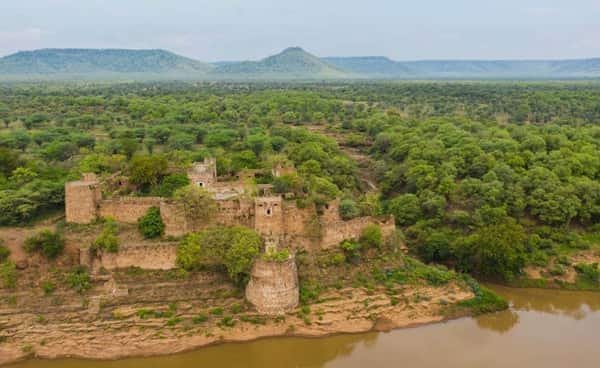
Kuno National Park in Madhya Pradesh has become one of India’s most closely watched wildlife destinations because it is the principal landscape of Project Cheetah. Located in Sheopur district in the north-western part of the state, Kuno combines dry deciduous forest, open woodland, grasslands, rocky hills and the Kuno River. The scenery feels very different from the dense sal forests of Kanha or the teak-dominated landscapes of some other central Indian parks.
Kuno began as a wildlife sanctuary of roughly 345 sq km in 1981. After years of habitat restoration and village relocation, it was upgraded to a national park in 2018 and expanded to 748.761 sq km. The wider Kuno Wildlife Division covers around 1,235 sq km. The park was originally prepared as a potential site for reintroducing Asiatic lions, but it later became the first release site for India’s cheetah reintroduction programme.
Eight cheetahs from Namibia arrived in September 2022, followed by animals from South Africa in February 2023 and a further batch from Botswana in February 2026. By March 9, 2026, India’s total cheetah population had reached 53 after new cubs were born at Kuno. The exact number physically present inside Kuno can change as animals are released, moved between management areas or shifted to other cheetah landscapes, so visitors should not rely on an old population figure when planning a trip.
| Particulars | Details |
| Destination | Kuno National Park |
| Where it is located | Sheopur district, Madhya Pradesh |
| National Park area | 748.761 sq km |
| Wider Kuno Wildlife Division | About 1,235 sq km |
| National Park status | 2018 |
| Main river | Kuno River |
| Main safari gates | Tiktoli, Ahera and Peepalbawadi |
| Tourism season | Generally October to June |
| Monsoon closure | Normally July to September |
| Safari shifts | Morning and afternoon; exact times vary by season |
| Published Gypsy safari rate | About ₹4,500 for up to six visitors; verify live 2026-27 rate |
| Limited private-vehicle entry | About ₹1,200 per vehicle where permitted; verify current rate |
| Best known for | Cheetahs, leopards, grasslands, dry deciduous forest and Kuno River |
| Recommended stay | 1-2 nights for multiple safari chances |
| Best season | Mid-November to mid-March |
Kuno National Park Safari Timings
Kuno conducts wildlife tourism in morning and afternoon shifts. The exact entry and exit time changes with daylight and season, so the time printed on the Madhya Pradesh Forest Department permit should always be treated as final.
Published seasonal visitor windows generally begin around 6:00 AM during October-December, around 6:30 AM in the colder January-March period and earlier again in April-June. Afternoon entry generally begins around 3:00 PM in winter and later during the hotter months. Morning access can continue until late morning, while afternoon safaris must finish before the prescribed evening exit time.
Kuno normally closes for regular tourism during the main monsoon period. The current tourism pattern is broadly October 1 to June 30, with July to September treated as the monsoon closure period unless the Forest Department issues a different order for a particular zone or season.
Kuno National Park Safari Cost
Kuno’s safari pricing is best understood as a combination of permit, vehicle and guide-related charges rather than a simple per-person entry ticket. The cheetah safari launched for the 2025-26 season with the following widely published base rates:
| Safari option | Published Base Rate |
| Gypsy safari | About ₹4,500 per vehicle for up to 6 visitors |
| Private light-vehicle entry | About ₹1,200 per vehicle where permitted |
| Forest guide | Compulsory; confirm whether included in the live booking total |
| Online reservation/service charge | As displayed by MPOnline during booking |
These figures should be treated as planning rates rather than permanent tariffs. The Madhya Pradesh Forest Department announced a 10% increase in park-entry tariffs from the 2025-26 season and the online system displays the payable amount dynamically. Vehicle and guide arrangements can also be shown separately depending on the booking route.
For a 2026-27 trip, the safest approach is therefore to select Kuno National Park on the official MP Forest booking portal, choose the date and safari category and use the final amount shown before payment. This avoids relying on an older travel-site package price that may include accommodation, transfers or a private naturalist.
Cheetah Safari at Kuno
The return of cheetahs has transformed Kuno’s tourism identity. Project Cheetah began here on September 17, 2022, when the first eight cheetahs brought from Namibia were released into the park. South African cheetahs arrived in February 2023, and nine animals from Botswana were brought to Kuno in February 2026 for quarantine and acclimatisation.
The cheetah experience should still be understood as genuine wildlife viewing, not an enclosure display. Some animals may be free-ranging in the larger landscape while others can be under management, veterinary observation or staged release. Which cheetahs are available to be encountered by tourists can therefore change from month to month.
Even in open grassland, a cheetah sighting is never guaranteed. Their movement is influenced by prey, territory, weather and management decisions. Visitors who take more than one safari have a better chance of experiencing different parts of the landscape.
Safari Gates and Tourism Zones
Kuno has three principal tourism entry gates: Tiktoli, Ahera and Peepalbawadi. Gate availability can depend on the season, road conditions and wildlife-management requirements.
Tiktoli is the historic main entrance and is approached from the Sesaipura side. It was temporarily restricted during the early cheetah-introduction phase because important quarantine and acclimatisation facilities were located in this part of the park, but it later reopened for tourism.
Ahera is approached from the Pohri side and has been an important entry point for cheetah-oriented tourism. Peepalbawadi provides another access option from the Agra village side. The best gate is therefore not simply the one with the most famous name; visitors should consider current cheetah movement, live gate availability and the location of their accommodation.
Wildlife Beyond Cheetahs
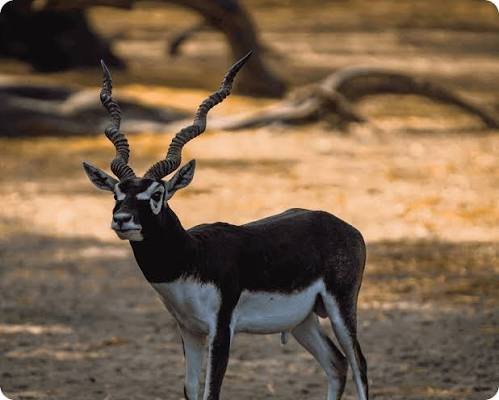
Kuno should not be treated as a one-species park. Its large prey base and varied habitats support chital, sambar, nilgai, wild pig, chinkara, chousingha and blackbuck. These herbivores are central to the ecological suitability of the landscape for large carnivores.
The park also supports leopards, striped hyenas, Indian wolves, golden jackals, sloth bears, jungle cats, Indian foxes and several smaller carnivores. Leopards were already an important predator in Kuno before the cheetah project and remain one of the park’s major wildlife attractions.
Birdwatchers can also find Kuno rewarding. Riverine stretches, open woodland and grassland support raptors, peafowl, water-associated birds and many dry-forest species. The relatively open terrain can make wildlife photography particularly attractive during the softer light of early morning and late afternoon.
Kuno River, Grasslands and Forest Landscape
The Kuno River runs through the protected landscape and gives the park its name. It provides an important ribbon of water and riverine habitat through an otherwise seasonally dry region.
Kardhai, khair and salai are characteristic trees of the park. Kuno is also known for broad grasslands created partly from former village and agricultural sites after settlements were voluntarily relocated from the protected area. These open spaces now provide grazing habitat for prey species and are particularly relevant to cheetah ecology.
This combination of open savannah-like patches, dry forest and river valleys is one of the main reasons Kuno was considered suitable for large-scale carnivore restoration.
How to Reach Kuno National Park
Kuno is relatively remote compared with national parks located beside major highways or airports, so the approach journey should be planned carefully.
By Air
Gwalior Airport is the most practical major airport for many travellers and is around 176 km from Kuno according to Madhya Pradesh Tourism. Jaipur can also be useful for travellers approaching from Rajasthan, depending on the selected gate and road route.
By Train
Shivpuri is one of the nearest useful railway stations and is roughly 70 km from the park according to Madhya Pradesh Tourism. Sawai Madhopur, Gwalior, Kota and Jhansi are other possible railheads depending on the rest of the itinerary.
By Road
Sesaipura is one of the main local approach points and lies roughly 15 km from the park. Kuno can be approached by road from Sheopur, Shivpuri, Gwalior, Sawai Madhopur and Kota. Because the three safari gates are widely separated, visitors should confirm the exact gate before setting out rather than navigating only to “Kuno National Park.”
Best Time to Visit Kuno National Park
The park’s own tourism information identifies mid-November to mid-March as the best period. Days are more comfortable, early mornings are cool and the dry deciduous landscape is pleasant for long safari drives.
October can still be warm after the monsoon, while December and January may have cold mornings. March begins to heat up but can remain rewarding for wildlife viewing.
April to June is much hotter, with May among the most demanding months. The advantage is that water becomes more important to wildlife and vegetation can be more open in places. Visitors during this period need an early start, sun protection and plenty of drinking water.
The main monsoon period from July through September is normally unsuitable for regular safari tourism because rain affects forest roads and management priorities shift away from visitor traffic.
How Much Time Is Needed?
A single safari provides an introduction to Kuno, but wildlife travellers should ideally stay for one or two nights and take at least two drives. Cheetahs and other predators can cover large distances, and one unsuccessful safari does not mean the park lacks wildlife.
Visitors travelling a long distance from Gwalior, Jaipur or another major city should avoid planning Kuno as a rushed same-day excursion. Staying near the selected safari gate also makes an early-morning reporting time much easier.
FAQs
Q. Is Kuno National Park the same as Kuno-Palpur Wildlife Sanctuary?
Kuno developed from the former Kuno Wildlife Sanctuary and is still sometimes called Kuno-Palpur in older material. The protected core was upgraded and expanded as Kuno National Park in 2018.
Q. Are cheetah sightings guaranteed at Kuno?
No. Cheetahs are managed as wild or progressively free-ranging animals, and their location changes. A safari offers a chance to see them, not a guaranteed sighting.
Q. Which gate should first-time visitors choose?
Tiktoli, Ahera and Peepalbawadi can all provide access. The best choice depends on live gate availability, current cheetah movement and where the visitor is staying, so the booking portal should be checked before selecting accommodation.
Q. Can tourists take their own car inside Kuno?
Limited private light-vehicle entry has been offered under park rules, but it is not the same as unrestricted self-driving. Entry requires a valid permit and must follow the route, guide and vehicle conditions imposed by the Forest Department.
Q. Is Kuno worth visiting even without a cheetah sighting?
Yes. Leopards, wolves, hyenas, deer, antelope, the Kuno River and the park’s broad grasslands make it a distinctive dry-forest safari destination in its own right.
Q. Why was Kuno originally prepared for Asiatic lions?
Wildlife experts identified the landscape as suitable for establishing an additional population of Asiatic lions outside Gir. Village relocation and habitat work undertaken during that period later also helped make Kuno suitable for the cheetah reintroduction project.
Q. How many cheetahs are currently in Kuno?
The number changes because of births, deaths, releases and transfers between cheetah landscapes. India’s total cheetah population reached 53 in March 2026, but travellers should use current official Project Cheetah updates for the number physically present at Kuno on a particular date.