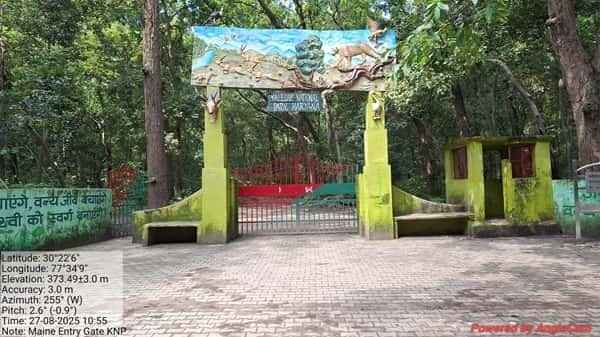
Sultanpur National Park is one of the easiest major birdwatching destinations to reach from Delhi-NCR. Located in Gurugram district, Haryana, the compact wetland park combines a shallow seasonal lake, open grassland, scrub and scattered tree cover, creating an important resting and feeding ground for resident as well as migratory birds. It is particularly rewarding in winter, when ducks, geese, waders and other migrants arrive from Central Asia and adjoining regions.
The protected area covers about 142.52 hectares. Sultanpur first received protection as a bird sanctuary in 1971 and was upgraded to a National Park on July 5, 1991. Its international importance increased further when it was designated a Ramsar Site in 2021. The Haryana Wildlife Department now describes it as a refuge for more than 250 species of resident and migratory birds, while the Ramsar record notes more than 220 waterbird and associated species and several globally threatened birds.
Visitors should also be aware of the park’s seasonal closure. For 2026, Sultanpur National Park has been closed from May 16 to September 30 for habitat restoration and the breeding period, so it is not open to regular tourists in early September 2026. The winter visitor season is expected to begin again from October, subject to the final reopening notice.
| Particulars | Details |
| Destination | Sultanpur National Park |
| Where it is located | Sultanpur, Gurugram district, Haryana |
| Area | About 142.52 hectares |
| Distance from Gurugram | About 15 km |
| Distance from Delhi | Around 46-50 km, depending on starting point |
| Usual visitor timing | Around 7:00 AM to 4:30 PM during the open season |
| Weekly closing day | Tuesday |
| 2026 seasonal closure | May 16 to September 30, 2026 |
| Adult entry | ₹50 reported at the gate in recent 2025-26 visitor records; confirm current rate before travel |
| Car parking | ₹30 reported recently; subject to change |
| Best time to visit | November to February |
| Recommended visit duration | 2-3 hours; longer for serious birdwatching |
Sultanpur National Park Timings
During the normal visitor season, Sultanpur National Park generally opens early in the morning and closes in the late afternoon. Recent visitor listings commonly show hours of about 7:00 AM to 4:30 PM, with Tuesday as the weekly closure. Early morning is the most useful time for birdwatchers because bird activity is usually higher, the light is softer and the walking conditions are more comfortable.
The park also has an annual seasonal closure. In 2026, authorities announced that it would remain closed from May 16 through September 30. This period is used for habitat work and gives breeding birds greater protection from visitor disturbance. Anyone planning a trip near the start or end of the season should check the reopening notice because dates can change from year to year.
Sultanpur National Park Ticket Cost
Sultanpur is an inexpensive wildlife destination, but visitors should be careful with old tariff pages. A number of older online sources still display entry fees of only a few rupees. More recent on-site visitor records from the 2025-26 season consistently report an adult entry charge of ₹50 and car parking of about ₹30.
The Haryana Forest Department’s current public tariff document does not separately list a revised Sultanpur fee, so the amount displayed at the park ticket counter should be treated as final. Charges for electric carts, binocular rental, professional cameras or group visits may be separate and can change without the basic entry fee changing.
| Charge | Current Planning Figure |
| Adult park entry | ₹50 reported recently |
| Car parking | ₹30 reported recently |
| Electric cart / binoculars / camera | Separate charges may apply; check at the counter |
Birdwatching Experience at Sultanpur
Unlike tiger reserves where visitors remain inside safari vehicles, Sultanpur is primarily explored on foot. Paths take visitors around the wetland and through grassland and tree-covered sections, while watchtowers and viewing points provide elevated positions for scanning the lake. Haryana Tourism notes that four watchtowers have been provided for birdwatching, along with an educational interpretation centre.
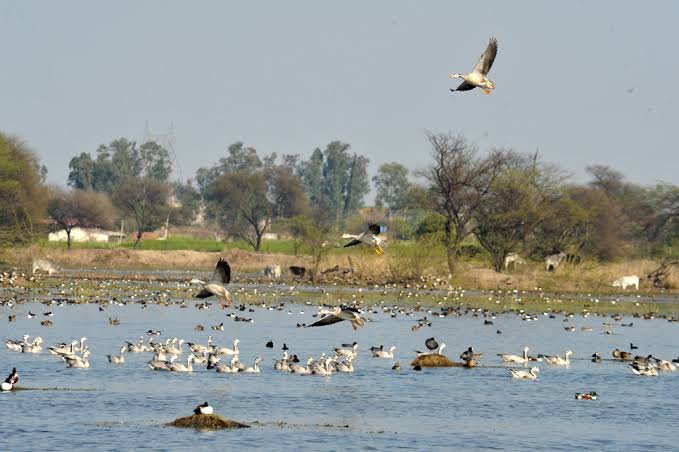
The experience changes considerably with the season. In winter, open-water areas may hold geese, ducks and waders, while storks, egrets, lapwings and kingfishers can be seen around shallower edges. The park is also useful for observing birds in grassland and scrub habitats, so visitors should not concentrate only on the central water body.
Birds and Wildlife at Sultanpur
The Haryana Wildlife Department lists more than 250 resident and migratory bird species for Sultanpur. Winter visitors can include bar-headed geese, northern pintails, Eurasian wigeons, common teals and other waterfowl. Resident species include Indian peafowl, red-wattled lapwing, cattle egret and white-throated kingfisher.
The Ramsar designation highlights the site’s broader conservation value. The wetland supports globally threatened species and, in suitable years, significant numbers of bar-headed and greylag geese. Its mixture of shallow water, islands, grassland and terrestrial habitat also supports reptiles, amphibians and small mammals.
Visitors sometimes expect the experience to resemble a zoo, but Sultanpur is a natural wetland. Birds are free to move in and out, and the number of species visible on any particular day depends on water levels, weather, season and migration patterns.
Walking Trail, Watchtowers and Interpretation Centre
One of Sultanpur’s strongest features is that the park can be experienced at a slow pace. The walking circuit around the wetland lets visitors stop repeatedly at viewing points rather than being carried quickly through the site. Depending on the route followed, a complete walk can take several kilometres, so visitors who want to cover the whole circuit should allow more than an hour.
The watchtowers are useful for scanning sections of open water without approaching birds too closely. Near the entrance, the interpretation facilities explain local birdlife, migration and the ecological importance of the wetland. The park also commemorates the contribution of ornithologist Dr. Salim Ali, whose advocacy helped draw attention to Sultanpur’s conservation value.
How to Reach Sultanpur National Park
Sultanpur National Park lies on the Gurugram-Farrukhnagar road and is about 15 km from Gurugram city. Its proximity to Delhi makes it practical as a half-day trip from much of the NCR.
By Car or Taxi
A private car or taxi is the most convenient choice for most visitors because direct public transport to the gate is limited. From central Gurugram, the journey is comparatively short, while travellers starting in Delhi should allow extra time for NCR traffic, particularly on the return journey.
By Train
Garhi Harsaru Junction, Farrukhnagar station and Gurugram railway station are among the nearest rail options. A taxi or local road transport is required for the final stretch to the park.
By Air
Indira Gandhi International Airport is roughly 34 km away according to the Gurugram district administration, although road travel time varies substantially with traffic.
Best Time to Visit Sultanpur National Park
November to February is the strongest period for a first visit. This is when winter migrants are usually present in the greatest variety, temperatures are comfortable and early mornings can produce excellent bird activity. December and January are especially popular with birdwatchers and photographers.
October can also be rewarding after the park reopens, as migration begins to build. By March, many winter visitors start leaving. Summer is much less attractive for birdwatching and, importantly, the park may be closed for part of the hot-weather and monsoon breeding period.
How Much Time Is Needed?
Casual visitors should keep about two to three hours for Sultanpur. That is usually enough to visit the interpretation area, walk a substantial part of the trail and spend time at several watchtowers. Serious birdwatchers may prefer a full morning because identifying distant waterbirds often requires patience rather than continuous walking.
Arriving soon after opening is usually more rewarding than arriving near noon. It also leaves enough time to walk without rushing before the afternoon closing hour.
FAQs
Q. Is Sultanpur National Park mainly for birdwatchers?
Birdwatching is the main attraction, but the park also works well for families, students, photographers and people looking for a quiet nature walk close to Delhi-NCR. The interpretation centre makes the visit more accessible even for people who cannot identify birds on their own.
Q. Are migratory birds present throughout the year?
No. The largest variety of long-distance migrants is generally seen during the winter months. Resident and local migratory birds remain important at other times, but the species mix changes substantially with the season.
Q. Can visitors take a safari jeep inside Sultanpur?
Sultanpur is not a conventional jeep-safari national park. The usual visitor experience is walking around designated trails and watching birds from viewing points and towers. Electric carts may be available for visitors who need assistance with movement.
Q. Is Sultanpur suitable for children and school groups?
Yes. Its compact size, interpretation facilities and visible wetland birds make it particularly suitable for educational visits. Children can observe migration, feeding behaviour and wetland ecology without undertaking a long forest safari.
Q. Why is Sultanpur important enough to be a Ramsar Site?
The wetland supports resident and migratory waterbirds at critical stages of their life cycles and has recorded globally threatened species. Its ecological functions also include nutrient cycling, groundwater-related services, education and recreation.
Q. Can Sultanpur be visited as a half-day trip from Delhi?
Yes. Its location close to Gurugram makes a half-day outing practical. The main variable is road traffic, so an early start from Delhi is preferable, especially on winter weekends.
Q. Does a low water level mean there will be no birds?
Not necessarily. Different birds prefer different water depths and habitats. Shallow margins, mudflats, grassland and scrub can all hold useful species, although overall bird numbers do depend on seasonal water conditions.
Q. What makes Sultanpur different from larger national parks?
Its importance comes from wetland biodiversity rather than large mammals or wilderness safaris. The park is small, easy to explore on foot and internationally significant as a stopover and wintering habitat for birds within the heavily urbanised Delhi-NCR region.