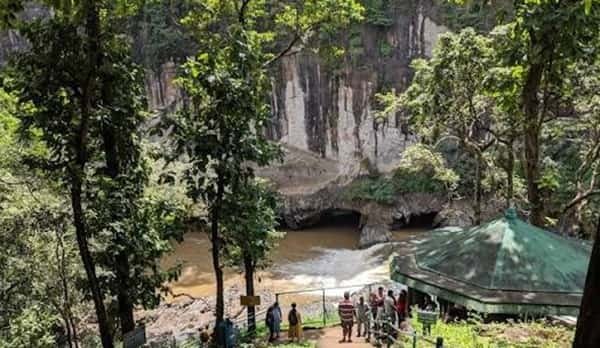
Sanjay Gandhi National Park (SGNP) is a remarkable stretch of protected forest in northern Mumbai, offering wildlife, ancient Buddhist heritage, nature trails and family attractions within one of India’s busiest metropolitan regions. Spread across about 103.84 sq km, the park extends through parts of Mumbai and Thane and represents a major green refuge inside the Mumbai Metropolitan Region.
Formerly known as Borivali National Park, it received its present name in 1981. The forest supports rich biodiversity, including more than 1,300 plant species, hundreds of bird species and mammals such as spotted deer, sambar and leopards. Tulsi Lake and Vihar Lake also lie within the protected landscape and remain important to Mumbai’s water-supply system.
For tourists, SGNP offers much more than a forest walk. Major attractions include the Tiger and Lion Safari, Kanheri Caves, the Van Rani mini train, boating, Gandhi Tekdi, cycling and nature trails. Kanheri Caves, located several kilometres inside the park, add an exceptional historical dimension with more than 100 Buddhist rock-cut caves developed over many centuries.
| Particulars | Details |
| Destination | Sanjay Gandhi National Park |
| Where it is located | Borivali East, Mumbai, Maharashtra |
| Area | About 103.84 sq km |
| General visitor hours | Around 8:00 AM to 5:00 PM |
| Weekly closing day | Monday |
| Adult park entry | ₹113 |
| Child park entry | ₹61 |
| Tiger & Lion Safari – Adult | ₹150 |
| Tiger & Lion Safari – Child | ₹61 |
| Van Rani mini train – Adult | ₹98 |
| Van Rani mini train – Child | ₹37 |
| Best time to visit | June to February |
| Recommended duration | 4–6 hours |
Sanjay Gandhi National Park Timings
For normal sightseeing, visitors should plan their trip between approximately 8:00 AM and 5:00 PM from Tuesday to Sunday. The park and most recreational attractions remain closed on Monday.
Individual attractions follow their own schedules, so visitors should not assume that every facility operates until the main gate closes.
| Attraction | Typical Timings |
| National Park visitor area | Around 8:00 AM – 5:00 PM |
| Tiger & Lion Safari | Around 9:00 AM – 4:30 PM |
| Van Rani Mini Train | 9:00 AM – 1:00 PM and 1:30 PM – 5:00 PM |
| Boating | Around 9:00 AM – 5:00 PM |
| Kanheri Caves | Daytime visiting hours |
| Weekly closure | Monday |
The mini train and several recreational activities take an afternoon operational break. Timings can also change because of maintenance, monsoon conditions or administrative restrictions, so visitors planning around a particular attraction should check its operational status on the day.
Sanjay Gandhi National Park Ticket Cost
Park entry and individual activities are charged separately. Buying the basic SGNP admission ticket does not automatically include the safari, mini train, boating or Kanheri Caves.
Main Entry Fee
| Visitor Category | Entry Fee |
| Adult | ₹113 |
| Child | ₹61 |
The ₹113 adult entry charge remained in use after a proposed tariff increase in 2026 was put on hold pending further review.
Tiger and Lion Safari Charges
| Category | Ticket Cost |
| Adult | ₹150 |
| Child, 5–12 years | ₹61 |
The safari ticket is an additional charge over the normal park admission.
Van Rani Mini Train Charges
The Van Rani, meaning Queen of the Forest, is one of SGNP’s best-known family attractions. After a prolonged interruption and repairs, the mini train returned to service.
| Category | Mini Train Fare |
| Adult | ₹98 |
| Child | ₹37 |
The train operates from Krishnagiri station within the park and is especially popular with families travelling with younger children.
Boating Charges
| Boat | Charge |
| Two-seater | ₹113 |
| Four-seater | ₹230 |
Boating availability can depend on weather, water conditions and operational requirements.
Tiger and Lion Safari
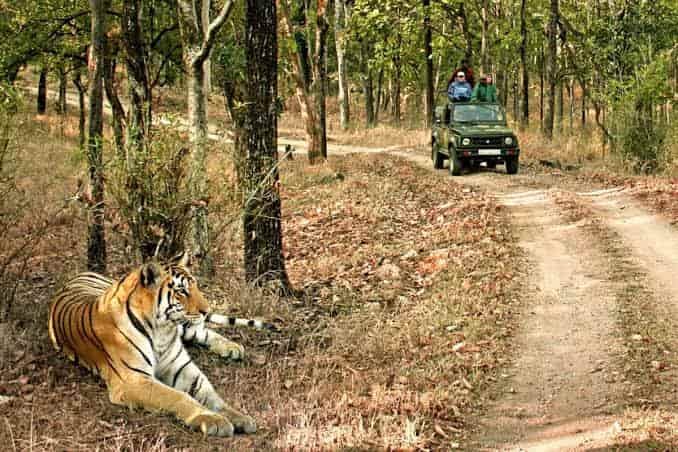
The Tiger and Lion Safari gives visitors an opportunity to see big cats from a protected vehicle within specially created safari enclosures.
This experience should not be confused with looking for wild leopards in the main national park forest. SGNP’s naturally occurring leopards are wild animals living in the larger protected landscape, while the lions and tigers shown during the tourist safari are maintained within designated safari facilities.
Visitors remain inside a closed vehicle while moving through the safari zones. The experience is relatively short compared with wilderness safaris at large tiger reserves, making it easy to combine with other attractions during the same visit.
Kanheri Caves
The Kanheri Caves are arguably SGNP’s most important cultural attraction. Located roughly 6 km inside the Borivali entrance, the complex contains more than 100 rock-cut Buddhist caves carved into basalt hills.
Their development spans many centuries, beginning around the 1st century BCE and continuing into the first millennium CE. The caves contain monastic cells, prayer halls, stupas, sculptures, inscriptions and an impressive ancient rainwater-harvesting system.
One of the most significant structures is the large chaitya or prayer hall with rows of pillars and a stupa.
Kanheri requires a separate Archaeological Survey of India entry ticket in addition to SGNP admission. Current ASI online tariffs have generally started at about ₹20 for Indian visitors and ₹250 for foreign visitors, although rates can be revised.
The distance from the main entrance is another factor to consider. Internal transport is available towards Kanheri, and recent park-operated e-bus fares have been around ₹100 for an adult and ₹50 for a child.
Van Rani Mini Train
Van Rani provides a short recreational train journey through part of the park’s tourist zone and around the Gandhi Tekdi area.
The train has long been associated with childhood visits to SGNP and remains primarily a family attraction rather than a wildlife safari. Its route provides forest views and occasional opportunities to see deer and other commonly encountered animals.
Because seating is limited and the train operates in fixed sessions, waiting times can be longer on Sundays and public holidays.
Gandhi Tekdi
Gandhi Tekdi is a memorial dedicated to Mahatma Gandhi and is located relatively close to the main tourist area.
The elevated position provides contrasting views of forest and Mumbai’s urban development. It can be reached on foot, making it a convenient addition for visitors who do not have enough time for one of the park’s longer nature trails.
Nature Trails and Cycling
SGNP is unusual among Indian national parks because visitors can explore some designated sections on foot and by bicycle.
The park has several recognised nature routes, including the Shilonda Trail, Kanheri or Upper Trail, Bamboo Hut or Gaumukh Trail and Highest Point Trail. Some routes require permission or participation in organised programmes rather than casual independent access.
The Highest Point route is particularly interesting because higher sections provide views towards Tulsi, Vihar and Powai lakes.
Cycling is another popular way to experience the accessible park roads. Visitors can bring a bicycle subject to applicable charges or check bicycle availability near the entrance.
Wildlife at Sanjay Gandhi National Park
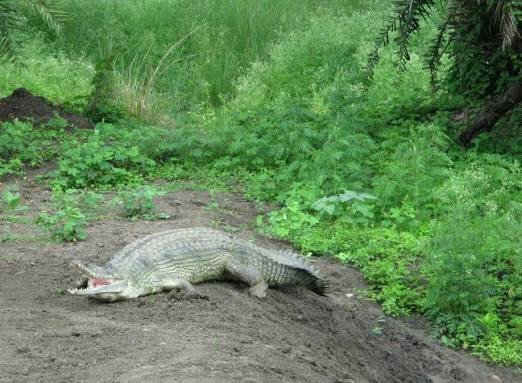
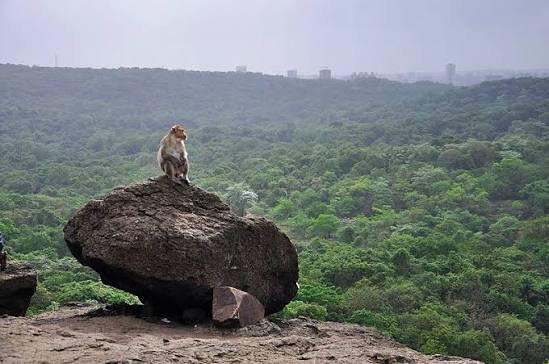
SGNP’s wildlife is not limited to animals displayed during the safari. The natural forest supports leopards, sambar, spotted deer, macaques, langurs, mongoose and numerous smaller mammals, along with reptiles, amphibians, insects and rich birdlife.
The leopard is especially important because SGNP supports these large carnivores despite being surrounded by dense urban development. Ordinary tourists, however, should not expect to see a wild leopard during a daytime recreational visit.
Birdwatching becomes another attraction during cooler months, while butterflies are particularly noticeable during and after the monsoon.
How to Reach Sanjay Gandhi National Park
The principal tourist entrance is at Borivali East, close to the Western Express Highway.
By Train
Borivali Railway Station on Mumbai’s Western Line is the most convenient railway station for most visitors. The park entrance is only a short road journey from the station and can be reached by autorickshaw, taxi or local bus.
By Road
The Western Express Highway provides straightforward road access from Mumbai’s western suburbs.
| Starting Point | Approximate Distance |
| Bandra | About 23 km |
| Andheri / Versova area | About 15 km |
| Worli | About 30 km |
| Nariman Point | About 41 km |
| Mumbai International Airport | Roughly 18 km |
Mumbai traffic can make actual travel time considerably longer than the distance suggests.
Best Time to Visit Sanjay Gandhi National Park
June to February offers the most attractive conditions overall.
The monsoon from June onward transforms the forest into dense greenery, activates seasonal streams and waterfalls and creates some of SGNP’s most scenic landscapes. The trade-off is slippery terrain and occasional restrictions during heavy rainfall.
From November to February, cooler and drier weather makes walking, cycling, cave exploration and birdwatching more comfortable.
March to May is hotter and more humid, so visitors planning long walks should preferably arrive early.
How Much Time Is Needed?
A basic visit covering the safari, boating or mini train can take around three to four hours.
Travellers who also want to explore Kanheri Caves should allow at least five to six hours, particularly because the caves are several kilometres from the main entrance and involve considerable walking and climbing.
Nature enthusiasts taking designated trails may need a separate half-day programme rather than trying to combine everything into one visit.
FAQs
Q. Can tourists freely walk anywhere inside Sanjay Gandhi National Park?
No. Visitors can walk through authorised tourist areas and designated routes, but large sections of SGNP are protected forest and are not open for unrestricted exploration. Certain nature trails also require permission or organised access.
Q. Are wild leopards seen during the regular tourist safari?
The regular Tiger and Lion Safari is a managed safari attraction and is not designed for tracking SGNP’s wild leopards. Leopards inhabit the natural forest, but sightings during an ordinary daytime tourist visit are uncommon.
Q. Can Kanheri Caves be comfortably visited by elderly people?
The main cave area involves steps, slopes and considerable walking. Internal transport reduces the journey from the park gate, but visitors still need to walk through the archaeological complex. Elderly travellers with mobility difficulties may therefore prefer exploring only the lower caves.
Q. Why are Tulsi and Vihar lakes important?
Both are historic reservoirs within the SGNP landscape and form part of Mumbai’s drinking-water system. Their catchment areas are environmentally sensitive, which is one reason public access to many surrounding forest zones is controlled.
Q. Is Sanjay Gandhi National Park mainly a zoo?
No. SGNP is a genuine protected natural forest with wild species, lakes and extensive biodiversity. The Tiger and Lion Safari occupies only a managed tourism section within the much larger national park.
Q. Can visitors trek independently on all SGNP trails?
No. Some accessible areas can be explored normally, while specialised forest trails may require prior permission, a naturalist or participation in an organised park programme. Visitors should not leave marked routes without authorisation.
Q. Is Kanheri Caves part of the National Park ticket?
Kanheri lies geographically inside SGNP, but it is a separately protected archaeological monument. Visitors therefore require park admission as well as the applicable Archaeological Survey of India ticket for the caves.
Q. Which is better for a first visit: Kanheri Caves or the safari?
They offer very different experiences. The safari is better for families primarily interested in seeing large animals, while Kanheri is the stronger choice for visitors interested in history, architecture and a longer nature outing. With five to six hours available, both can form part of the same visit.