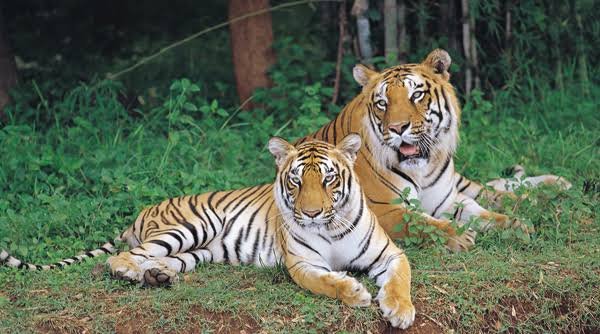
Bandhavgarh Tiger Reserve is one of India’s most celebrated tiger landscapes, known for sal forests, grasslands, rocky hills and a long association with the Royal Bengal tiger. Located in Umaria and Katni districts of eastern Madhya Pradesh, the reserve combines wildlife tourism with a landscape of considerable historical and archaeological importance. Bandhavgarh National Park was originally declared in 1968, and the wider landscape was brought under Project Tiger in 1993-94.
The present tiger reserve covers about 1,536.93 sq km, comprising a 716.90 sq km core and an 820.03 sq km buffer. Its habitats include sal-dominated forest, mixed deciduous woodland, bamboo, meadows, valleys and rocky outcrops. Apart from tigers, Bandhavgarh supports leopard, dhole, sloth bear, gaur, sambar, chital, wild pig, four-horned antelope and rich birdlife.
Tourism is organised through authorised vehicle safaris. The three main core tourism zones are Tala, Magadhi and Khitauli, while Dhamokhar, Johila and Panpatha are important buffer zones. For the 2026-27 season, advance permit bookings have already opened on the Madhya Pradesh Forest Department portal. Core-zone tourism is normally available from October to June, while the monsoon period restricts tourism in core areas; buffer operations depend on local conditions and official orders.
| Particulars | Details |
| Destination | Bandhavgarh Tiger Reserve |
| Where it is located | Umaria and Katni districts, Madhya Pradesh |
| Total tiger reserve area | About 1,536.93 sq km |
| Core area | About 716.90 sq km |
| Buffer area | About 820.03 sq km |
| Main core safari zones | Tala, Magadhi and Khitauli |
| Main buffer zones | Dhamokhar, Johila and Panpatha |
| Safari season | Core zones generally October to June |
| Morning safari | Around sunrise to late morning; exact times vary by season |
| Afternoon safari | Mid-afternoon to sunset; exact times vary by season |
| Weekly closure | Wednesday afternoon safari closed in MP tiger reserves |
| Published full-vehicle entry permit | ₹1,500 for up to 6 tourists; vehicle and guide extra |
| Published single-seat entry permit | ₹250 per seat; vehicle and guide share extra |
| Best time to visit | November to April; March-May is popular for tiger viewing |
| Recommended stay | 2-3 days |
Bandhavgarh Tiger Reserve Timings
Bandhavgarh does not follow one fixed safari clock throughout the year because entry and exit are linked to sunrise and sunset. Morning drives generally begin around 5:30-6:30 AM depending on the month and continue until late morning. Afternoon drives normally begin between about 2:30 PM and 4:00 PM and finish close to sunset.
The exact reporting, entry and exit time printed on the safari permit should always be treated as final. Forest management can also modify timings temporarily because of weather, road conditions, wildlife movement or other operational requirements.
Madhya Pradesh tiger reserves observe a half-day weekly break on Wednesday, which means the afternoon safari is not operated. Core tourism is also suspended during the monsoon closure period. Travellers planning trips around festival dates should check the booking calendar because special closures may also apply.
Bandhavgarh Tiger Reserve Ticket Cost
A Bandhavgarh safari price has several components, so the online permit amount should not be mistaken for the total cost of the drive. The Madhya Pradesh Forest Department booking system separates the forest entry permit from the safari vehicle and mandatory guide charges.
Published Entry Permit Charges
| Permit Type | Published Entry Permit Fee |
| Full vehicle permit | ₹1,500 for a light motor vehicle, maximum 6 tourists |
| Single-seat permit | ₹250 per tourist |
These published figures cover the entry permit only. The safari gypsy or registered vehicle charge and the guide fee are payable separately, generally at or through the park operating system. The portal also applies service charges to online reservations.
An important 2026 point is that the official booking portal currently carries a notice stating that a rate increase has been proposed. If revised rates are approved, tourists with earlier permits may be required to pay the difference at the park counter. For that reason, package prices quoted by private websites should not be treated as official government tariffs.
Safari Zones in Bandhavgarh
Tala Zone
Tala is Bandhavgarh’s best-known tourism zone and is the usual first choice for many visitors. It combines sal forest, open meadows, rocky ridges and historically significant parts of the Bandhavgarh landscape. Tiger sightings are possible, but no zone can guarantee them on a particular drive.
Magadhi Zone
Magadhi lies beside deeper forest and is another important core safari area. Its mix of woodland and open habitat supports tigers as well as chital, sambar, gaur, wild boar and numerous birds. It is a strong alternative when Tala permits are unavailable.
Khitauli Zone
Khitauli is often quieter in character and is valued for varied wildlife rather than only tiger sightings. The zone can be rewarding for birdwatchers and for visitors interested in dhole, leopard, sloth bear and herbivores alongside the possibility of seeing a tiger.
Buffer Zones
Dhamokhar, Johila and Panpatha form the principal buffer tourism zones adjoining the core. They provide additional safari capacity and are useful when core permits sell out. Buffer safaris are still genuine forest drives and can produce excellent wildlife sightings, although the scenery and animal activity differ by route.
What the Safari Experience Is Like
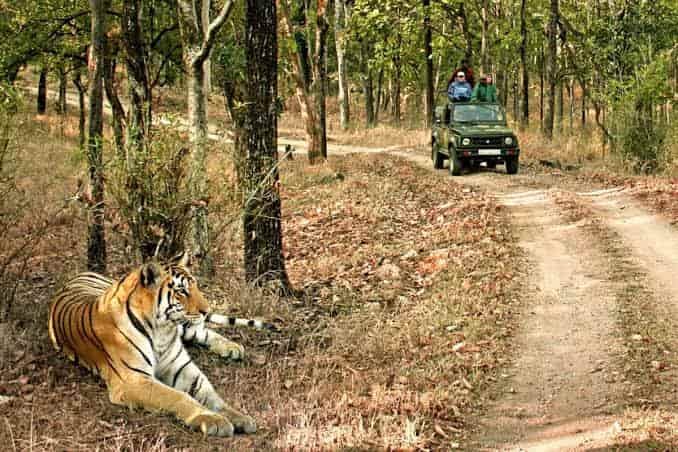
Tourists enter Bandhavgarh in authorised safari vehicles, usually open gypsies, with a registered driver and guide. A full vehicle permit allows up to six tourists, excluding the driver and guide. Private cars cannot simply be used in place of a registered safari vehicle in the core tourism zones.
Bandhavgarh is a natural tiger reserve, not a managed wildlife display. Tigers may be visible for several minutes on one drive and remain completely unseen on the next. Alarm calls from deer or langurs, pugmarks, fresh tracks and changes in animal behaviour are often part of the experience even when a large predator does not appear.
For serious wildlife travellers, two or more drives are far more useful than a single safari. Morning and afternoon conditions are different, and choosing more than one zone gives a broader view of the reserve.
Wildlife at Bandhavgarh
The Royal Bengal tiger is the flagship species, but Bandhavgarh has a much wider ecological value. The reserve supports leopard, dhole or Indian wild dog, sloth bear, striped hyena, wolf, jackal and several smaller carnivores. Common prey animals include chital, sambar, wild pig and nilgai, while gaur is another impressive large mammal of the landscape.
The reserve’s mixture of sal forest, grassland and wet areas also supports abundant birdlife. Peafowl, kingfishers, parakeets, raptors, vultures, storks and many woodland species can be encountered. Official reserve information records hundreds of bird and plant species, making Bandhavgarh worthwhile even for visitors whose interests go beyond tigers.
How to Reach Bandhavgarh Tiger Reserve
By Train
Umaria is the nearest convenient railway station, roughly 35-37 km from the main tourism area around Tala. Katni, about 100 km away, is a larger rail junction with broader connections. Travellers can hire taxis from either station.
By Air
Jabalpur Airport is one of the most practical airports for Bandhavgarh and is about 190 km away. Khajuraho is around 250 km away and can also be combined with Bandhavgarh in a longer Madhya Pradesh itinerary.
By Road
Tala is the main tourism hub, with resorts, safari services and access to the core zone. Road connections are available from Umaria, Katni, Jabalpur and other towns in eastern Madhya Pradesh. Anyone booked on the first morning safari should stay near the relevant entry gate the previous night.
Best Time to Visit Bandhavgarh
November to February offers the most comfortable weather, with cool mornings and pleasant daytime conditions. This period is well suited to families, general sightseeing and birdwatching.
March to May becomes much hotter, but many wildlife photographers prefer the dry season. Vegetation becomes thinner and animals increasingly use remaining water sources, which can improve visibility. June can be productive but is very hot and close to the annual monsoon closure.
The core zones are closed to normal tourism during the monsoon period from July to September. Some buffer tourism may continue subject to weather, road conditions and Forest Department orders, so monsoon visitors should verify availability before travelling.
How Much Time Is Needed?
A two-night stay is a practical minimum for most visitors because it allows at least two safari opportunities without rushing. Wildlife enthusiasts often stay three nights and book several drives across different zones. Since permits for Tala, Magadhi and Khitauli are limited, advance planning is especially important during winter holidays and long weekends.
FAQs Bandhavgarh Tiger Reserve
Q. Is Tala always the best zone for seeing a tiger?
Tala is famous and has excellent tiger habitat, but it is not automatically the best on every day. Tigers move naturally, and Magadhi, Khitauli and buffer zones can also produce strong sightings. Recent animal movement matters more than the reputation of a zone.
Q. Can visitors change their safari zone after the permit is booked?
A safari permit is issued for a specific tourism zone and date. Zone changes should not be assumed to be available at the gate. Visitors should select the zone carefully during booking and follow the conditions printed on the permit.
Q. Is Bandhavgarh suitable for travellers who are not wildlife photographers?
Yes. The reserve offers attractive sal forests, meadows, birdlife, large herbivores and a strong sense of wilderness. A good naturalist can make the drive interesting even when a tiger is not seen.
Q. Are children allowed on Bandhavgarh safaris?
Children can join regular vehicle safaris, subject to the general permit and vehicle rules. Families should remember that drives start very early, roads can be rough and summer heat can be intense.
Q. Can tourists enter Bandhavgarh Fort during a normal safari?
The historic fort lies within the protected landscape, but access has been restricted for many years and should not be assumed to be part of an ordinary safari. Visitors should rely on the current Forest Department rules rather than older guidebooks that describe unrestricted fort visits.
Q. Are buffer-zone safaris worth booking if core permits are sold out?
Yes. Buffer forests are part of the same wider tiger landscape and can hold tigers, leopards, sloth bears, herbivores and excellent birdlife. They are not simply a substitute attraction, although sighting patterns differ from the core zones.
Q. How early should a safari be booked?
The MP Forest portal currently opens advance permits up to 120 days ahead. Popular dates and core zones can fill quickly, so travellers with fixed holiday dates should book as soon as their preferred date becomes available.
Q. Is one safari enough for Bandhavgarh?
One drive can be enjoyable, but it gives only a brief view of one route at one time of day. Two to four safaris across different shifts and zones greatly improve the overall experience and wildlife-viewing opportunities.