Bhitarkanika National Park is one of Odisha’s most distinctive wildlife destinations, where mangrove forest, tidal creeks, mudflats and estuarine rivers create a landscape very different from a conventional tiger reserve. Located in Kendrapara district, the park is best known for its saltwater crocodiles, but a visit also brings opportunities to see spotted deer, monitor lizards, waterbirds and the complex plant life of a tidal mangrove ecosystem.
The National Park covers about 145 sq km and forms the core of the much larger Bhitarkanika Wildlife Sanctuary, notified over roughly 672 sq km in 1975. The core area was declared a National Park in September 1998. The surrounding Bhitarkanika wetland was later recognised as a Ramsar site in 2002, underlining the international importance of its mangroves, estuaries and wildlife.
Tourism here is shaped by water. Instead of spending the entire visit inside a jeep, most travellers explore Bhitarkanika by boat, moving through creeks towards areas such as Dangmal and watching the muddy banks for basking crocodiles and birds. Walking sections around Dangmal add a crocodile hatchery, museum, mangrove trails and other interpretation facilities to the experience.
| Particulars | Details |
| Destination | Bhitarkanika National Park |
| Where it is located | Kendrapara district, Odisha |
| National Park area | About 145 sq km |
| Bhitarkanika Wildlife Sanctuary | About 672 sq km |
| National Park status | September 1998 |
| Main access points | Khola and Gupti; Chandbali is another important boat approach |
| Day visitor timings | 6:00 AM to 6:00 PM |
| Day visitor entry fee | ₹40 per person |
| Annual crocodile-breeding closure | May 1 to July 31 |
| 2026 reopening | August 1, 2026 |
| Published Chandbali-Dangmal boat rate | ₹4,000 per sortie for day visitors |
| Published boat capacity | Up to 18 passengers plus 2 crew on the Chandbali route |
| Best known for | Saltwater crocodiles, mangroves, creeks and birdlife |
| Recommended visit duration | One full day; 1 night for a slower visit |
| Best season | October to March |
Bhitarkanika National Park Timings
Odisha Tourism currently lists Bhitarkanika’s day-visitor window as 6:00 AM to 6:00 PM. These are the broad visitor hours rather than a promise that every boat, permit counter or attraction operates continuously throughout that period.
For travellers using Chandbali as the entry point, the Bhadrak district administration currently lists the daily pass-issue window as 7:00 AM to 12:15 PM. Boat departure times depend on the chosen jetty, route, tide and booking arrangement, so visitors should confirm the reporting time shown on their permit or boat booking.
Bhitarkanika has an important seasonal closure. In 2026 the National Park and adjoining sanctuary remained closed to tourists from May 1 through July 31 for the breeding and nesting season of saltwater crocodiles. The park reopened on August 1, 2026. The three-month closure is a conservation measure and also reduces risk to visitors when nesting females can be especially defensive.
Bhitarkanika National Park Ticket Cost
The official Odisha Tourism visitor information currently lists the general day-entry fee at ₹40 per person. Guests staying in Forest Department eco-tourism accommodation generally have the entry component included in the accommodation booking according to the tourism information.
Boat travel is a separate cost and varies with the boarding point and route. The Bhadrak district administration’s entry-point information, last updated in June 2026, lists ₹4,000 per sortie for a day trip from Chandbali to Dangmal. A Chandbali-Dangmal trip including a night halt is listed at ₹4,500 per sortie. That page states that the registered boats on this route can carry up to 18 passengers with two crew members.
| Ticket / Service | Current Published Figure |
| Day visitor entry | ₹40 per person |
| Chandbali-Dangmal boat – day visitors | ₹4,000 per sortie |
| Chandbali-Dangmal boat including night halt | ₹4,500 per sortie |
| Boat capacity on published Chandbali service | 18 passengers + 2 crew |
| Eco-tourism stay guests | Entry fee generally included with accommodation booking |
Boat prices from Gupti, Khola or other local jetties can differ because distance, vessel type and itinerary are not identical. Visitors should therefore use the tariff shown by the authorised booking counter or EcoTour Odisha for the exact route they choose rather than treating one boat price as a universal Bhitarkanika rate.
Boat Safari Through the Mangroves
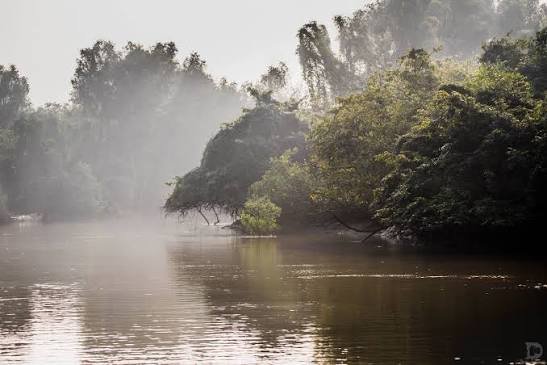
The boat journey is the defining Bhitarkanika experience. The waterways are influenced by the Brahmani, Baitarani, Dhamra and other channels, producing a maze of tidal creeks and canals through dense mangrove vegetation.
During a slow cruise, visitors watch exposed mudbanks and creek edges for saltwater crocodiles. Large animals are sometimes seen basking in the open, while smaller crocodiles may remain close to the water or mangrove roots. Spotted deer and birds can also appear along the banks.
Tides strongly influence what visitors see. A lower tide exposes more mudbank and can make basking crocodiles easier to notice, while high tide changes the character of the creeks. This is one reason boat itineraries and travel times can vary from one visit to another.
Saltwater Crocodiles at Bhitarkanika
The saltwater or estuarine crocodile is Bhitarkanika’s flagship species. Odisha’s Mangrove Forest Division has run a long-term crocodile conservation programme in this landscape since the 1970s, when the population was extremely small compared with later decades.
The park’s creeks, mudflats and brackish-water channels provide excellent crocodile habitat. Some individuals attain exceptional size, which has helped give Bhitarkanika a reputation as one of India’s most important places for observing the species in the wild.
The annual May-July tourism closure is directly connected with this conservation priority. During the 2026 nesting season, forest personnel recorded 117 saltwater crocodile nests in Bhitarkanika and adjoining water systems before the park reopened in August.
Dangmal: Crocodile Centre, Museum and Forest Walk
Dangmal is one of the most important visitor areas inside Bhitarkanika and is commonly reached by boat from Gupti or Chandbali-side routes. Odisha Tourism itineraries regularly include the crocodile reservoir or hatchery, wildlife museum and walking sections through the mangrove forest.
This land-based section makes the trip more varied than a boat cruise alone. Visitors can learn about crocodile conservation, observe mangrove vegetation at closer range and walk through designated forest routes. Depending on the season and trail, spotted deer and other wildlife may also be encountered.
The area around Bagagahana, the well-known heronry near Surajpore creek, adds another dimension during the bird-breeding season when large numbers of colonial waterbirds gather in the landscape.
Birdlife and Mangrove Biodiversity
Bhitarkanika is a major bird habitat as well as a crocodile reserve. Winter brings migratory species to its wetlands, while resident kingfishers, herons, egrets, storks, raptors and other water-associated birds can be seen at different times of the year.
The mangroves themselves are central to the park’s ecological importance. These salt-tolerant forests stabilise tidal land, shelter young fish and crustaceans and create feeding and nesting habitat for reptiles and birds. The larger Bhitarkanika wetland’s Ramsar status reflects the importance of this interconnected estuarine system.
Wild boar, spotted deer, water monitor lizards, pythons and other reptiles and mammals occur in the wider sanctuary. A good Bhitarkanika visit therefore rewards travellers who look beyond only the largest crocodiles.
How to Reach Bhitarkanika National Park
Bhitarkanika has more than one approach, so the correct route depends on whether the visitor plans to enter through Khola, Gupti or travel by boat from Chandbali.
By Road
Khola can be approached by road through Rajnagar. Gupti is another major access point and is widely used for onward boat travel towards Dangmal. From Bhubaneswar, the Bhitarkanika region is roughly 160-170 km by road depending on the chosen gate and route.
By Train
Bhadrak is one of the most useful railway stations for the northern approach and is the nearest railhead highlighted by Odisha Tourism. The Bhadrak district administration places Chandbali about 55 km from Bhadrak railway station. Cuttack can also be practical for travellers approaching the Kendrapara-Rajnagar side.
By Air
Biju Patnaik International Airport in Bhubaneswar is the main airport for Bhitarkanika. Depending on the selected entry point, the road journey is generally around 150-170 km and should be planned with enough time for boat reporting and permit formalities.
Best Time to Visit Bhitarkanika National Park
October to March is the strongest overall period for most visitors. Temperatures are more comfortable, boat travel is pleasant and winter adds migratory birds to the already rich resident birdlife.
August and September bring a lush post-monsoon landscape after the crocodile-breeding closure. The park reopened on August 1 in 2026, and local nesting birds were already adding activity to the mangroves. Heavy rain and tidal conditions can still influence boating during this period.
April becomes hotter and more humid. May, June and July are not tourism months because the park closes for crocodile nesting and breeding. Visitors should not plan a park trip during the annual closure even if accommodation is available elsewhere in the district.
How Much Time Is Needed?
A full day is the most practical minimum for Bhitarkanika because the visit usually involves road travel, boat cruising and time at Dangmal or another walking area. A rushed two-hour stop does not do justice to the tidal landscape.
An overnight stay is better for travellers who want an early boat trip, birdwatching and a slower mangrove experience. Eco-tourism accommodation is available at several locations in the Bhitarkanika landscape, including Dangmal and Gupti, subject to live availability on the official booking system.
FAQs
Q. Is Bhitarkanika mainly a jeep-safari national park?
No. Boat cruising through the mangrove creeks is the main wildlife experience. Walking and interpretation areas around Dangmal complement the boat trip.
Q. Why does Bhitarkanika close for three months every year?
The May 1-July 31 closure protects saltwater crocodiles during breeding and nesting and also reduces the risk of conflict with nesting females.
Q. Which entry point should first-time visitors choose?
Gupti and Khola are the two best-known access points. Gupti is especially convenient for travellers planning a boat trip towards Dangmal, while the best choice ultimately depends on accommodation and the booked boat route.
Q. Are crocodile sightings guaranteed?
No wildlife sighting is guaranteed, but Bhitarkanika has an exceptionally important saltwater crocodile population and boat routes through suitable creek habitat provide good opportunities to see them.
Q. Is Gahirmatha Marine Wildlife Sanctuary the same as Bhitarkanika National Park?
No. Gahirmatha is a separate adjoining marine sanctuary on the coast, famous particularly for Olive Ridley sea turtles. It forms part of the broader coastal conservation landscape around Bhitarkanika.
Q. Can Bhitarkanika be visited as a day trip from Bhubaneswar?
It is possible, but the long road journey and fixed boat arrangements make the day quite demanding. Starting very early or staying overnight near the park provides a more relaxed experience.
Q. What has changed for visitors after the 2026 reopening?
The park reopened on August 1, 2026 after the annual crocodile-nesting closure, and authorities are enforcing a strict green protocol that bans single-use plastics and polythene inside the protected area.