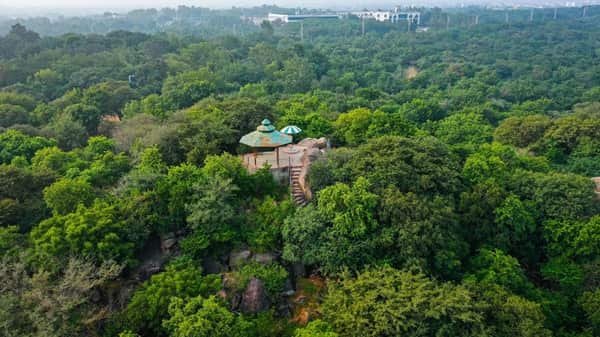
Ranthambore National Park is one of India’s best-known tiger destinations, combining dry deciduous forest, rocky ridges, open grassland, lakes and centuries-old ruins in the Sawai Madhopur district of Rajasthan. The landscape lies where the Aravalli and Vindhya hill systems meet and is especially famous for Royal Bengal tigers that are sometimes seen around lakes, old gateways and forest tracks.
Ranthambore became one of the original Project Tiger reserves in 1973-74, while the National Park was formally notified in 1980. Current Rajasthan Forest Department statistics list the notified National Park area at 282.03 sq km. The larger Ranthambore Tiger Reserve extends far beyond the National Park and includes adjoining protected forests. Visitors may also notice older tourism references quoting about 392 sq km for Ranthambore; this figure continues to appear in travel literature, but the current state protected-area table lists 282.03 sq km specifically for the National Park.
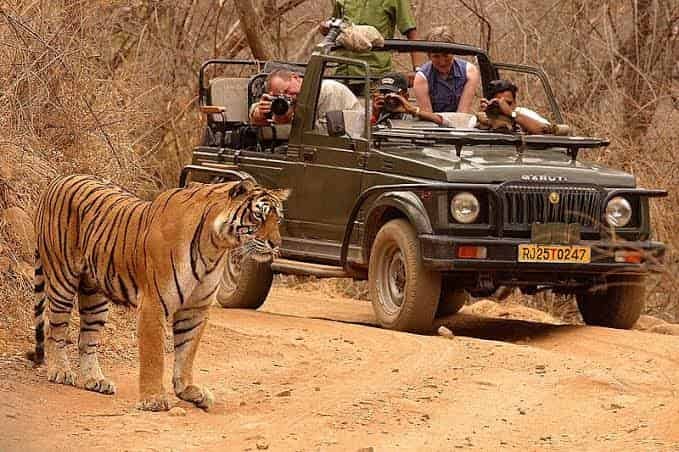
The main tourism experience is a guided forest safari in either a six-seat open Gypsy/jeep or a larger 20-seat Canter. The reserve has 10 tourism zones, and safaris operate in morning and afternoon shifts with timings changing according to sunrise and sunset. The main safari season runs from October to June, while booking demand is especially high in winter and during the hotter pre-monsoon months when wildlife often concentrates near water.
| Particulars | Details |
| Destination | Ranthambore National Park / Ranthambore Tiger Reserve |
| Where it is located | Sawai Madhopur district, Rajasthan |
| Distance from Sawai Madhopur | About 14 km to the park landscape |
| Current notified National Park area | 282.03 sq km |
| Tiger Reserve area | Over 1,400 sq km; current state records list about 1,530 sq km |
| Safari season | Main season: October to June |
| Safari shifts | Morning and afternoon; timings change seasonally |
| Safari vehicles | 6-seat Gypsy/jeep and 20-seat Canter |
| Safari zones | 10 tourism zones |
| Indicative 2026 Jeep cost – Indian | Around ₹2,300-₹2,500 per person |
| Indicative 2026 Canter cost – Indian | Around ₹1,500-₹1,800 per person |
| Nearest railway station | Sawai Madhopur |
| Nearest major airport | Jaipur International Airport, about 165-170 km |
| Best time to visit | October to April; April-June for hotter but often rewarding wildlife viewing |
| Recommended stay | 2 nights / 2-3 days |
Ranthambore National Park Timings
Ranthambore operates two safari shifts each day during the open season. Unlike a zoo with fixed year-round hours, safari entry and exit are adjusted according to daylight. Morning safaris generally begin between 6:00 AM and 7:00 AM, while afternoon safaris normally begin between 2:00 PM and 3:30 PM depending on the month.
| Period | Typical Morning Safari | Typical Afternoon Safari |
| October | Around 6:30 AM-10:00 AM | Around 2:30 PM-6:00 PM |
| November-January | Around 7:00 AM-10:30 AM | Around 2:00/2:30 PM-5:30 PM |
| February-March | Around 6:30 AM-10:00 AM | Around 2:30 PM-6:00 PM |
| April-mid May | Around 6:00 AM-9:30 AM | Around 3:00 PM-6:30 PM |
| Mid May-June | Around 6:00 AM-9:30 AM | Around 3:30 PM-7:00 PM |
These are planning timings rather than a substitute for the safari permit. The official booking portal displays the applicable time during booking, and visitors should follow the reporting time printed on the confirmed ticket.
Ranthambore National Park Ticket Cost
Ranthambore safari pricing is not a single park-entry fee. The final amount can include the forest permit, visitor fee, vehicle charge, guide charge, taxes and the selected booking category. The official portal calculates the payable amount at booking, and rates can change with government revisions or booking type.
For 2026 planning, recent public safari tariffs place a shared Gypsy/jeep safari for an Indian visitor at roughly ₹2,300-₹2,500 per person and a Canter safari at roughly ₹1,500-₹1,800 per person. Foreign visitor rates are considerably higher. These figures should be treated as indicative because the official booking system may show a different final amount for the selected date, zone and category.
| Safari Type | Capacity | Indicative 2026 Indian Cost |
| Gypsy / Jeep Safari | Up to 6 visitors | Around ₹2,300-₹2,500 per person |
| Canter Safari | Up to 20 visitors | Around ₹1,500-₹1,800 per person |
A full private Gypsy requires booking all available seats and therefore costs more overall. Canters are shared vehicles and are usually the more economical option. Hotel transfers are not automatically part of every forest booking, so travellers should check what is included before comparing prices quoted by different operators.
Safari Zones in Ranthambore
Ranthambore is divided into 10 tourism zones. Zone allocation affects the landscape and route, but no zone can guarantee a tiger sighting because all wildlife is free-ranging.
Zones 1 to 5
The first five zones cover the classic core tourism landscape around lakes, old ruins, rocky valleys and established tiger territories. Zone 3 is particularly famous for Padam Talao and Rajbagh, while Zones 1, 2, 4 and 5 include a mix of forest tracks, valleys and water sources. These zones are usually in very high demand.
Zones 6 to 10
The outer tourism zones provide a different Ranthambore experience with open woodland, scrub, hills and water bodies. They can also produce excellent tiger, leopard and herbivore sightings. Visitors should not assume that a higher zone number automatically means poorer wildlife viewing.
Gypsy Safari vs Canter Safari
A Gypsy is a smaller open vehicle carrying up to six tourists. Its lower seating position and smaller group size are attractive to photographers and families, and the vehicle can usually reposition more easily on forest tracks when wildlife activity is reported.
A Canter is a larger open vehicle carrying up to 20 tourists. It is less private but provides a higher viewing position and usually costs less per person. Both vehicle types enter authorised safari zones and are accompanied by the required forest staff or guide under the booking system.
For a family of five or six, booking a complete Gypsy can provide a more comfortable group experience. Solo travellers and budget-conscious visitors may find a Canter perfectly adequate.
Wildlife at Ranthambore
The Royal Bengal tiger is Ranthambore’s flagship species, but the reserve supports a much broader dry-forest ecosystem. Leopards, sloth bears, striped hyenas, jackals, sambar, chital, nilgai, wild boar and langurs are among the mammals visitors may encounter.
Marsh crocodiles can often be seen around lakes, while the reserve has an impressive variety of resident and migratory birds. Rajasthan Tourism notes more than 300 bird species in the Ranthambore landscape.
Tiger sightings are never guaranteed. Ranthambore is famous because its open forest, lakes and historic structures sometimes allow unusually clear views, but animal movement changes daily. A safari that does not produce a tiger can still offer excellent sightings of deer, crocodiles, raptors and other wildlife.
Ranthambore Fort and the Forest Landscape
One feature that makes Ranthambore different from many tiger reserves is the presence of the imposing Ranthambore Fort above the forest. The fort is part of the Hill Forts of Rajasthan UNESCO World Heritage property and contains gateways, temples, tanks and extensive defensive walls.
The forest below is dotted with ruins, old pavilions and stone structures. This combination of wildlife and medieval architecture gives photographs from Ranthambore a character that is difficult to find in other Indian reserves.
How to Reach Ranthambore National Park
By Train
Sawai Madhopur is the most convenient railway station and has connections with Delhi, Jaipur, Mumbai and several other cities. It is the preferred arrival point for many visitors because hotels and safari pickup arrangements are concentrated around the town.
By Air
Jaipur International Airport is the nearest major airport, roughly 165-170 km away by road. Travellers generally continue from Jaipur by taxi or private car.
By Road
Ranthambore is around 165-170 km from Jaipur and roughly 350 km from Delhi. Road journey times depend heavily on traffic and route conditions. Visitors with an early-morning safari should stay in Sawai Madhopur or near the safari pickup area the previous night.
Best Time to Visit Ranthambore
October to March offers the most comfortable weather. Winter mornings can be cold, particularly in an open safari vehicle, but the temperatures are pleasant for sightseeing and photography.
April to June is much hotter, yet serious wildlife watchers often value this period because shrinking water availability can draw animals towards lakes and waterholes. The main core tourism season closes for the monsoon, although the exact operational status of individual zones should always be checked before planning travel.
How Much Time Is Needed?
A two-night stay is ideal for most first-time visitors. It allows at least two safaris, preferably one in the morning and one in the afternoon, without turning the trip into a rushed excursion.
Travellers particularly interested in tigers or wildlife photography often book three or four drives across different zones. More safaris improve the opportunity to experience varied landscapes, but they still do not guarantee a particular sighting.
FAQs
Q. Which Ranthambore zone is best for tiger sightings?
There is no permanently best zone. Tiger territories and daily movement change, and sightings occur across both the traditional core zones and the outer tourism zones. Choosing a convenient available zone is usually better than cancelling a trip because a famous zone is full.
Q. Is one safari enough at Ranthambore?
One safari provides a good introduction, but two safaris at different times of day offer a more complete experience. Morning and afternoon drives can differ greatly in light, temperature and animal movement.
Q. Can a private car enter the safari zones?
No. Visitors must use authorised safari vehicles booked under the reserve system. Private cars can travel to hotels and permitted public areas but cannot replace a licensed Gypsy or Canter inside tourist safari routes.
Q. Is Ranthambore suitable for children?
Yes, many families visit Ranthambore. Children who can comfortably sit through a several-hour open-vehicle drive generally enjoy the experience, although early winter mornings can be cold and summer afternoons can be very hot.
Q. Is the Ranthambore Fort visit included in a tiger safari?
No. The fort is a separate heritage visit even though it stands within the wider Ranthambore landscape. Travellers should keep additional time if they want to explore the fort and its temples after or between safaris.
Q. Are Zones 6 to 10 worth booking?
Yes. These zones have different terrain and can produce tigers, leopards and other wildlife. They should not be dismissed simply because Zones 1 to 5 are more famous in older travel literature.
Q. Why do safari timings change during the year?
Safari hours are linked to seasonal sunrise and sunset. Winter days are shorter, while summer daylight lasts longer, so the forest department adjusts entry and exit times accordingly.
Q. How early should a Ranthambore safari be booked?
Popular dates, especially weekends, holidays and the winter season, can fill well in advance. The official portal opens advance inventory according to a booking calendar, so visitors with fixed travel dates should reserve as soon as their eligible booking window opens.