Mrugavani National Park is a compact protected forest on the western outskirts of Hyderabad, close to Chilkur and Moinabad. Spread across the rocky Deccan landscape, it offers a quick nature break from the city rather than the large-scale wilderness safari experience associated with tiger reserves such as Bandipur or Pench. The park is particularly known for spotted deer, dry deciduous vegetation, birdlife, a short safari ride and environmental education facilities.
The Ranga Reddy district administration lists Mrugavani at 3.6 sq km and records that it was declared a National Park in 1994. Although small in area, the park protects an important remnant of Hyderabad’s native woodland and grassland mosaic. Government forest records have documented more than 600 plant species, around 20 mammal species, 20 reptile species and about 130 bird species in the park.
Its location is one of its biggest advantages. Mrugavani is roughly 20 km from Hyderabad’s Mahatma Gandhi Bus Station and lies on the route towards Chilkur, close to the Nehru Outer Ring Road. This makes it suitable for a half-day family outing, a school nature visit or a combined trip with Chilkur Balaji Temple.
| Particulars | Details |
| Destination | Mrugavani National Park |
| Where it is located | Chilkur, Moinabad mandal, Ranga Reddy district, Telangana |
| Distance from central Hyderabad | Around 20 km from MGBS |
| Area | 3.6 sq km |
| National Park status | 1994 |
| Visitor timings | 9:00 AM to 5:00 PM |
| Weekly closure | Monday is commonly observed as the closure day; confirm before travel |
| Recent adult entry rate | Around ₹40 per person, based on 2026 visitor reports |
| Recent child entry rate | Around ₹20 per child, based on 2026 visitor reports |
| Recent safari bus rate | Around ₹70 per person, based on 2026 visitor reports |
| Main attractions | Deer, safari ride, watch tower, viewpoint, nature trails and education centre |
| Recommended visit duration | Around 2–3 hours |
| Best season | October to February |
Mrugavani National Park Timings
The Government of India’s Incredible India portal currently lists Mrugavani National Park as open from 9:00 AM to 5:00 PM. These hours are suitable for general sightseeing, nature walks and the park’s visitor facilities.
Older and current visitor information commonly identifies Monday as the weekly closure day. Because the main government visitor page does not presently display a weekly-closure line, travellers making a special trip on Monday should confirm with the park or Telangana tourism authorities before leaving.
For the best experience, morning hours are preferable, particularly from October to February. The weather is cooler, bird activity is usually better and walking through the open sections of the park is more comfortable.
Mrugavani National Park Ticket Cost
The official Ranga Reddy district and Incredible India pages currently provide information on the park, wildlife and timings but do not publish an up-to-date entrance-fee table. Recent visitor reports from late 2025 and 2026, however, consistently mention an adult entry fee of about ₹40, a child ticket of around ₹20 and a safari bus charge of about ₹70 per person.
These figures should therefore be treated as current planning rates rather than a permanently fixed government tariff. Visitors should follow the amount displayed at the official ticket counter on the day of their visit.
| Ticket / Activity | Recent 2026 Planning Rate |
| Adult entry | Around ₹40 |
| Child entry | Around ₹20 |
| Safari bus ride | Around ₹70 per person |
| Official online tariff | Not clearly published on current government visitor pages |
Safari Ride at Mrugavani National Park
The park offers a short guided safari-style ride that takes visitors through the protected area and provides a convenient way to see parts of the forest without covering the route entirely on foot. It is especially popular with families and children.
Recent 2026 visitors have reported a safari charge of around ₹70 per person. The ride is relatively short and should not be compared with a three- or four-hour jeep safari in a major tiger reserve.
Spotted deer are the most realistic large-animal sighting during the ride. Peafowl and other birds may also be seen, while sambar, wild boar and smaller mammals depend on movement and chance.
Wildlife in Mrugavani National Park
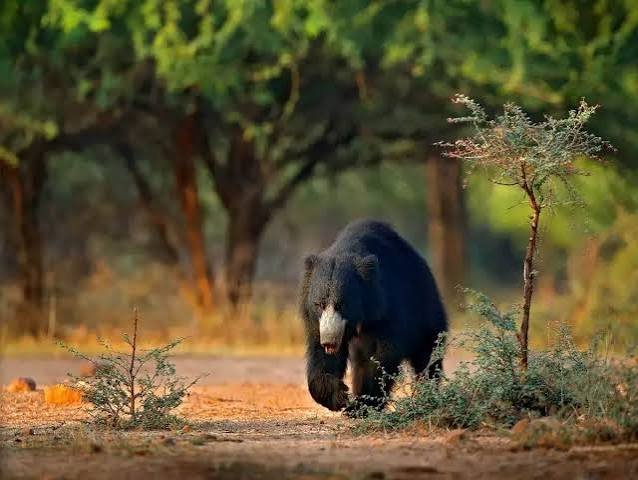
Spotted deer or chital are the animals most strongly associated with Mrugavani. The Ranga Reddy district administration states that the park supports around 350 spotted deer and also lists sambar, wild boar, jungle cat, civet, mongoose and Indian hare among its mammals.
Reptiles recorded from the landscape include monitor lizards, pythons, Indian rat snakes and Russell’s vipers. Visitors should remain on designated paths and avoid approaching or disturbing any reptile encountered in the park.
Birdlife is another important attraction. Government information records more than 100 bird species, including peafowl, warblers, lapwings and flowerpeckers. Early morning is generally the most rewarding time for visitors interested in birds.
Forest, Grasslands and Deccan Landscape
Mrugavani protects a small but valuable example of the native vegetation that once covered much larger parts of the Hyderabad region. Its topography includes woodland, grassland and exposed rocky formations typical of the Deccan plateau.
Teak, bamboo, sandalwood, palas and several other native plants occur in the park. Telangana Forest Department records have documented more than 600 plant species, including over 130 species with medicinal value.
This diversity is important because the park is surrounded by a rapidly expanding metropolitan region. Its conservation role therefore extends beyond tourism and includes protection of native vegetation, small wildlife and urban-edge biodiversity.
Watch Tower, Viewpoint and Education Centre
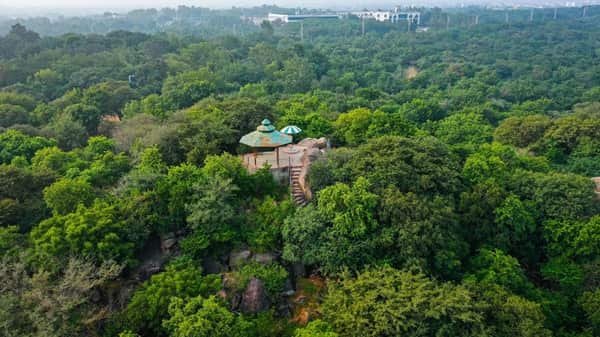
Mrugavani includes a watch tower and an elevated viewpoint that provide broader views over the forest and surrounding landscape. These are useful for observing the park’s woodland structure and for birdwatching.
The park also has an Environmental Education Centre, museum, library and auditorium developed to explain local wildlife and conservation. This educational focus makes Mrugavani particularly suitable for school groups and younger visitors.
Older Forest Department records also describe nature camps organised for schools, colleges and voluntary organisations, showing that environmental education has long been one of the park’s main functions.
Nature Walks
Walking is one of the simplest ways to experience Mrugavani because the park is small enough for visitors to combine the safari ride with a short nature walk.
Designated trails allow visitors to observe dry deciduous plants, rocks, butterflies, birds and smaller animals at a slower pace. The walking experience is particularly pleasant during winter mornings and immediately after the monsoon, when vegetation is greener.
Visitors should remain within permitted areas and follow staff instructions because the park is a protected wildlife habitat rather than an ordinary city garden.
How to Reach Mrugavani National Park
Mrugavani is located at Chilkur in Moinabad mandal on the western side of Hyderabad and is easily accessible by road.
By Road
The Ranga Reddy district administration places the park around 20 km from Hyderabad and describes it as being on the route to Chilkur, close to the Nehru Outer Ring Road. Taxis, app cabs and private vehicles are the most convenient options for families.
By Train
Hyderabad Deccan railway station is the nearest major railhead and is listed by the district administration at approximately 19.7 km from the park. From the station, visitors can continue by taxi or other road transport.
By Air
Rajiv Gandhi International Airport is the nearest airport. The Ranga Reddy district administration places it at approximately 21 km from Mrugavani National Park.
Best Time to Visit Mrugavani National Park
October to February is the most comfortable period for most visitors. Hyderabad’s winter weather makes nature walks and time at the viewpoint considerably easier than during peak summer.
July to September can give the park a greener appearance after monsoon rain, although wet trails and humid conditions may affect outdoor plans.
March to May is generally hotter. Visitors coming in summer should prefer the morning hours and avoid spending too long in exposed sections during the middle of the day.
How Much Time Is Needed?
Around two to three hours is enough for most visitors to cover the basic Mrugavani experience, including the safari ride, viewpoint, education centre and a short walk.
The park works particularly well as part of a half-day outing with nearby Chilkur Balaji Temple. Travellers looking for a full wilderness safari or a large national-park experience should remember that Mrugavani is a compact urban-edge conservation park rather than a major tiger reserve.
FAQs
Q. Is Mrugavani National Park a large jungle safari destination?
No. It is a compact 3.6 sq km national park on Hyderabad’s outskirts. The safari ride is short and is better viewed as an introduction to the park rather than a full-scale wilderness safari.
Q. What wildlife is most commonly seen at Mrugavani?
Spotted deer are the park’s most characteristic animals. Peafowl and other birds are also commonly associated with the visitor experience, while sambar, wild boar and smaller mammals are less predictable.
Q. Is Mrugavani suitable for children?
Yes. The short safari, deer, viewpoint and Environmental Education Centre make it particularly suitable for families and school groups.
Q. Can Mrugavani and Chilkur Balaji Temple be visited together?
Yes. The park lies on the Chilkur side of Hyderabad, so combining both places in a half-day or day outing is practical.
Q. Is the park useful for birdwatching?
Yes. More than 100 bird species have been recorded in the park. Morning hours are generally preferable for bird activity and cooler walking conditions.
Q. Is Monday a good day to visit?
Monday is commonly listed as the park’s weekly closure day in visitor information. Since the current government tourism page does not clearly display the weekly closure, visitors should confirm before making a Monday trip.
Q. Are the ₹40 entry and ₹70 safari rates official fixed 2026 tariffs?
They are the most recent rates repeatedly reported by visitors in 2026, but the current government visitor pages do not publish a live tariff table. The ticket-counter amount should therefore be treated as final.