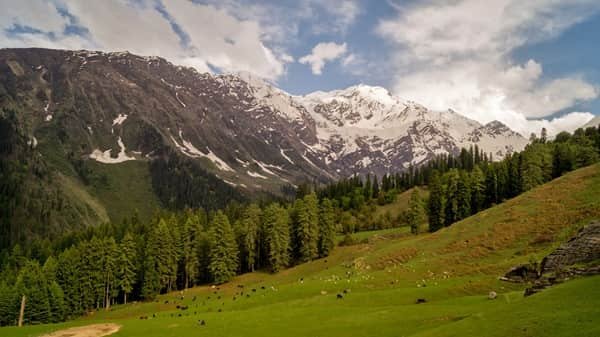
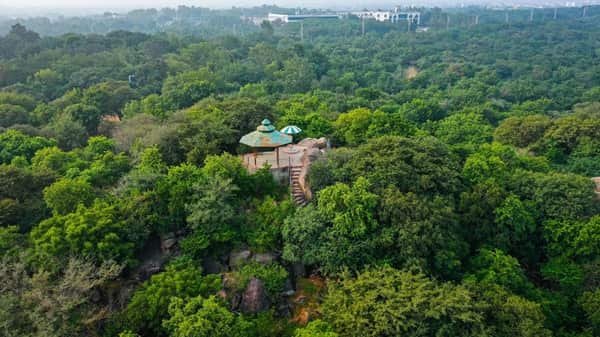
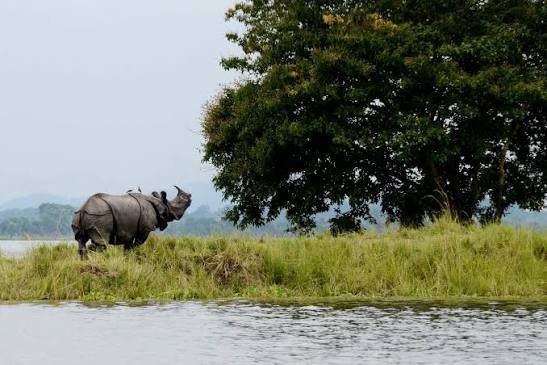
Vansda National Park is a small but remarkably dense forest in southern Gujarat, close to the northern edge of the Western Ghats. Located in Navsari district near Waghai, the park is very different from Gujarat’s better-known dry wildlife landscapes. Tall teak, bamboo and moist deciduous vegetation create a thick canopy that can keep parts of the forest surprisingly dark even during the middle of the day.
The park covers 23.99 sq km, usually rounded to 24 sq km, and was declared a protected national park in April 1979. Gujarat Tourism notes that the landscape contains more than 450 plant species and over 200 bird species, while mammals associated with the forest include leopard, hyena, deer and four-horned antelope. Birdwatching and plant diversity are often stronger attractions here than sightings of large mammals.
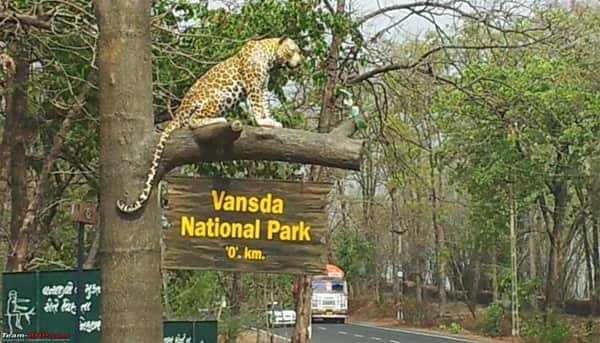
Vansda is also easy to combine with the wider Waghai-Saputara region. Waghai lies only a few kilometres away, while the Waghai Botanical Garden, Gira Falls, eco-campsites and the forested Dangs can turn a short national-park visit into a full nature-based trip.
| Particulars | Details |
| Destination | Vansda National Park |
| Where it is located | Navsari district, southern Gujarat, near Waghai |
| Area | 23.99 sq km (about 24 sq km) |
| National Park status | April 1979 |
| Nearest town | Waghai, about 4 km |
| Distance from Surat | About 106 km |
| Distance from Saputara | About 60 km |
| Common visitor timings | Around 8:00 AM to 5:00 PM; confirm locally |
| Monsoon access | Seasonal restrictions/closure are commonly reported from mid-June to mid-October |
| Official current tariff page | No live public fee table on the current Gujarat Tourism page |
| Recent planning rate for car/jeep | Around Rs 400 per vehicle, based on current travel listings |
| Guide | Commonly reported around Rs 100 for first hour; verify at gate |
| Best known for | Dense teak-bamboo forest, birdlife, leopard habitat and nature walks |
| Recommended visit duration | Around 2-4 hours |
| Best season | November to May; post-monsoon and winter are especially attractive |
Vansda National Park Timings
The current Gujarat Tourism page does not publish a formal daily opening-and-closing timetable. However, recent visitor information and travel listings consistently place the normal visitor window at around 8:00 AM to 5:00 PM.
Because Vansda is a small forest park rather than a large reserve with fixed morning and afternoon safari permits, visitors should think in terms of a daytime entry window rather than a strict three-hour safari shift.
Monsoon access needs extra care. Current travel listings commonly report a seasonal closure or restricted period from roughly mid-June to mid-October. Gujarat Tourism’s own older trip-planning information recommends the pre-monsoon-to-winter period, while the Government of India tourism compendium gives November to May as the best visiting season. Anyone travelling close to the monsoon reopening should confirm the latest gate status before leaving.
Vansda National Park Ticket Cost
The current Gujarat Tourism destination page provides updated information on the park and how to reach it, but it does not display a live 2026 entrance-fee table. This means older fixed fee figures should not be presented as guaranteed official rates.
Recent visitor listings commonly quote around Rs 400 for a car or jeep, about Rs 2,000 for a bus, a camera charge of roughly Rs 200 and a guide charge beginning around Rs 100 for the first hour. These are useful only as planning estimates and should be confirmed at the entry gate.
Visitors should also remember that guide, vehicle and camera charges may be separate. If the Forest Department revises the tariff, the amount displayed at the park counter is the final amount.
| Ticket / Service | Current Planning Information |
| Car / Jeep entry | Around Rs 400, based on recent travel listings |
| Bus entry | Around Rs 2,000, based on recent travel listings |
| Camera | Around Rs 200, based on recent travel listings |
| Guide | Around Rs 100 for first hour; additional time may cost extra |
| Official 2026 live tariff | Not published on the current Gujarat Tourism destination page |
Jeep Drive and Nature Walk Experience
Vansda is not a classic open-grassland safari destination. The forest is thick, visibility is often limited and the main pleasure comes from moving slowly through a cool, heavily wooded landscape.
Gujarat Tourism states that visitors can explore the park through jeep rides and nature walks. The forest road and walking experience are useful for observing vegetation, butterflies, birds, animal tracks and the changing structure of moist deciduous forest.
Large-mammal sightings should be treated as a bonus. The dense canopy can hide animals even when they are close, and visitors who arrive expecting the easy wildlife visibility of Velavadar or an open tiger-reserve meadow may be disappointed.
Wildlife in Vansda National Park
Leopard is the most important large predator associated with Vansda. Other mammals recorded from the park include hyena, chital, four-horned antelope, barking deer, wild boar, jungle cat, palm civet, mongoose, macaques, langurs, porcupine, flying squirrel and pangolin.
The older Gujarat Forest Department profile also records reptiles such as python, Russell’s viper, cobra and krait. Visitors should stay on permitted routes and avoid entering dense vegetation without a guide.
Wildlife sightings are naturally unpredictable. Vansda is much better appreciated as a biodiverse forest than as a destination where visitors are promised a particular animal.
Birdwatching at Vansda
Birdlife is one of Vansda’s strongest attractions. The current Gujarat Tourism page describes the park as supporting more than 200 bird species, while older official tourism material highlights forest birds such as racket-tailed drongo, paradise flycatcher, grey hornbill and Malabar trogon.
The forest spotted owlet is among the particularly interesting species associated with the wider southern Gujarat forest landscape. Woodpeckers, pigeons, babblers, sunbirds, thrushes and peafowl add variety.
Early morning is usually the most productive time for birdwatchers because temperatures are lower and forest activity is higher.
Dense Forest and Plant Diversity
The vegetation is what makes Vansda immediately distinctive. Gujarat’s Forest Department describes the park as tropical moist deciduous forest dominated by tall teak, with bamboo and numerous associated tree species.
The park has 443 recorded flowering plant species in older Forest Department records, while current Gujarat Tourism material describes more than 450 plant species overall. Orchids and moisture-loving vegetation occur in suitable parts of the forest, particularly around river and stream habitats.
The Ambika River drains the landscape and the park forms a continuous ecological tract with forests towards the Dangs, giving a 24 sq km national park a connection to a much larger wooded region.
Waghai Botanical Garden and Nearby Nature Sites
Waghai Botanical Garden is one of the easiest attractions to combine with Vansda. Gujarat Forest Department information specifically recommends the garden and the nature-education trail from the botanical-garden side towards the national park.
Travellers staying longer in the region can also include Gira Falls, Saputara and nearby eco-tourism campsites. These are separate attractions rather than parts of the national park, but they help make the Waghai-Dangs region suitable for a one- or two-day nature itinerary.
How to Reach Vansda National Park
Waghai is the nearest useful base for Vansda National Park, while Surat is the main large-city transport hub.
By Road
The current Gujarat Tourism page places Vansda National Park about 106 km from Surat and around 235 km from Vadodara. Older official trip-planning information places Waghai about 4 km away, Ahwa around 28 km away and Saputara roughly 60 km away.
By Train
Gujarat Tourism lists Waghai railway station as the nearest station, around 4 km from the national park. Travellers should verify the current train service before depending on this route, because local narrow-gauge operations have changed over time. For more dependable long-distance rail connections, Surat, Bilimora and Valsad can be more practical.
By Air
Surat Airport is the nearest major airport. The current Gujarat Tourism page places it at approximately 120 km from Vansda National Park.
Best Time to Visit Vansda National Park
November to February is the easiest period for most visitors. Temperatures are comfortable, walking is pleasant and the forest retains much of its post-monsoon freshness.
March to May becomes warmer but remains within the Government of India tourism compendium’s recommended November-to-May season.
The monsoon transforms the southern Gujarat forests, but access can be restricted because of heavy rain, slippery tracks and forest-management requirements. Visitors travelling from June through mid-October should confirm that the park has reopened before making the trip.
How Much Time Is Needed?
Around two to four hours is sufficient for most visitors who want to take a short forest drive, walk and spend some time birdwatching.
Serious birdwatchers and nature enthusiasts can use Waghai as a base and devote a full day to Vansda plus the botanical garden and nearby forest sites.
Visitors coming from Surat can technically make the trip in a day, but staying around Waghai, Ahwa or Saputara gives a more relaxed experience.
FAQs
Q. Is Vansda National Park the same as Vansada National Park?
Yes. Vansda and Vansada are spelling variations used for the same national park in southern Gujarat.
Q. Is Vansda mainly a wildlife safari park?
No. The dense moist deciduous forest, birds, plants and nature walks are major attractions. Large mammals can be difficult to see because visibility inside the forest is limited.
Q. Are leopard sightings common?
Leopards occur in the park, but sightings are unpredictable. Visitors should not plan the trip with the expectation of seeing one.
Q. What is the current entrance fee?
The current Gujarat Tourism page does not publish a live 2026 tariff. Recent visitor listings commonly quote around Rs 400 for a car or jeep, but the amount at the Forest Department counter should be treated as final.
Q. Is the park open during the monsoon?
Seasonal closure or restricted access is commonly reported from roughly mid-June to mid-October. Confirm the current reopening status before travelling during that period.
Q. Is Vansda good for birdwatching?
Yes. Birdlife is one of the strongest reasons to visit, with the current Gujarat Tourism page describing more than 200 bird species in the park.
Q. Which place is the best base for a visit?
Waghai is the closest practical base, only a few kilometres from the park. Saputara offers more tourist accommodation but is much farther away.