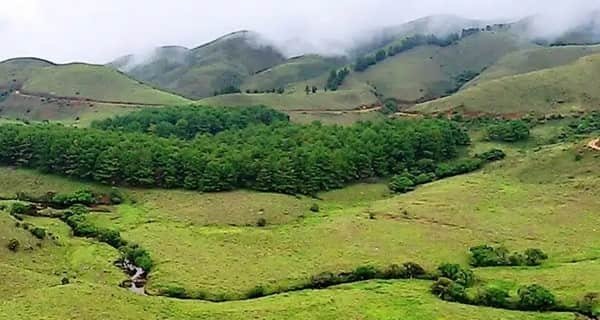
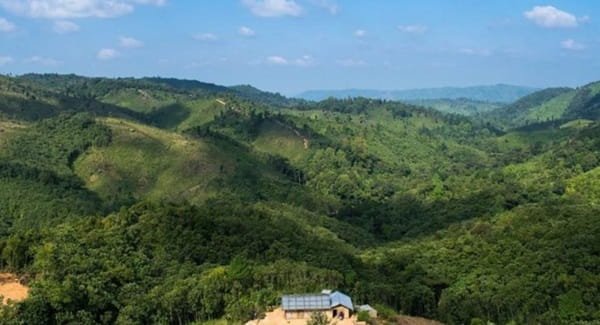
Manas National Park is one of Assam’s most remarkable wildlife landscapes, stretching along the foothills of the eastern Himalayas beside the Bhutan border. The park combines alluvial grasslands, riverine forest, semi-evergreen woodland and the broad Manas River, creating a striking setting for tigers, wild water buffalo, elephants, rhinos, golden langurs and some of India’s rarest small mammals.
Manas is unusual because several major conservation designations overlap here. The original National Park was notified over 500 sq km in 1990, and Assam Forest Department records also list a 350 sq km first addition notified in 2016. The much larger Manas Tiger Reserve covers 2,837.12 sq km. The UNESCO World Heritage property, historically inscribed as Manas Wildlife Sanctuary in 1985, covers 39,100 hectares within this wider conservation landscape.
The park is especially important for species that are difficult to encounter elsewhere, including the pygmy hog, hispid hare, Assam roofed turtle and golden langur. Manas is also contiguous with Royal Manas National Park in Bhutan, creating an internationally significant transboundary wildlife landscape.
| Particulars | Details |
| Destination | Manas National Park |
| Where it is located | Foothills of the eastern Himalayas in western Assam, along the Bhutan border |
| Original National Park area | 500 sq km |
| First addition | 350 sq km, notified in 2016 |
| Manas Tiger Reserve area | 2,837.12 sq km |
| UNESCO World Heritage property | 39,100 hectares |
| National Park status | 1990 |
| UNESCO inscription | 1985 |
| Main tourism ranges | Bansbari, Bhuyanpara and Panbari, subject to current operations |
| Jeep safari timings | Around 6:30-9:30 AM, 10:00 AM-1:00 PM and 2:00-5:00 PM |
| Elephant safari | Early morning, mainly Bansbari when operational |
| Indicative jeep safari cost | About ₹4,450-₹5,050 per jeep for Bansbari/Bhuyanpara on recent published tariffs; verify live rate |
| Best known for | Tiger, wild water buffalo, rhino, elephant, golden langur, pygmy hog and birdlife |
| Recommended stay | 2 nights with at least two safaris |
| Best season | November to April |
Manas National Park Safari Timings
Government tourism information for the Bodoland region currently lists three common jeep-safari windows in Manas: approximately 6:30 AM to 9:30 AM, 10:00 AM to 1:00 PM and 2:00 PM to 5:00 PM. In some booking systems the first shift is shown from 6:00 AM, so visitors should follow the reporting time printed on their permit.
Elephant safaris, when operational, are generally conducted in the early morning. The Bansbari side is the best-known area for elephant rides, with commonly published slots around 6:00-7:00 AM and 7:00-8:00 AM.
Assam Tourism describes Manas as visitable through the year, but the practical wildlife-tourism season is strongest from roughly October or November to April. Heavy monsoon rain can affect forest roads, safari routes and individual activities, so live range availability should always be checked before a May-September trip.
Manas National Park Safari Cost
Unlike some national parks with a single government tariff displayed prominently online, Manas does not currently have one clear Assam Tourism page publishing a universal 2026 jeep-safari price for every range. Assam Tourism instead lists the contact of the Manas Jeep Safari Association for current bookings.
Recently published visitor tariffs show Indian jeep-safari rates of roughly ₹4,450-₹4,600 for Bansbari and about ₹5,050 for Bhuyanpara for a three-hour safari. Other private booking sites quote somewhat different package prices because inclusions such as entry fees, guide or service charges vary.
For this reason, the figures below should be used only for trip budgeting. The final rate quoted by the authorised safari association or official booking counter for the selected date should be treated as the actual payable amount.
| Safari / Activity | Indicative Planning Rate |
| Bansbari jeep safari | Around ₹4,450-₹4,600 per jeep |
| Bhuyanpara jeep safari | Around ₹5,050 per jeep |
| Elephant safari | Recent published rates roughly ₹1,250-₹1,500 per person when operating |
| Safari duration | About 3 hours for a standard jeep safari |
| Final payable amount | Confirm with authorised Manas safari booking/association for selected date |
Bansbari Safari Range
Bansbari is the best-known tourism gateway to Manas and the most practical choice for many first-time visitors. It is approached from Barpeta Road and leads north towards the Mathanguri area close to the Bhutan border.
The route passes through a mixture of grassland, woodland and riverine habitat. Elephants, gaur, deer, wild buffalo and numerous birds may be encountered, while tiger and leopard sightings depend entirely on luck and animal movement.
Bansbari also has the strongest tourism infrastructure, with lodges, camps and safari vehicles concentrated around the approach to the park.
Bhuyanpara and Panbari
Bhuyanpara provides another important safari experience and is valued for its grasslands, woodland and quieter wildlife routes. Government tourism information lists jeep safaris in both Bansbari and Bhuyanpara.
Panbari is another range within the Manas landscape and can offer a less crowded experience when tourism access is open. However, range operations, road conditions and safari availability can change by season, so visitors should not assume that every zone is open every day.
For travellers staying two nights, choosing more than one range can provide a broader view of Manas than repeating exactly the same route.
Wildlife in Manas National Park
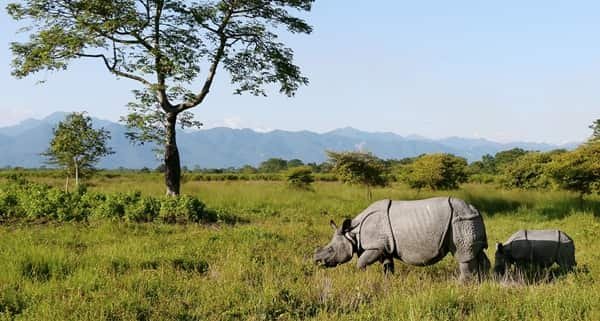
Manas supports an exceptional mixture of large mammals and rare smaller species. Tigers, leopards, Asian elephants, Indian one-horned rhinoceros, gaur and wild water buffalo occur in the protected landscape.
The park is particularly famous for the pygmy hog and hispid hare, both closely associated with tall alluvial grassland. Golden langurs occur in the wider Manas landscape, while the Assam roofed turtle adds to the park’s importance for reptile conservation.
The Assam Forest Department describes Manas as supporting nearly 60 mammal species and more than 500 bird species. The park is also designated as an Important Bird Area, making it especially rewarding for visitors interested in birding rather than only large mammals.
Rhino and Wild Water Buffalo Conservation
Indian one-horned rhinoceroses were once severely affected by poaching and conflict in Manas, but conservation programmes later restored a breeding population through translocation and protection.
Wild water buffalo are another major conservation feature. Manas forms part of one of the most important remaining landscapes for the species, and large, heavily built buffalo can sometimes be seen in grasslands or near wet areas.
Neither rhino nor buffalo sightings are guaranteed on a single safari, but both contribute to the park’s unusual wildlife identity beyond its tiger population.
Manas River and Mathanguri
The Manas River is central to the scenery of the park. It descends from Bhutan and flows through the protected landscape before eventually joining the Brahmaputra system. Broad riverbeds, gravel banks and forested Bhutan hills create some of the most memorable views in the reserve.
Mathanguri is a well-known forest location near the northern part of the tourism route. Its setting beside the river, with Bhutan immediately beyond, gives Manas a dramatic landscape character that differs from the flatter floodplains of Kaziranga.
River-based activities, including rafting, are periodically promoted in the Manas landscape, but availability depends on water conditions and the current tourism season.
UNESCO World Heritage Status
Manas was inscribed on the UNESCO World Heritage List in 1985 for its outstanding natural beauty, ecological processes and globally important biodiversity. UNESCO recognises the dramatic combination of Himalayan foothills, the Manas River, alluvial grasslands and tropical forest.
The property was placed on the List of World Heritage in Danger in 1992 following severe impacts from conflict and poaching. Improved protection and recovery later allowed UNESCO to remove Manas from the danger list in 2011, making its conservation history particularly significant.
How to Reach Manas National Park
Bansbari is the most commonly used tourism gateway, and Barpeta Road is the main transport base for reaching this side of the park.
By Road
Manas is around 140-160 km from Guwahati depending on the exact destination and route. Assam Tourism recommends hired vehicles for convenience, although buses also operate towards the Barpeta region. From Barpeta Road, the Bansbari park entrance is roughly 20-25 km away.
By Train
Barpeta Road railway station is the most convenient railhead for the Bansbari side. It has connections with Guwahati and several longer-distance routes. Travellers can continue from the station by taxi or other local road transport.
By Air
Lokpriya Gopinath Bordoloi International Airport at Guwahati is the principal airport used for Manas. The onward road journey generally takes several hours, so visitors arriving by air should avoid scheduling a safari too close to their flight arrival time.
Best Time to Visit Manas National Park
November to April is the strongest overall period. Assam Tourism and UNESCO visitor information both identify these months as particularly suitable because the weather is cooler and wildlife visibility improves as tall grass becomes drier.
December to February brings the most comfortable daytime temperatures and is excellent for birdwatching. Early mornings can be cold, especially in an open safari vehicle.
March and April become warmer, but the drier conditions can make large mammals easier to observe around grasslands and water sources. Heavy monsoon rain from roughly May or June onward can affect safari operations and road access.
How Much Time Is Needed?
Assam Tourism suggests allowing two to three days to appreciate Manas properly. For most wildlife travellers, two nights is a good minimum because it allows at least two jeep safaris and time to experience the river landscape.
A one-day visit is possible from nearby accommodation, but a single safari may not show the range of habitats or wildlife for which Manas is known. Serious birdwatchers and wildlife photographers may prefer three nights or more.
FAQs
Q. Is Manas National Park the same as Manas Tiger Reserve?
No. The National Park forms part of the much larger Manas Tiger Reserve. The original National Park was 500 sq km, while the Tiger Reserve covers 2,837.12 sq km.
Q. Is Manas National Park open throughout the year?
Assam Tourism describes the park as open year-round, but the most reliable wildlife-tourism period is from roughly October or November to April. Monsoon conditions can close or restrict individual safari routes and activities.
Q. Which range is best for a first safari?
Bansbari is usually the easiest first choice because it has the strongest tourism infrastructure and the well-known route towards Mathanguri. Bhuyanpara is a good alternative for a second safari.
Q. Is a tiger sighting guaranteed in Manas?
No. Manas supports tigers, but sightings depend on wildlife movement, vegetation and chance. Elephants, deer, gaur, wild buffalo and birds are generally more realistic possibilities.
Q. Why is Manas important for rare species?
The park protects several highly threatened animals, including the pygmy hog, hispid hare, Assam roofed turtle and other species associated with its grasslands, forests and river systems.
Q. Is Manas connected with Bhutan?
Yes. The Indian protected landscape is contiguous with Royal Manas National Park in Bhutan, creating an important transboundary conservation area.
Q. How many days should a first-time visitor stay?
Two nights is a practical minimum. It allows more than one safari and gives enough time to experience the river and forest landscape without rushing.