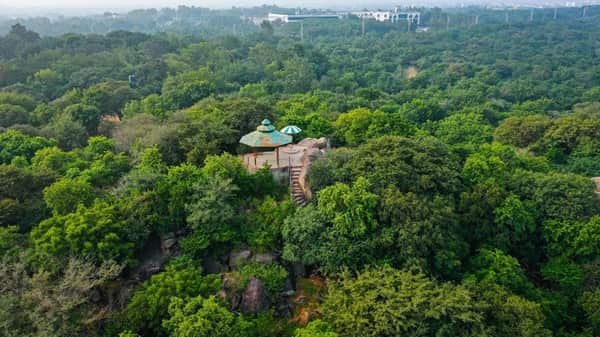
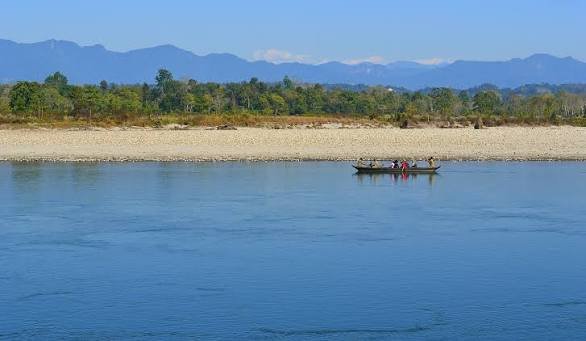
Blackbuck National Park at Velavadar is one of Gujarat’s most distinctive wildlife destinations. Instead of dense forest, the park protects a wide sweep of open grassland, saline plains, seasonal wetlands and scrub in the Bhal region of Bhavnagar district. Large herds of blackbuck are the main attraction, but the landscape is equally important for Indian wolves, nilgai, foxes and an exceptional variety of grassland and migratory birds.
The park covers about 34 sq km and is among India’s smaller national parks. Gujarat Tourism records that the protected area began with roughly 18 sq km in July 1976 and was enlarged by another 16 sq km in 1980. Its small size makes wildlife easier to observe than in many heavily wooded reserves, particularly when blackbuck herds move across the open plains.
Velavadar is also a major birding destination. The official booking information records 186 bird species, along with 16 mammal species and 17 reptile species. Winter is especially notable for harriers, while the threatened lesser florican is associated with the grassland ecosystem.
| Particulars | Details |
| Destination | Blackbuck National Park / Velavadar National Park |
| Where it is located | Velavadar, Bhavnagar district, Gujarat |
| Area | About 34 sq km |
| Protected area established | 1976; expanded in 1980 |
| Distance from Bhavnagar | About 47 km |
| Tourism season | 16 October to 15 June |
| Annual closure | 16 June to 15 October |
| Winter timings | 6:30 AM-11:30 AM and 2:00 PM-7:00 PM |
| Summer timings | 6:00 AM-11:00 AM and 2:30 PM-7:30 PM |
| Indian entry – hired private Gypsy | ₹40 per person; Gypsy charge extra |
| Indian personal car/jeep | ₹400, maximum 6 persons |
| Weekend surcharge | 25% extra |
| Guide | Mandatory |
| Best known for | Blackbuck herds, Indian wolves, harriers and grassland birds |
| Recommended visit duration | Around 3-5 hours |
| Best season | November to February |
Blackbuck National Park Timings
The current official Gujarat wildlife booking portal divides Velavadar’s visitor schedule into winter and summer periods. From 16 October through the end of February, the park is open from 6:30 AM to 11:30 AM and again from 2:00 PM to 7:00 PM.
From 1 March to 15 June, the morning period begins earlier, from 6:00 AM to 11:00 AM, while the afternoon period runs from 2:30 PM to 7:30 PM.
The park is open from Monday to Sunday during the tourism season. It closes every year from 16 June to 15 October for the monsoon period. Visitors should still follow the time printed on the online permit because forest management can adjust entry when required.
Blackbuck National Park Ticket Cost
The official Velavadar booking system currently lists the following entry fees for Indian visitors:
| Entry Option | Current Official Fee |
| Individual using hired private Gypsy | ₹40 per person; Gypsy hire paid separately |
| Personal car / jeep | ₹400, maximum 6 persons |
| Matador / station wagon | ₹1,000, maximum 15 persons |
| Minibus / bus / tractor / medium-heavy vehicle | ₹3,500, maximum 60 persons |
| Weekend surcharge | 25% extra |
| Foreign visitor with hired private Gypsy | US$10 per person |
| Foreign personal car / jeep | US$40, maximum 6 persons |
The ₹40 individual entry fee does not include the private Gypsy charge. Visitors hiring a local safari vehicle must pay the vehicle owner separately. A trained guide is mandatory for the park visit.
The official system also applies a 25% surcharge on weekends. Because vehicle hire is separate from the entry permit, travellers should check the complete amount before confirming their safari.
Safari and Grassland Experience
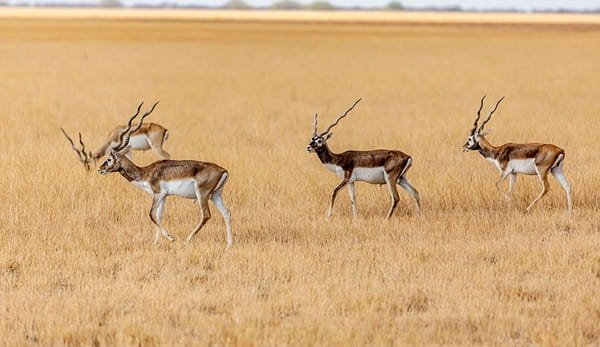
Velavadar offers a very different safari experience from forested tiger reserves. The open terrain means visitors can often watch wildlife across long distances, and large groups of blackbuck may be visible grazing or moving through the grasslands.
Visitors can enter using an authorised hired Gypsy or, under the current permit system, certain categories of personal vehicles. A guide is compulsory. The guide is useful not only for locating wildlife but also for explaining the grassland ecology, seasonal wetlands and behaviour of the animals.
Early morning is particularly rewarding for visitors hoping to see Indian wolves, which are much less predictable than blackbuck. Late afternoon also provides attractive light for grassland photography and animal activity.
Blackbuck at Velavadar
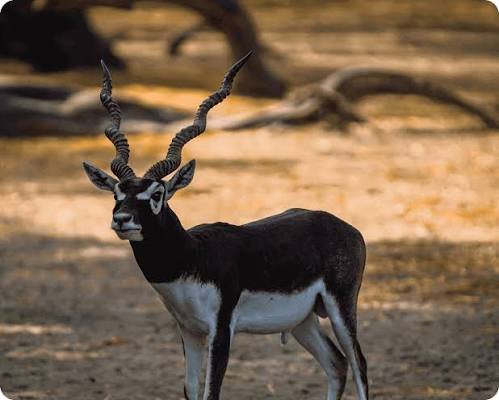
The blackbuck is the species that defines Velavadar. Mature males develop dark brown to nearly black upper bodies, white underparts and long spiralling horns, while females and younger animals are lighter in colour.
Gujarat Tourism reports roughly 1,800 blackbuck in and around the park landscape. Herds can often be seen in the open, sometimes separated into groups of males and groups of females with young.
The open grasslands allow visitors to observe running, grazing and social behaviour more clearly than would be possible in a densely wooded habitat.
Indian Wolves and Other Mammals
Velavadar is one of the better-known places in Gujarat for the Indian wolf. Wolves use the open grassland and surrounding plains, but sightings are much less reliable than blackbuck sightings. Early morning generally offers the best possibility.
Nilgai, Indian fox, jackal, jungle cat and other smaller mammals also occur in the landscape. The official park information records 16 mammal species overall.
Wildlife should always be viewed from the permitted route. The open appearance of the grasslands can make animals seem easy to approach, but leaving designated areas or chasing wildlife can disturb both breeding and feeding behaviour.
Birdwatching at Velavadar
Birdwatching is one of Velavadar’s strongest attractions, particularly during winter. The grasslands, wetlands, mudflats and saline areas support a mixture of raptors, cranes, waterbirds and specialised grassland species.
Wintering harriers are especially famous. Gujarat Tourism notes that large numbers arrive from regions including Siberia and use the Velavadar landscape as an important roosting area.
The lesser florican is another significant species associated with the grasslands. Other birds recorded in the wider ecosystem include eagles, falcons, kestrels, larks, cranes, pelicans, flamingos, herons, spoonbills and nightjars.
Grassland, Wetlands and Saline Plains
Velavadar’s conservation value comes largely from habitat that is often overlooked in comparison with forests. Pale grasslands occupy much of the park, while seasonal rivers, low-lying wetlands, saline plains and mudflats create additional feeding and breeding areas.
This mixture supports antelope, wolves, foxes, reptiles and a wide range of birds. Seasonal changes can transform the park dramatically: winter brings dry golden grass and migratory birds, while the monsoon turns the surrounding landscape greener even though the national park itself remains closed to regular visitors.
Forest Guest House at Velavadar
The official booking website also publishes accommodation tariffs for Forest Department facilities inside the national park. For Indian citizens, a forest guest-house room is listed at ₹3,000 per night for two people, with ₹100 for an extra bed.
Dormitory accommodation is also listed. An air-conditioned bed on a sharing basis is ₹500 per person, while a non-air-conditioned bed is ₹300. Meals are not included in these accommodation tariffs.
Availability can be limited, so travellers interested in staying within the protected landscape should check the official booking system well in advance.
How to Reach Blackbuck National Park
Velavadar lies in Bhavnagar district in the Bhal region of Gujarat.
By Road
Gujarat Tourism places the park about 47 km from Bhavnagar. The road journey normally takes around an hour, making Velavadar practical as a day trip from the city. Ahmedabad is farther away and is better treated as a full-day road excursion or an overnight wildlife trip.
By Train
Bhavnagar is the nearest major railway station, around 47 km from the national park according to Gujarat Tourism. Travellers can continue to Velavadar by taxi or private vehicle.
By Air
Bhavnagar Airport is the closest airport. Gujarat Tourism’s current Velavadar page places the park at roughly 47 km from the airport. Ahmedabad Airport can also be used for travellers combining Velavadar with a wider Gujarat itinerary.
Best Time to Visit Blackbuck National Park
November to February is the strongest period for most visitors. Temperatures are comfortable, blackbuck remain easy to observe in the open grasslands and winter migration greatly improves birdwatching.
March to May becomes progressively hotter, although wildlife remains visible and early morning visits can still be rewarding.
The park closes from 16 June to 15 October. Interestingly, the monsoon is an important breeding season for the lesser florican in the wider grassland landscape, but regular tourist access to the national park is not available during this period.
How Much Time Is Needed?
Around three to five hours is enough for a normal Velavadar visit, particularly if the main goal is a morning or afternoon safari.
Wildlife photographers and birdwatchers may prefer to stay overnight and take both an evening and an early-morning outing. This is especially useful for travellers hoping to see wolves or winter harriers.
Because the park is relatively small, visitors do not need several days to understand its main habitats, but repeated visits at different times of day can produce very different wildlife experiences.
FAQs
Q. Is Blackbuck National Park the same as Velavadar National Park?
Yes. Blackbuck National Park at Velavadar is commonly called Velavadar National Park or Velavadar Blackbuck National Park.
Q. Are blackbuck sightings easy at Velavadar?
Blackbuck are the park’s most visible large mammals and are often seen in groups across the open grasslands. However, exact numbers and viewing distance vary.
Q. Is an Indian wolf sighting guaranteed?
No. Wolves live in the landscape but are elusive. Early-morning visits generally provide a better chance than the middle of the day.
Q. Can visitors take their own car inside the park?
The current official permit system lists personal car or jeep entry at ₹400 for up to six people. Visitors must follow park rules and the mandatory guide requirement.
Q. Does the park close every week?
No weekly closure is currently listed. The official timetable shows Monday to Sunday operation during the tourism season, with the annual closure from June 16 to October 15.
Q. Why is Velavadar important for birdwatchers?
The park combines grassland, wetlands and saline areas and supports 186 recorded bird species. It is especially known for wintering harriers and the threatened lesser florican.
Q. Is a private Gypsy included in the ₹40 entry fee?
No. The ₹40 fee is the individual park entry charge for visitors using a hired private Gypsy. The Gypsy vehicle charge must be paid separately.