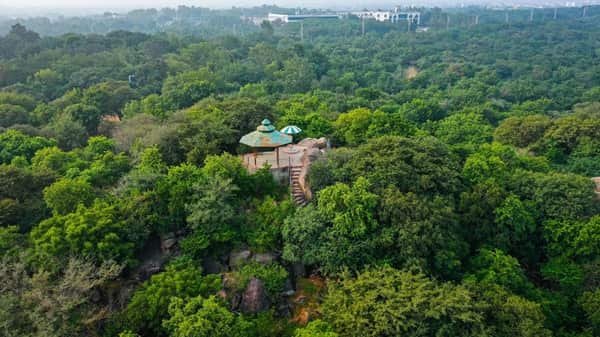
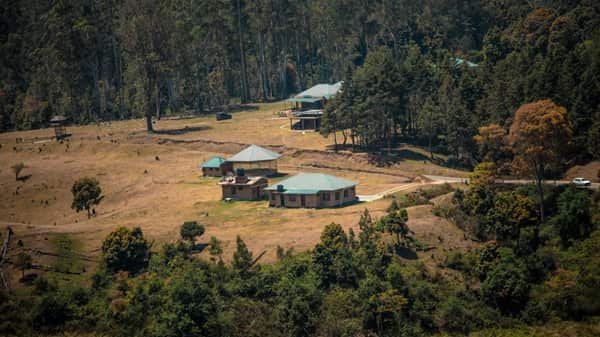
Mudumalai National Park is one of southern India’s most important wildlife landscapes, lying in the Nilgiri hills at the meeting point of Tamil Nadu, Karnataka and Kerala. The reserve forms part of the larger Nilgiri Biosphere Reserve and is closely connected with Bandipur Tiger Reserve and Wayanad Wildlife Sanctuary, creating an extensive habitat for tigers, Asian elephants, gaur and other large mammals.
Today, tourism is generally promoted under the name Mudumalai Tiger Reserve. The National Tiger Conservation Authority lists the reserve at 688.59 sq km, comprising a 321 sq km core or critical tiger habitat and a 367.59 sq km buffer. The core was notified as critical tiger habitat in 2007, while the buffer was notified in 2012.
Theppakadu is the main tourism and reception centre. Visitors can book Forest Department-run vehicle safaris, visit the Elephant Conservation Centre and stay in selected Forest Department accommodation. Private vehicles are not permitted to operate as safari vehicles inside the core tourism zone.
| Particulars | Details |
| Destination | Mudumalai National Park / Mudumalai Tiger Reserve |
| Where it is located | The Nilgiris district, Tamil Nadu |
| Tiger Reserve area | 688.59 sq km |
| Core / critical tiger habitat | 321 sq km |
| Buffer area | 367.59 sq km |
| Main visitor centre | Theppakadu |
| Safari timings | Morning 6:30 AM-10:00 AM; afternoon 2:00 PM-5:00 PM |
| Gypsy safari slots | 6:30 AM, 8:00 AM, 9:30 AM, 2:00 PM, 3:30 PM and 5:00 PM |
| Gypsy safari duration | About 70 minutes |
| Camper safari duration | About 60 minutes |
| Camper rate – Indian/OCI | ₹130 per person |
| Camper rate – Foreigner | ₹400 per person |
| Camper vehicle charge | ₹4,200 per vehicle where booked as full vehicle |
| Elephant camp feeding | 8:30-9:00 AM and 5:30-6:00 PM |
| Best known for | Asian elephants, tigers, gaur, wild dogs and Nilgiri landscape |
| Recommended visit | Half day for one safari; 1-2 nights for a fuller wildlife trip |
| Best season | October to February; summer is hotter |
Mudumalai National Park Safari Timings
The official Mudumalai Tiger Reserve website currently lists the broad safari periods as 6:30 AM to 10:00 AM in the morning and 2:00 PM to 5:00 PM in the afternoon.
For Gypsy bookings, the official availability system currently shows six standard start times: 6:30 AM, 8:00 AM, 9:30 AM, 2:00 PM, 3:30 PM and 5:00 PM. A Gypsy slot runs for roughly 70 minutes.
The Bolero Camper safari lasts about 60 minutes. The official programme page states that the first camper departs at 6:30 AM and the last leaves at 5:00 PM. Visitors are advised to report one hour before their turn.
Mudumalai Safari Cost
The official booking portal offers different Forest Department-run safari formats, including the Mazda minibus, Bolero Camper and Gypsy. Prices therefore depend on the selected vehicle and whether the visitor is booking an individual seat or an entire vehicle.
The current official Bolero Camper page lists ₹130 per Indian/OCI visitor and ₹400 per foreign visitor. The same page also displays ₹4,200 as the full vehicle safari charge.
For Gypsy safari, availability and the final payable amount are displayed through the official booking calendar. Since the live system can change by programme and date, visitors should rely on the final checkout amount instead of a fixed rate copied from an older travel website.
| Safari / Activity | Current Official / Booking Information |
| Bolero Camper – Indian/OCI | ₹130 per person |
| Bolero Camper – Foreigner | ₹400 per person |
| Bolero Camper – Full vehicle | ₹4,200 |
| Gypsy safari | Current rate shown during official date/slot booking |
| Mazda minibus safari | Current rate shown during official booking |
| Elephant Conservation Centre | Separate entry ticket |
Forest Department Safari Only
The Mudumalai Tiger Reserve administration specifically warns visitors about fraudulent private jeep safaris. Private vehicles are not permitted to operate safari rides within the core area.
Visitors should book the Forest Department-operated safari through the official Mudumalai Tiger Reserve website or obtain an available ticket at the Theppakadu reception centre.
This distinction is important because private operators outside the reserve may advertise a ‘Mudumalai jeep safari’ even though they cannot take tourists on the official core tourism route.
Wildlife Safari Experience
Mudumalai lies within one of India’s richest large-mammal landscapes. The reserve supports Asian elephants, tigers, leopards, dholes or wild dogs, sloth bears, gaur, sambar, chital, barking deer and wild boar.
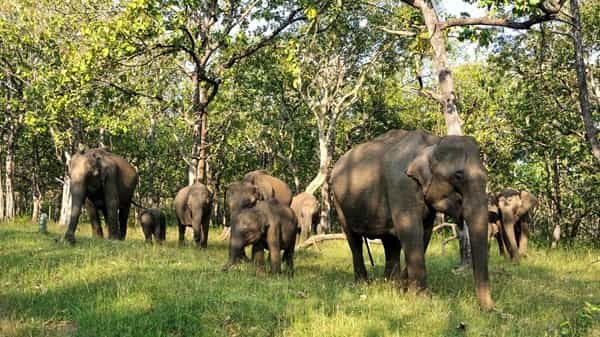
Elephants are among the most realistic large-animal sightings. Herds move across forest roads and through riverine areas, particularly where the Mudumalai-Bandipur-Wayanad landscape remains connected.
Tiger sightings are possible but never guaranteed. The forest includes moist deciduous, dry deciduous, semi-evergreen and thorn habitats, so visibility changes considerably from one section to another.
Theppakadu Elephant Conservation Centre
Theppakadu Elephant Camp is one of Mudumalai’s best-known attractions. The official reserve describes it as one of Asia’s oldest elephant camps and states that the elephants are used for conservation work, conflict mitigation, patrolling and wildlife-management duties.
Visitors can watch the camp elephants being fed during scheduled sessions. The official current timings are 8:30 AM to 9:00 AM in the morning and 5:30 PM to 6:00 PM in the evening.
Entry to the Elephant Conservation Centre is ticketed separately and can be booked through the official Mudumalai website or at the reception centre, subject to availability.
Mudumalai and the Nilgiri Biosphere Reserve
Mudumalai is part of the Nilgiri Biosphere Reserve, India’s first biosphere reserve, declared in 1986. Its position at the tri-junction of Tamil Nadu, Karnataka and Kerala gives it an especially important role in landscape-scale conservation.
The reserve shares a boundary with Bandipur Tiger Reserve to the north and Wayanad Wildlife Sanctuary to the west. These connected forests allow elephants, tigers and other wildlife to move across state boundaries.
This means Mudumalai should not be viewed as an isolated 688 sq km reserve. It forms part of a much larger Western Ghats wildlife landscape.
How to Reach Mudumalai National Park
Theppakadu is the principal visitor centre and is located on the Ooty-Mysore interstate highway.
By Road
The official Mudumalai website places Theppakadu about 91 km from Mysore and around 67-68 km from Ooty via Gudalur. A shorter route from Ooty through the steep Sigur/Kalhatty Ghat is about 36-40 km but has sharp bends and requires careful driving. Mudumalai is about 240 km from Bengaluru and roughly 124 km from Kozhikode/Calicut.
By Train
Mysuru is the most convenient major railway station from the north and lies about 100 km from Mudumalai. Udhagamandalam or Ooty is another railhead on the Nilgiri Mountain Railway, although onward road travel is required.
By Air
Coimbatore is the most practical major airport on the Tamil Nadu side, roughly 160-170 km from Theppakadu. Bengaluru and Calicut/Kozhikode airports can also be used depending on the wider itinerary.
Best Time to Visit Mudumalai National Park
October to February is one of the best periods for most visitors. The weather is relatively comfortable and the forest remains attractive after the monsoon.
March and April are hotter, and the official reserve information describes these months as the peak summer period. Wildlife may still be active around water sources, but midday conditions can become uncomfortable.
Older Tamil Nadu Forest Department visitor information lists the reserve as generally visitable through much of the year except the heavy monsoon period. Current access, however, should always be checked through the official Mudumalai booking calendar because temporary closures can occur because of rain, fire risk or wildlife-management needs.
How Much Time Is Needed?
A single Forest Department safari and a visit to the Elephant Conservation Centre can be covered in roughly half a day if the timings match well.
For a more complete trip, one or two nights around Theppakadu or Masinagudi allows visitors to take both morning and afternoon wildlife drives and explore the surrounding Nilgiri landscape at a relaxed pace.
Travellers combining Mudumalai with Ooty, Bandipur or Wayanad should remember that road distances can look short on a map but mountain roads and wildlife-zone traffic restrictions can increase travel time.
FAQs
Q. Is Mudumalai National Park the same as Mudumalai Tiger Reserve?
The names refer to overlapping protected areas in the same landscape. Today, tourism and conservation management are generally presented under Mudumalai Tiger Reserve, which covers 688.59 sq km including its core and buffer.
Q. Can private jeeps take tourists on safari inside Mudumalai?
No. The official reserve states that private vehicles are not permitted to operate safari rides inside the core tourism area. Visitors should use Forest Department-run safari vehicles.
Q. What are the current safari timings?
The official website lists the broad morning safari period as 6:30 AM-10:00 AM and the afternoon period as 2:00 PM-5:00 PM, with individual Gypsy slots starting at 6:30 AM, 8:00 AM, 9:30 AM, 2:00 PM, 3:30 PM and 5:00 PM.
Q. Are tiger sightings common?
Mudumalai supports an important tiger population, but no tiger sighting is guaranteed. Elephants, gaur and deer are generally more realistic safari possibilities.
Q. Can visitors see the elephants at Theppakadu?
Yes. The official elephant feeding sessions are currently scheduled for 8:30-9:00 AM and 5:30-6:00 PM, subject to operational changes.
Q. Which is the best base for the official safari?
Theppakadu is the main reception and safari centre. Masinagudi is a popular nearby accommodation area, but visitors still need to report to the official safari point shown on their booking.
Q. Is Mudumalai connected to Bandipur?
Yes. Mudumalai shares a boundary with Bandipur Tiger Reserve in Karnataka and forms part of the wider Nilgiri Biosphere Reserve wildlife landscape.