Dudhwa National Park is one of northern India’s most important Terai wildlife destinations, combining tall grasslands, dense sal forest, wetlands and riverine habitats close to the India-Nepal border. Located in Lakhimpur Kheri district of Uttar Pradesh, it is particularly valuable for visitors interested in tigers, swamp deer, Indian one-horned rhinoceros and birdlife rather than only a quick big-cat safari.
The park was notified as a national park in 1977 and covers about 490 sq km. It forms the best-known part of the wider Dudhwa Tiger Reserve landscape, which also includes Kishanpur Wildlife Sanctuary and Katarniaghat Wildlife Sanctuary. This distinction matters because travellers sometimes use “Dudhwa” for the whole reserve even when their safari or stay is actually in a different protected area.
Dudhwa’s conservation story is unusual. The area has long been a stronghold of the northern swamp deer, or barasingha, while the Indian one-horned rhinoceros was successfully reintroduced here in the 1980s. The reserve also supports tigers, elephants, leopards, hispid hare, Bengal florican and a remarkably rich variety of resident and migratory birds.
| Particulars | Details |
| Destination | Dudhwa National Park |
| Where it is located | Lakhimpur Kheri district, Uttar Pradesh, near the India-Nepal border |
| National Park area | About 490 sq km |
| Year notified | 1977 |
| Main tourism season | Generally 15 November to 15 June; annual forest orders may alter opening dates |
| Winter safari | 7:00 AM-10:00 AM; 3:00 PM to before sunset |
| Summer safari | 6:00 AM-9:00 AM; 4:30 PM to before sunset |
| Indian adult entry | ₹250 per person/trip |
| Indian child entry | ₹100 for child aged 5+ |
| Full vehicle safari | ₹4,000 from Dudhwa National Park departure point |
| Alternate departure | ₹5,000 from Dudhwa Tourism Premises |
| Vehicle capacity | Maximum 7 visitors |
| Best known for | Tiger, barasingha, one-horned rhino, sal forest and birdlife |
| Recommended visit | At least 1-2 nights for multiple safaris |
| Best season | November to February for weather and birding; March-May for warmer wildlife viewing |
Dudhwa National Park Safari Timings
The official Uttar Pradesh Eco Tourism booking system lists separate winter and summer safari schedules. In winter, the morning safari runs from 7:00 AM to 10:00 AM, while the evening safari starts at 3:00 PM and continues until before sunset.
In summer, the morning shift is 6:00 AM to 9:00 AM and the evening shift begins at 4:30 PM and continues until before sunset. The portal also states that the maximum entry time for the evening safari is 4:00 PM, so visitors should report well before their scheduled departure.
Forest conditions, weather and management orders can affect entry. The official tourism page gives 15 November to 15 June as the normal visitor season, although annual opening dates may occasionally be advanced or changed. The live booking calendar should therefore be treated as the final authority for a particular travel date.
Dudhwa National Park Ticket and Safari Cost
The current official booking pages list the following main charges for Dudhwa:
| Category | Current Official Rate |
| Indian tourist entry | ₹250 per person/trip |
| Indian child aged 5+ | ₹100 per child/trip |
| Foreign tourist entry | ₹2,000 per person/trip |
| Foreign child aged 5+ | ₹1,400 per child/trip |
| Full safari vehicle – Dudhwa National Park | ₹4,000, maximum 7 visitors |
| Per-person option – Dudhwa National Park | ₹800, available through offline booking |
| Full safari vehicle – Dudhwa Tourism Premises | ₹5,000, maximum 7 visitors |
| Per-person option – Tourism Premises | ₹1,000, available through offline booking |
The official portal states that the guide fee and road fee are included in the safari charge, while the protected-area entry fee is additional. Online checkout may also add applicable GST and a convenience charge before the final payment amount is shown.
One older tariff page on the same official website still displays lower safari figures, but the current online safari-booking page and the newer accommodation-tariff page show ₹4,000 and ₹5,000. Travellers should therefore follow the amount displayed in the live booking system when making payment.
Visitors should keep their park entry pass and identity proof available because forest officials may ask to see them inside the protected area.
Wildlife Safari Experience
A Dudhwa safari passes through a classic Terai landscape rather than dry open forest. Tall elephant grass, sal woodland, marshes, pools and seasonal wetlands can make wildlife viewing more challenging, but they also create a far richer habitat.
Tigers are the biggest attraction for many visitors, but a sighting is never guaranteed. The reserve is equally rewarding for deer, wild boar, elephants, raptors and smaller wildlife. Because vegetation can be dense, repeated safaris generally give a better experience than relying on a single drive.
Safari vehicles must follow designated routes and forest rules. The official code requires an authorised guide, limits vehicle speed to 20 kmph inside protected areas and prohibits chasing, feeding or disturbing wildlife.
Barasingha and One-Horned Rhinoceros
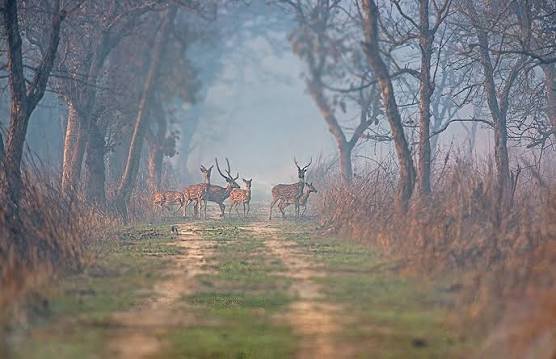
Dudhwa is especially important for the northern swamp deer, commonly called barasingha. The reserve is considered the country’s key stronghold for this subspecies, which depends on the grassland and wetland habitats of the Terai.
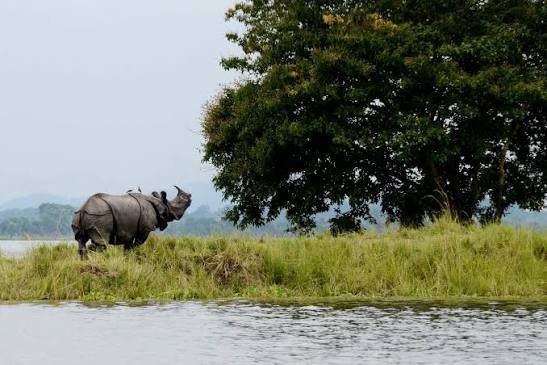
The Indian one-horned rhinoceros gives Dudhwa another unusual identity. Rhinos were reintroduced here in 1984 after disappearing from the region much earlier. Today, Dudhwa is the only reserve in northern India with a reintroduced population of the species.
Seeing a rhino is not automatic because their movement is restricted to suitable habitat and visitor routes may vary. Travellers should therefore treat both rhino and tiger sightings as possibilities rather than promises.
Birdwatching at Dudhwa
Dudhwa is also one of Uttar Pradesh’s major birding destinations. Official tourism information records more than 450 resident and migratory bird species in the wider reserve.
Winter is particularly rewarding because lakes, marshes and other water bodies attract migratory birds. Species associated with the landscape include Bengal florican, hornbills, red junglefowl, peafowl, fishing eagles, serpent eagles, ospreys, paradise flycatchers, woodpeckers and Indian pittas.
For serious birdwatchers, a trip that combines Dudhwa with Kishanpur or Katarniaghat can be more rewarding than concentrating only on large mammals.
Dudhwa National Park and Dudhwa Tiger Reserve: What Is the Difference?
Dudhwa National Park is the protected national-park unit in Lakhimpur Kheri. The wider Dudhwa Tiger Reserve landscape includes Dudhwa National Park together with Kishanpur Wildlife Sanctuary and Katarniaghat Wildlife Sanctuary.
This is useful to know when booking because safari departure points, accommodation and wildlife experiences differ. Kishanpur is particularly noted for grassland wildlife and tigers, while Katarniaghat adds extensive riverine habitat and opportunities associated with gharial, aquatic wildlife and birding.
How to Reach Dudhwa National Park
Dudhwa lies in the Terai region of Uttar Pradesh close to Palia Kalan and the India-Nepal border.
By Road
The official UP Eco Tourism route places Dudhwa at about 228 km from Lucknow and around 427 km from New Delhi. The final approach generally passes through Lakhimpur Kheri, Mailani and Palia. Road travel is usually the most convenient option for visitors carrying luggage or planning more than one safari.
By Train
Dudhwa railway station is only a few kilometres from the park area, while Palia and Mailani are other nearby rail points. Train services and connections can change, so visitors should verify the current timetable before building a trip around a particular train.
By Air
Lucknow’s Chaudhary Charan Singh International Airport is the main airport used for Dudhwa. From Lucknow, travellers can continue by taxi, private vehicle or suitable public transport.
Best Time to Visit Dudhwa National Park
November to February is the most comfortable period for most travellers. Mornings can be cold, but daytime conditions are pleasant and winter is particularly good for birdwatching because of migratory species.
March to May becomes progressively hotter, yet these months can still be rewarding for wildlife enthusiasts. As water sources shrink and grass dries in places, animal movement may become easier to observe, although midday heat can be demanding.
The monsoon closure protects the forest during the wet season when roads can become unsuitable for tourism. The official tourism page normally lists 15 November to 15 June as the visitor season, but visitors should always confirm the current year’s opening notification.
How Much Time Is Needed?
A rushed day trip does not show Dudhwa at its best. Visitors who are serious about wildlife should ideally stay for at least one or two nights and plan more than one safari shift.
Two or three drives increase the chance of experiencing different parts of the forest and seeing wildlife under different light and activity conditions. Travellers combining Dudhwa with Kishanpur or Katarniaghat should allow additional days because the protected areas are separate and road travel takes time.
FAQs
Q. Is a tiger sighting guaranteed in Dudhwa National Park?
No. Dudhwa supports a significant tiger population, but dense Terai vegetation and natural animal movement mean that no individual wildlife sighting can be guaranteed.
Q. Is Dudhwa worth visiting if I do not see a tiger?
Yes. The park’s value goes well beyond tiger sightings. Barasingha, one-horned rhinoceros, wetlands, sal forest, elephants and exceptional birdlife make the landscape rewarding even without a big-cat encounter.
Q. Should I book more than one safari?
For wildlife-focused visitors, two or more safari shifts are preferable. Different routes, weather and animal movement can make each drive very different.
Q. Can a private car be taken inside the safari forest?
Ordinary private sightseeing vehicles cannot simply drive through protected safari routes. Entry is regulated and visitors must use the authorised safari system with a guide and valid permit.
Q. Is Dudhwa good for birdwatching?
Yes. Winter is especially productive because the reserve’s wetlands attract migratory birds in addition to its large resident bird population.
Q. Do Dudhwa, Kishanpur and Katarniaghat use the same safari booking?
They belong to the wider Dudhwa landscape, but they are separate tourism locations with their own departure points and booking options. Visitors should select the correct location when reserving a safari.
Q. Is Dudhwa suitable for a one-day visit from Lucknow?
It is technically possible to reach the region by road, but the distance makes a same-day wildlife trip tiring and leaves little flexibility around safari timings. An overnight stay is much more practical.