Guindy National Park is one of Chennai’s most unusual green spaces: a legally protected national park surrounded by a major Indian city. Located beside Raj Bhavan in South Chennai, the park preserves a rare remnant of Southern Tropical Dry Evergreen Forest along with grassland and scrub habitats. Guindy was declared a reserved forest in 1920, and 270.57 hectares of the Guindy Park Reserved Forest were notified as a national park in 1978.
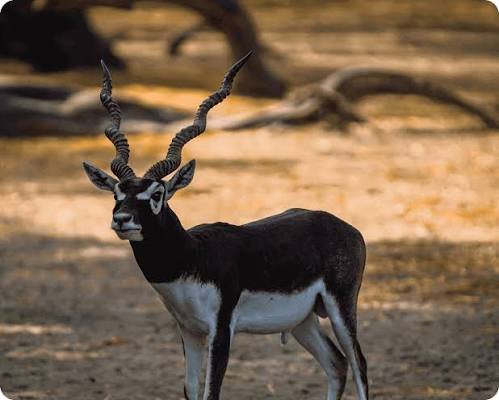
Despite its compact size of about 2.70 sq km, the park supports considerable biodiversity. Tamil Nadu’s Chennai Wildlife Division records around 350 plant species, most of them indigenous, while state policy documents note wildlife such as blackbuck, spotted deer, jackals and langurs along with more than 130 bird species. The mix of open grassland and woodland is particularly important for blackbuck and spotted deer in the middle of Chennai’s dense urban landscape.
Visitors should understand an important distinction before planning a trip. The protected core of Guindy National Park is not operated like a conventional walk-in zoo. Regular family sightseeing is centred on Guindy Children’s Park, a recognised zoo and Nature Education Centre on the north-eastern side of the national park. The adjacent Chennai Snake Park is a separate attraction with its own entrance, timings and ticket.
| Particulars | Details |
| Destination | Guindy National Park |
| Where it is located | Guindy, South Chennai, beside Raj Bhavan and near IIT Madras |
| National Park area | 270.57 hectares (about 2.70 sq km) |
| Year notified as National Park | 1978 |
| Main public visitor facility | Guindy Children’s Park / Nature Education Centre |
| Children’s Park timings | 9:30 AM to 5:30 PM |
| Weekly closing day | Tuesday |
| Children’s Park adult ticket | ₹60 |
| Child ticket, age 5-12 | ₹10 |
| Children below 5 | Free |
| Chennai Snake Park ticket | ₹30 adult; ₹10 child age 3-12 |
| Recommended visit duration | 2-4 hours for Children’s Park and Snake Park |
| Best time to visit | November to February for comfortable outdoor weather |
Guindy National Park Timings
For most tourists, the practical visiting hours are those of Guindy Children’s Park, which the Chennai Wildlife Division lists as 9:30 AM to 5:30 PM. The facility remains closed every Tuesday. These are the current official hours for the main public-facing wildlife attraction associated with Guindy National Park.
The protected national park itself should not be treated as an unrestricted public walking ground. Access to sensitive forest areas is controlled by the Forest Department, while routine visitors use the Children’s Park and designated conservation-education facilities. This distinction explains why older travel guides sometimes show conflicting ‘Guindy National Park’ timings.
The adjacent Chennai Snake Park opens from 9:00 AM to 5:30 PM and is also closed on Tuesday. Travellers planning to see both attractions should arrive before mid-afternoon rather than close to the ticket counters’ final operating period.
Guindy National Park Ticket Cost
There is no single all-inclusive ticket covering the protected National Park, Children’s Park and Chennai Snake Park. The regular entry fee most visitors see online for ‘Guindy National Park’ is actually the current tariff for Guindy Children’s Park.
Guindy Children’s Park Entry Fee
| Category | Entry Fee |
| Adults | ₹60 |
| Children, 5-12 years | ₹10 |
| Children below 5 years | Free |
The official park also offers an Augmented Reality show at ₹50 for adults and ₹15 for children aged 1-14. A video-camera charge of ₹200 is listed separately.
Chennai Snake Park Entry Fee
| Category / Activity | Current Fee |
| Adult entry | ₹30 |
| Child entry, 3-12 years | ₹10 |
| AR show | ₹30 per person |
| VR show | ₹100 per person |
| Still camera | ₹40 |
| Mobile camera | ₹20 |
| Video camera | ₹100 |
The Snake Park is managed separately by the Chennai Snake Park Trust, so its ticket is not included with entry to Guindy Children’s Park.
Guindy Children’s Park
Guindy Children’s Park occupies about 22 acres and functions as a Nature Education Centre. It was inaugurated on August 14, 1959 by Prime Minister Jawaharlal Nehru and today operates as a recognised zoo under the Central Zoo Authority framework.
The Chennai Wildlife Division states that the park houses around 50 animal species: 10 mammal species, 30 bird species and 10 reptile species. The animals are displayed in naturalistic enclosures designed to help visitors understand their behaviour, habitats and conservation value.
This is the section best suited to families with young children. It combines wildlife displays with shaded greenery and conservation education, and it is much easier to explore than the restricted natural forest core of the National Park.
Wildlife and Vegetation
Guindy National Park protects one of the few surviving patches of Southern Tropical Dry Evergreen Forest within a large city. Its vegetation forms a mosaic of woodland, scrub and grassland rather than the dense evergreen appearance many visitors expect from the word ‘forest’. During dry months the landscape can look brown and sparse, while monsoon rain transforms it into a much greener environment.
Blackbuck and spotted deer are among the park’s best-known mammals, particularly because both are adapted to open grassland. Jackals, langurs and palm civets are also associated with the Guindy landscape. The official wildlife division records about 350 plant species, and Tamil Nadu’s policy documentation notes more than 130 bird species.
Large banyan trees occur in the woodland, while fruit-bearing trees and shrubs provide food and shelter for birds. This combination of different habitats is one reason the national park remains ecologically important despite its small size.
Chennai Snake Park
Chennai Snake Park stands next to the Guindy National Park complex on Sardar Patel Road and is a worthwhile companion visit, particularly for travellers interested in reptiles. The Chennai Snake Park Trust was constituted in 1972 and operates the attraction as a not-for-profit conservation and education facility.
Its current displays include Indian snakes, crocodilians, turtles and tortoises, lizards and several exotic reptiles. The park’s official information lists 20 species of Indian snakes and all three species of Indian crocodilians among a total display collection of around 36 reptile species.
The reptile enclosures are complemented by educational displays and models explaining subjects such as snake identification, behaviour and conservation. Because it has a separate ticket and gate, visitors should budget additional time rather than assuming it forms part of the Children’s Park admission.
How to Reach Guindy National Park
Guindy National Park is located in South Chennai beside Raj Bhavan and close to IIT Madras, Anna University, Gandhi Mandapam and the Cancer Institute. The public-facing Children’s Park address is Wildlife Warden, Guindy Children’s Park, Raj Bhavan Post, Chennai – 600 022.
By Metro
Guindy is served by Chennai Metro’s Blue Line. Chennai Metro’s official station information identifies Guindy National Park, Anna University, Gandhi Mandapam and Snake Park among the nearby landmarks connected from Guindy station. From the station, visitors can continue by bus, autorickshaw or taxi.
By Suburban Train or MRTS
Guindy suburban railway station provides another useful approach from several parts of Chennai. Kasturba Nagar and nearby MRTS stations can also be convenient depending on the visitor’s starting point, particularly for the Sardar Patel Road side.
By Road
Sardar Patel Road is the key road corridor for reaching the Children’s Park and Snake Park area. Taxis, autorickshaws and MTC buses are widely available. The site is also relatively close to Chennai International Airport compared with most city attractions, making it possible to include in a half-day Chennai itinerary.
Best Time to Visit Guindy National Park
November to February is the most comfortable period for a family visit because Chennai’s weather is relatively cooler and walking through outdoor enclosures is easier. Morning hours are especially pleasant during winter.
The park can be visited during most of the year, but March to June is typically hotter and more humid. After the monsoon, the natural vegetation becomes greener, making the broader Guindy landscape more attractive. Regardless of season, Tuesday should be avoided because both the Children’s Park and Chennai Snake Park are closed.
How Much Time Is Needed?
Around two hours is sufficient for a relaxed visit to Guindy Children’s Park alone. Families who stop at the educational displays and children’s areas may spend longer.
Allow roughly three to four hours if you plan to visit both the Children’s Park and Chennai Snake Park without rushing. Guindy is therefore better treated as a compact half-day urban wildlife outing rather than an all-day safari destination.
Contact Details
Wildlife Warden, Guindy Children’s Park, Raj Bhavan Post, Chennai – 600 022. Phone: 044-29505150 / 044-22200335. The Chennai Wildlife Division’s public email is wlwchennai@yahoo.co.in.
FAQs
Q. Can ordinary visitors freely enter the forest core of Guindy National Park?
No. The protected forest is not an unrestricted recreation ground. Routine public sightseeing is centred on Guindy Children's Park and other designated facilities, while access to sensitive areas is controlled by the Forest Department.
Q. Is Guindy National Park a safari park?
No. Guindy does not operate the kind of jeep or bus wildlife safari found at parks such as Bannerghatta or Kaziranga. Its main public experience is the Children's Park, while the National Park itself is an urban conservation area.
Q. Is the Chennai Snake Park inside the same ticketed area?
No. It is adjacent to the Guindy complex but is managed separately by the Chennai Snake Park Trust. Visitors need a separate ticket.
Q. Can visitors expect to see wild blackbuck inside the Children's Park?
Blackbuck are strongly associated with the wider Guindy landscape, but the Children's Park is a managed zoo and education facility. A visit there should not be treated as a guaranteed wildlife sighting tour of the National Park's free-ranging animals.
Q. Why is Guindy National Park important despite being so small?
Its importance comes from conserving a rare urban remnant of Southern Tropical Dry Evergreen Forest, grassland and scrub habitat in the middle of Chennai. It provides habitat for native plants, blackbuck, deer, jackals and numerous bird species while also functioning as a major green lung.
Q. Is Guindy suitable for very young children?
Yes. The Children's Park is specifically designed for family and nature-education visits, with compact walking distances and animal exhibits. Families can add the Snake Park if the child is comfortable with reptile displays.
Q. Can Guindy National Park and IIT Madras wildlife areas be visited as one park?
No. Although IIT Madras occupies land historically connected to the old Guindy forest landscape, it is a separate institutional campus with its own access rules. Visitors should not treat it as an extension of the public National Park visitor area.
Q. Is Guindy worth visiting for serious wildlife tourism?
It is valuable for urban ecology, conservation education and a short wildlife-oriented outing, but travellers seeking wilderness safaris or large-mammal tracking should choose a larger protected area. Guindy's special appeal is that this biodiversity survives inside Chennai itself.