Madhav National Park is one of Madhya Pradesh’s most distinctive wildlife destinations because it combines forest, grassland, lakes and royal-era architecture within easy reach of Shivpuri town. The National Park was established in 1958 and today covers about 354.61 sq km. Its landscape lies in the Upper Vindhyan hills and includes dry deciduous forest, open meadows and important wetlands such as Sakhya Sagar and Madhav Sagar.
The conservation importance of the area increased significantly in 2025 when Madhav became India’s 58th tiger reserve and the ninth tiger reserve in Madhya Pradesh. The notified Madhav Tiger Reserve is much larger than the National Park itself, with a core area of 375.233 sq km and a buffer of 1,276.154 sq km, taking the total tiger-reserve landscape to about 1,651.387 sq km. Tigers have been re-established in the landscape, while leopards, nilgai, chital, sambar, chinkara, chausingha, sloth bear, jackal and numerous birds are also found here.
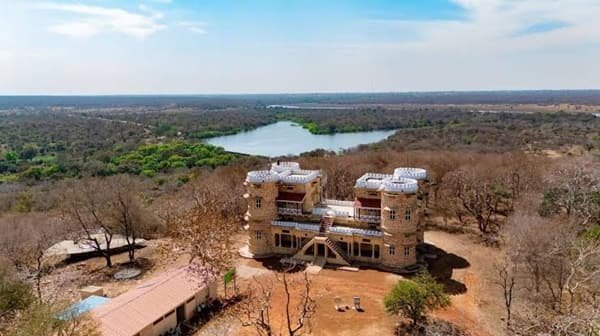
For visitors, Madhav offers more than a conventional wildlife drive. Sakhya Sagar is a Ramsar wetland of international importance, George Castle stands on a high point inside the park, and the lakes attract migratory waterfowl in winter. The park is officially open through the year from sunrise to sunset, although the best season depends on whether the visitor’s priority is wildlife, birdwatching, greenery or waterfalls.
| Particulars | Details |
| Destination | Madhav National Park / Madhav Tiger Reserve |
| Where it is located | Near Shivpuri town, Madhya Pradesh |
| National Park area | About 354.61 sq km |
| Tiger Reserve status | India’s 58th tiger reserve; notified in 2025 |
| Tiger Reserve area | 1,651.387 sq km including core and buffer |
| Opening hours | Sunrise to sunset; timings vary seasonally |
| Weekly closure | No fixed weekly closure stated for the park |
| Jeep/Car/Gypsy vehicle rate | ₹750 as currently displayed by the reserve |
| Mini-bus rate | ₹150 as currently displayed by the reserve |
| Guide fee | ₹360 |
| Online permit | Booked separately through MP Online; vehicle and guide charges extra |
| Best time to visit | October to March for pleasant weather and birding |
| Recommended duration | Half day to 1 full day; 1 night for a relaxed trip |
| Nearest airport | Gwalior Airport, about 125 km away |
| Nearest railway station | Shivpuri Railway Station |
Madhav National Park Timings
Madhav National Park is officially open from sunrise to sunset. Unlike parks that follow one fixed clock schedule throughout the year, entry and exit times can shift with the season because daylight changes between winter and summer.
Visitors planning a safari should follow the reporting time shown on the confirmed permit. Morning visits are generally better for cooler temperatures and wildlife activity, while late-afternoon drives can be rewarding around water sources. During summer, the park becomes hotter but wildlife sightings may improve as animals concentrate near dependable water.
The park is unusual in Madhya Pradesh because it remains open through the year. October to March is considered the most comfortable period, while monsoon visits offer greener scenery and seasonal waterfalls at places such as Bhura Kho and Tunda Barkha.
Madhav National Park Ticket Cost
The Madhav Tiger Reserve booking system separates the online forest permit from vehicle and guide charges. MP Online currently states that the vehicle and mandatory guide fees are not included in the online permit and must be paid separately at the park.
The official Madhav Tiger Reserve excursion page currently displays the following local excursion charges:
| Tourism Component | Current Displayed Rate |
| Jeep / Car / Gypsy (LMV) | ₹750 |
| Mini Bus | ₹150 |
| Guide Fee | ₹360 |
The reserve’s public tariff table does not spell out every booking component in the same place, and the MP Online permit fee is calculated separately. For the 2026-27 season, MP Online is also carrying a notice that a further rate increase has been proposed and that any approved difference may have to be paid at the park counter. Visitors should therefore treat the final amount displayed on the official booking portal as the controlling price.
A guide is compulsory for vehicle excursions. MP Online also notes that if a registered safari vehicle is unavailable at Madhav Tiger Reserve, park management may permit a private vehicle at the applicable standard rate, subject to its rules and approval.
Safari Experience at Madhav
Madhav is different from Bandhavgarh or Kanha because the landscape is more compact and combines wildlife viewing with wetlands and heritage points. A safari passes through dry deciduous forest, open grassland and lake-edge habitat, creating good opportunities to see both mammals and birds.
The park’s herbivores include chital, sambar, nilgai, chinkara and chausingha. Leopards, sloth bears, jackals, wild boar and other carnivores or omnivores are also present. Tigers have returned to the landscape, but visitors should not expect the same tiger-sighting frequency associated with some of Madhya Pradesh’s older tiger reserves.
The value of a Madhav safari lies in the combination of habitats. A drive can shift from dry forest to open meadow and then to a lake where mugger crocodiles and waterbirds become the main attraction.
Sakhya Sagar and Madhav Sagar
The two lakes are central to the identity of Madhav National Park. Sakhya Sagar, created in the early twentieth century, is surrounded by the park and supports marsh crocodiles, reptiles, fish and large numbers of waterbirds.
Sakhya Sagar was designated a Ramsar Site in 2022 and covers about 248 hectares under the Ramsar listing. In winter, geese, pintails, teals, mallards, pochards and other migratory species add considerably to the park’s birdwatching value.
Madhav Sagar is another important water body within the landscape. Together, the lakes provide year-round water for wildlife and create a sharp visual contrast with the surrounding dry forest.
George Castle
George Castle is one of the park’s most unusual attractions. It stands at roughly 484 metres above sea level and was built in 1911 by the Scindia ruler of Gwalior for a proposed overnight halt by King George V during a hunting visit.
The planned stay never happened, but the structure remains an important heritage landmark. From the higher ground around the castle, visitors can see forest, lakes and the Kardhai-dominated landscape. It gives Madhav a historical character that most Indian national parks do not have.
Wildlife and Birdlife
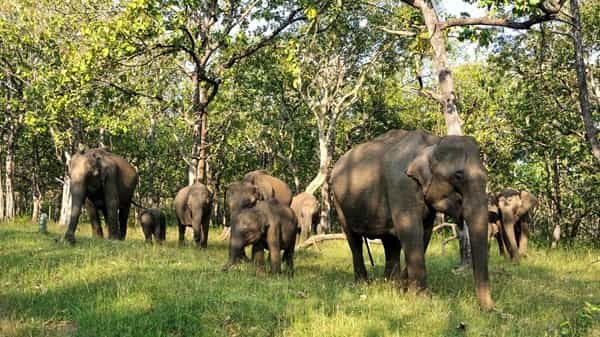
Madhav supports a diverse mixture of mammals because of its grassland, woodland and wetland habitats. Nilgai, chital and chinkara are among the more familiar species, while sambar, chausingha, wild boar, jackal and sloth bear add to the variety.
Leopards have long been part of the landscape, and the recent restoration of tigers has made Madhav an increasingly important conservation area. MP Tourism currently notes that five tigers are present in the park landscape.
Birdwatching is particularly rewarding from late autumn through winter. The lakes attract migratory waterfowl, while the surrounding forest supports woodland and open-country species. Painted storks, herons, sunbirds, geese, teals and other birds may be encountered depending on season and habitat.
How to Reach Madhav National Park
Madhav National Park lies very close to Shivpuri town, making it easier to access than many remote tiger reserves.
By Air
Gwalior Airport is the nearest major airport, approximately 125 km from Shivpuri. The road journey generally takes a few hours depending on traffic and route conditions.
By Train
Shivpuri has its own railway station and is connected with a number of regional and long-distance routes. Travellers can also use larger railway hubs such as Gwalior or Jhansi and continue by road.
By Road
Shivpuri is about 100 km from Jhansi and around 300 km from Bhopal. The National Park has access points close to the town, including approaches from the old Jhansi road and the Agra-Mumbai road corridor.
Best Time to Visit Madhav National Park
October to March is the best all-round season. Temperatures are more comfortable, migratory birds arrive at the lakes and longer outdoor visits are easier.
April to June becomes hot, but the dry season can improve wildlife visibility because animals depend more heavily on remaining water sources. Visitors interested primarily in mammals may therefore find summer rewarding despite the heat.
The monsoon transforms the landscape and activates seasonal waterfalls such as Bhura Kho and Tunda Barkha. This period is better suited to scenery and greenery than to a classic dry-season wildlife experience.
How Much Time Is Needed?
A half-day is enough for a basic safari and a few major viewpoints, but a full day provides a better experience if visitors want to combine wildlife, Sakhya Sagar and George Castle.
Staying one night in Shivpuri is useful for travellers who want an early-morning excursion without driving from Gwalior or Jhansi before dawn. Shivpuri also has additional attractions such as the Royal Chhatris and historic sites that can be combined with the park.
FAQs
Q. Is Madhav National Park now a tiger reserve?
Yes. Madhav was notified as India’s 58th tiger reserve in 2025. The tiger reserve is much larger than the National Park because it includes adjoining core and buffer forests around the protected area.
Q. Is a tiger sighting likely at Madhav?
Tigers are now present, but Madhav should not be approached as a guaranteed tiger-sighting destination. Its appeal is broader, combining mammals, lakes, crocodiles, birdlife and heritage landmarks.
Q. Can tourists use their own vehicle inside the park?
Safari entry is controlled by the Forest Department. The 2026-27 MP Online rules state that a private vehicle may be permitted only in specified circumstances, such as when a registered vehicle is unavailable, and this remains subject to park approval and the applicable charge.
Q. Why is Sakhya Sagar important?
Sakhya Sagar is not simply a scenic lake. It is a Ramsar wetland of international importance and provides habitat for migratory waterbirds, marsh crocodiles and other aquatic wildlife.
Q. Is Madhav worth visiting for birdwatchers?
Yes. Winter is especially rewarding because migratory waterfowl use the lakes. The combination of wetlands, grassland and woodland also supports a wider range of resident species.
Q. What makes George Castle unusual?
George Castle is a royal-era structure inside the forest, built in 1911 for a planned visit by King George V. Its elevated location provides views over the lakes and surrounding forest.
Q. Is Madhav National Park open during the monsoon?
The official Forest Department profile states that Madhav is open throughout the year. Monsoon conditions can still affect individual routes or activities, so visitors should check local operating conditions before travel.
Q. Is one day enough for Madhav National Park?
Yes. A full day is enough for most first-time visitors to combine a wildlife excursion with the lakes and heritage points. An overnight stay in Shivpuri makes an early safari more convenient.