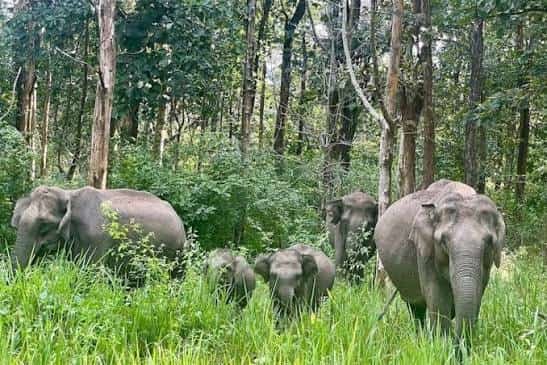
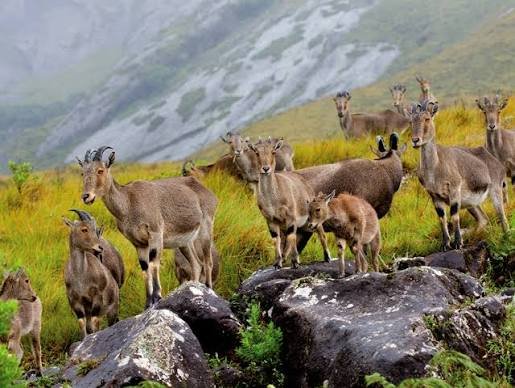
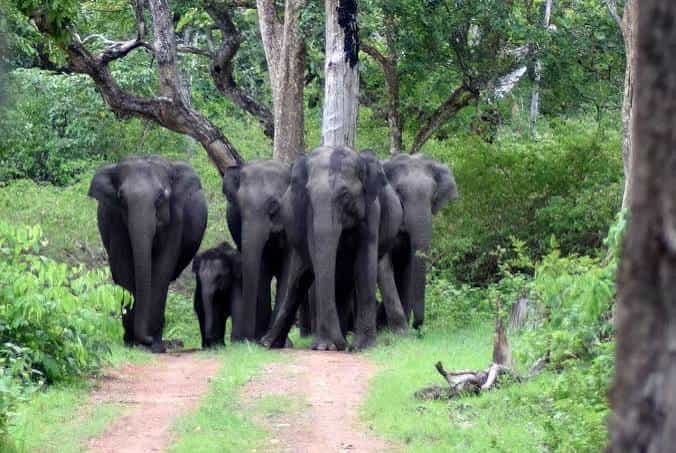
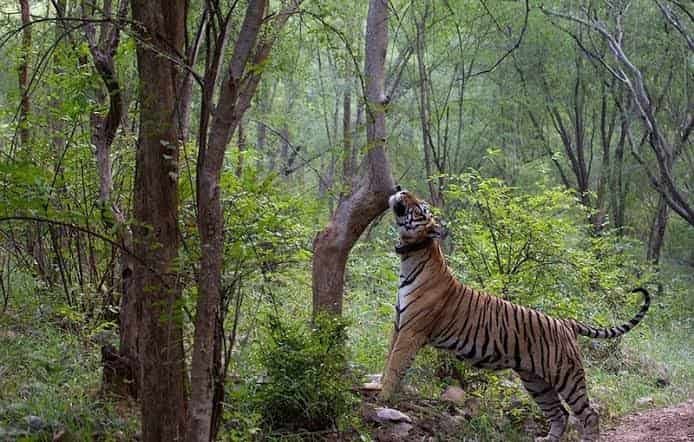
Sariska National Park is one of Rajasthan’s best-known wildlife landscapes and an important tiger destination within easy reach of Jaipur and Delhi. Located in Alwar district in the Aravalli hills, the reserve combines dry deciduous forest, rocky ridges, grasslands, valleys and seasonal water bodies. Tigers are the headline attraction, but leopards, sambar, chital, nilgai, striped hyenas, jackals and a wide variety of birds make Sariska worthwhile even when a tiger remains out of sight.
The protected landscape has several overlapping designations. Rajasthan Forest Department’s current protected-area table lists Sariska National Park at about 400.15 sq km, while the National Tiger Conservation Authority lists Sariska Tiger Reserve at 1,213.34 sq km, including 881.11 sq km of core habitat and 332.23 sq km of buffer. Sariska became a wildlife sanctuary in 1955, joined Project Tiger in 1978-79 and later received National Park status.
Sariska also has an unusual conservation history. Tigers disappeared from the reserve in the early 2000s, after which animals were translocated from Ranthambore. The programme succeeded in re-establishing a breeding tiger population, making Sariska one of the world’s best-known examples of tiger reintroduction into a former range.
| Particulars | Details |
| Destination | Sariska National Park / Sariska Tiger Reserve |
| Where it is located | Alwar district, Rajasthan |
| National Park area | About 400.15 sq km in the current Rajasthan Forest Department protected-area table |
| Tiger Reserve area | 1,213.34 sq km including core and buffer |
| Core area | 881.11 sq km |
| Main safari gates | Sariska Gate and Tehla Gate |
| Safari zones | Core tourism zones allocated through the Rajasthan Forest Department booking system |
| Safari season | October to June for regular core tourism |
| Monsoon core closure | 1 July to 30 September |
| Weekly closure | Wednesday for regular forest safari tourism |
| Safari shifts | Morning and afternoon; exact timings vary by season |
| Gypsy capacity | Up to 6 visitors |
| Canter capacity | Up to 20 visitors |
| Best known for | Tigers, leopards, Aravalli forest, Kankwari Fort and Pandupol |
| Recommended stay | 1 night with 1-2 safaris |
| Best season | November to February; March-May for hotter wildlife viewing |
Sariska National Park Safari Timings
Sariska operates morning and afternoon wildlife safaris, and the timings change through the year according to daylight. The exact reporting and departure time printed on the Rajasthan Forest Department permit should always be treated as final.
Commonly published seasonal timings are approximately 6:30 AM to 10:00 AM and 2:30 PM to 6:00 PM in October; 7:00 AM to 10:30 AM and 2:00 PM to 5:30 PM during the coldest winter months; 6:30 AM to 10:00 AM and 2:30 PM to 6:00 PM in February and March; and roughly 6:00 AM to 9:30 or 10:00 AM with afternoon safaris extending later during April to June.
Rajasthan Tourism currently states that entry to the forest is closed on Wednesdays. Regular core safari tourism also closes during the monsoon, and in 2026 the core zones were closed from July 1 through September 30 for the breeding season, wet forest tracks and visitor safety.
| Period | Indicative Safari Timing |
| October | Around 6:30 AM-10:00 AM / 2:30 PM-6:00 PM |
| November-January | Around 7:00 AM-10:30 AM / 2:00 PM-5:30 PM |
| February-March | Around 6:30 AM-10:00 AM / 2:30 PM-6:00 PM |
| April-mid May | Around 6:00 AM-9:30 AM / 3:00 PM-6:30 PM |
| Mid May-June | Around 6:00 AM-9:30 AM / 3:30 PM-7:00 PM |
Sariska National Park Safari Cost
The Rajasthan Forest Department operates the official wildlife-permit system through its Aaranyak/FMDSS platform. Visitors can book a Gypsy for up to six people or a Canter for up to 20 people. The government portal calculates the actual permit amount according to visitor category, vehicle and current tariff.
The public booking interface does not consistently expose one permanent Sariska price before the visitor selects the booking details. For trip planning, current 2026-27 private booking services commonly quote about Rs 1,495 per Indian visitor for a shared Gypsy and about Rs 1,040 per Indian visitor for a shared Canter. A full Gypsy is commonly quoted around Rs 8,970 and a full Canter around Rs 20,800.
These package amounts should be treated as indicative rather than as a fixed government tariff because private booking services may include permit, boarding pass, driver, guide or service components. The final amount shown by the Rajasthan Forest Department system should be treated as the authoritative payable figure.
| Safari Option | Indicative 2026-27 Planning Figure |
| Shared Gypsy – Indian | Around Rs 1,495 per person |
| Full Gypsy – Indian | Around Rs 8,970 for up to 6 visitors |
| Shared Canter – Indian | Around Rs 1,040 per person |
| Full Canter – Indian | Around Rs 20,800 for up to 20 visitors |
| Official booking amount | Follow the live Rajasthan Forest Department permit system |
Sariska Gate and Tehla Gate
Sariska has two principal tourism gateways: Sariska Gate on the Alwar side and Tehla Gate on the eastern side of the reserve. The better choice depends on the zone allocated during booking and the location of the visitor’s accommodation.
Sariska Gate is the older and more established tourism entrance and is convenient for travellers coming from Alwar, Jaipur or Delhi. Tehla Gate provides access to other safari routes and can be useful for visitors staying on the eastern side of the reserve.
Because the gates are separated by road distance, travellers should not book accommodation first and assume any safari permit will work from the nearest gate. The gate and zone printed on the permit should determine where they stay.
Wildlife Safari Experience
Sariska’s dry Aravalli landscape is very different from the greener forests of central India. Dhok is the dominant tree across much of the reserve, while valleys support other dry-deciduous species, grasslands and water sources.
Tigers are the main attraction, but sightings are never guaranteed. Leopards, striped hyenas, jungle cats, jackals, sambar, chital, nilgai, wild boar and langurs are among the other mammals associated with the reserve.
Rajasthan Tourism also highlights the birdlife of Sariska, with more than 200 species recorded from the landscape. Crested serpent eagles, sandgrouse, quails, woodpeckers and many other dry-forest birds can add considerable interest to a safari.
Tiger Reintroduction at Sariska
Sariska is especially significant because its tiger population had disappeared by the middle of the 2000s. Instead of abandoning the landscape, conservation authorities began moving tigers from Ranthambore to Sariska.
The reintroduction programme eventually produced breeding animals and established a resident tiger population again. Rajasthan Tourism describes Sariska as the first tiger reserve in the world to have successfully relocated tigers in this way.
This history makes every tiger sighting at Sariska part of a larger conservation story. It also explains why individual tigers are closely monitored by reserve staff.
Kankwari Fort
Kankwari Fort adds a historical element to the Sariska experience. Located inside the reserve, the fort is associated with Mughal history and is traditionally linked with the imprisonment of Dara Shikoh by Aurangzeb during the seventeenth-century struggle for succession.
Rajasthan Tourism lists Kankwari among the important places that can be encountered on jeep-safari routes. Actual access can depend on the assigned tourism zone, route condition and current forest-management instructions.
Pandupol Hanuman Temple
Pandupol Hanuman Temple is another important site within the Sariska landscape. The temple is associated with traditions from the Mahabharata and attracts large numbers of pilgrims.
Religious traffic is managed separately from ordinary wildlife tourism. Forest planning documents have historically restricted pilgrim movement to specified days and routes because unregulated traffic can disturb wildlife. Visitors interested in Pandupol should therefore check the current pilgrimage-entry arrangements rather than assuming their safari permit automatically covers a temple visit.
How to Reach Sariska National Park
Sariska is one of the more accessible tiger reserves in northern India, particularly for travellers starting from Delhi, Jaipur or Alwar.
By Road
Rajasthan Tourism places Sariska about 200 km from Delhi and around 107 km from Jaipur. Alwar city is the nearest major urban base and lies roughly 35-40 km from the main Sariska side, depending on the exact entrance and route.
By Train
Alwar Junction is the most convenient railway station for Sariska and has connections with Delhi, Jaipur and other cities. Travellers can continue from Alwar by taxi or private vehicle to their booked gate.
By Air
Jaipur International Airport is the nearest major airport for most travellers. Delhi can also be practical for visitors arriving from cities with stronger flight connections and combining Sariska with a road trip.
Best Time to Visit Sariska National Park
November to February is the most comfortable period for most visitors. Morning drives can be cold, but daytime conditions are pleasant and the dry forest is easy to explore.
March to May becomes considerably hotter, yet wildlife enthusiasts often favour the dry months because animals may spend more time near water sources and vegetation becomes thinner. Temperatures can become extreme in late May and June.
Core safari tourism closes during the monsoon from July through September. Buffer or pilgrimage-related access may operate under separate rules, but visitors planning a wildlife safari should treat October as the regular reopening period.
How Much Time Is Needed?
A single safari provides only a brief introduction to Sariska. Wildlife-focused visitors should ideally stay for one night and take an afternoon safari followed by a morning drive.
Two safaris provide a better chance to experience different routes and wildlife activity. Travellers interested in adding Alwar, Siliserh Lake or other nearby attractions may prefer a two-night itinerary.
FAQs
Q. Is Sariska National Park the same as Sariska Tiger Reserve?
Not exactly. Sariska National Park is one protected-area component, while Sariska Tiger Reserve covers a much larger core-and-buffer landscape. In ordinary tourism, the names are often used interchangeably.
Q. Is Sariska closed every Wednesday?
Rajasthan Tourism currently states that regular forest entry is closed on Wednesdays, so visitors should not plan a normal safari for that day.
Q. Are tiger sightings guaranteed at Sariska?
No. Sariska has a resident tiger population, but sightings depend on animal movement, route, weather and chance.
Q. Which is better, Gypsy or Canter?
A Gypsy carries fewer visitors and usually provides a quieter, more flexible viewing experience. A Canter is more economical per person and can be useful when Gypsy seats are unavailable.
Q. Does Sariska close during the monsoon?
Regular core safari tourism closes from July 1 to September 30. Current booking availability should be checked for any buffer or special-route operations.
Q. Can visitors go to Pandupol Temple during a safari?
Temple access follows separate religious-tourism and forest-management rules. Visitors should check the current permitted days and route rather than assuming a safari booking includes unrestricted temple access.
Q. What is special about Sariska’s tiger population?
The reserve lost its tigers in the early 2000s and later rebuilt the population through a pioneering translocation programme using animals from Ranthambore.