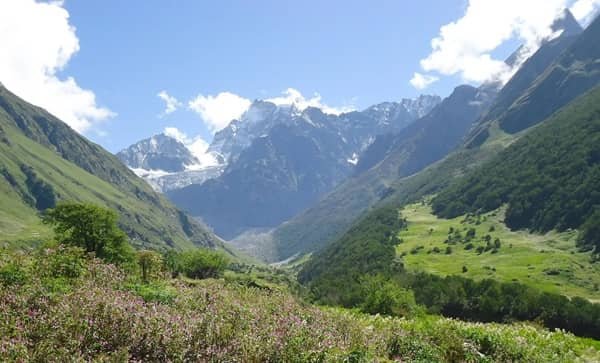
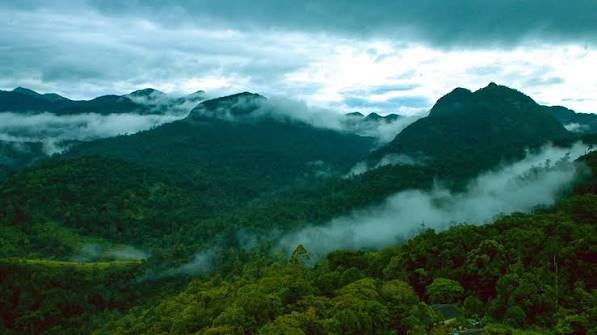
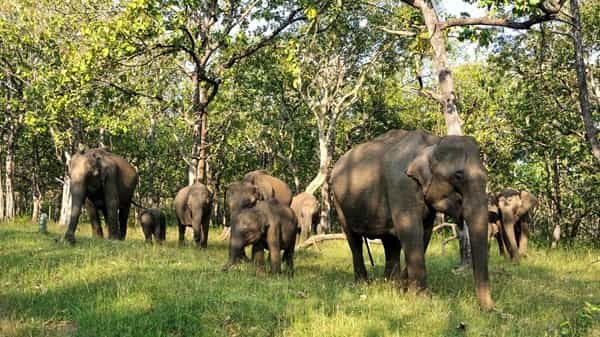
Namdapha National Park is one of India’s largest and most remote protected wilderness areas, lying in Changlang district of eastern Arunachal Pradesh close to the Myanmar border. Dense tropical rainforest, bamboo, river valleys, steep hills, temperate forest and high alpine vegetation occur within a single protected landscape, giving Namdapha an extraordinary range of habitats and wildlife.
The park was declared a National Park in 1983 and also became part of Project Tiger in the same period. Current Arunachal Pradesh government pages commonly describe the Namdapha protected landscape at about 1,985.24 sq km, while the National Tiger Conservation Authority lists the notified tiger reserve as 1,807.82 sq km of core habitat plus 245 sq km of buffer, or 2,052.82 sq km in total. The difference reflects the way the National Park and Tiger Reserve boundaries are recorded by different official authorities.
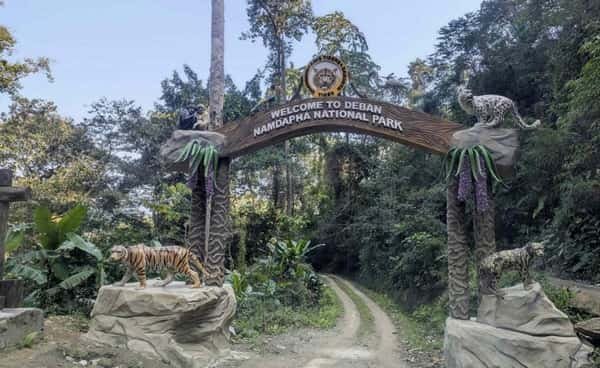
Namdapha is not a conventional drive-in safari destination. More than 60 percent of the reserve is remote, and tourism focuses on trekking, nature walks, birdwatching, wildlife photography, riverside camping and forest stays around Deban. This makes it better suited to travellers looking for a serious wilderness experience than visitors expecting a short tiger-safari drive.
| Particulars | Details |
| Destination | Namdapha National Park / Namdapha Tiger Reserve |
| Where it is located | Changlang district, Arunachal Pradesh, near the India-Myanmar border |
| National Park status | 1983 |
| State-listed protected area | About 1,985.24 sq km |
| NTCA Tiger Reserve area | 2,052.82 sq km including 1,807.82 sq km core and 245 sq km buffer |
| Main tourism gateway | Miao |
| Main forest base | Deban, about 26 km from Miao |
| Best season | October to April |
| Fixed daily safari shifts | Not applicable; Namdapha is mainly trek- and nature-based |
| Published Indian entry fee | ₹10 per person on current Changlang district page; subject to revision |
| Published foreign entry fee | ₹50 per person; subject to revision |
| Published vehicle entry | ₹100 per vehicle; subject to revision |
| Inner Line Permit | Required for Indian visitors entering Arunachal Pradesh |
| Best known for | Four big cats, hoolock gibbon, rainforest, birding and wilderness trekking |
| Recommended visit | At least 2-3 nights for a meaningful experience |
Namdapha National Park Timings
Namdapha does not operate with fixed morning and afternoon safari shifts like Corbett, Pench or Bandipur. The official Arunachal Pradesh forest ecotourism information describes trekking, riverside camping, birding, wildlife photography and nature walks as the principal visitor activities.
The Changlang district administration recommends October to April as the best season. Travel becomes much more difficult during the monsoon because the region receives heavy rainfall and forest roads, streams and trekking routes can become challenging or temporarily inaccessible.
Visitors should arrange park entry, guides, accommodation and trekking plans through the Namdapha Tiger Reserve administration at Miao. For actual day-to-day entry hours, the instruction given by the range office or forest guide should be followed because the official public pages do not publish one universal opening-and-closing timetable for all routes.
Namdapha National Park Entry Fees
The current Changlang district government page still publishes a basic Project Tiger entry tariff. It lists ₹10 per Indian tourist, ₹50 per foreign visitor and ₹100 for a vehicle. Children and students are charged half the applicable visitor rate.
The same official page clearly states that these rates are subject to revision from time to time. Travellers should therefore treat them as the latest publicly displayed government tariff, not as a guaranteed 2026 counter price. The Namdapha Tiger Reserve office at Miao should be contacted for confirmation before arrival.
Camera Charges
The current district tariff lists ₹75 for an ordinary camera, ₹400 for a still camera with telephoto or zoom lens and ₹750 for a video movie camera per trip. These published charges are also marked as subject to revision.
Professional filming, research photography or specialised expeditions may require additional permission beyond an ordinary visitor entry permit.
Inner Line Permit for Arunachal Pradesh
Indian visitors from outside Arunachal Pradesh need an Inner Line Permit to enter the state. The official Arunachal Pradesh eILP portal currently charges ₹300 for a tourist eILP valid for up to three days and ₹500 for a stay of more than three days and up to 14 days.
Foreign nationals do not use the tourist eILP system. They must follow the applicable Protected Area Permit or Restricted Area Permit procedure. Travellers should complete the state-entry formalities before setting out for Miao and Namdapha.
Deban: Main Base for Visitors
Deban is the principal forest base for exploring Namdapha. It lies about 26 km beyond Miao and is reached by a forest road that crosses streams and passes through dense vegetation before arriving near the Noa-Dihing River.
The Changlang district administration lists a Forest Rest House, tourist huts and dormitory accommodation at Deban. However, the room tariffs shown on that page are old legacy rates and are explicitly marked as subject to revision, so accommodation should be confirmed directly before travel.
For most visitors, Deban is the place where the scale of Namdapha becomes clear. Beyond it, the experience shifts from road access to trails, river crossings, forest camps and guided exploration.
Trekking and Nature Experience
Namdapha is one of the strongest national parks in India for travellers who enjoy trekking rather than conventional vehicle safaris. Forest routes pass through tropical evergreen vegetation, bamboo, riverbanks and increasingly rugged terrain.
Official forest ecotourism information specifically lists trekking, riverside camping, birding, wildlife photography and nature walks among the main activities. Nature guides and basic trekking-route facilities are available through the protected-area administration.
Because many sections are remote and mobile connectivity can be unreliable, visitors should not attempt independent deep-forest trekking without local permission and an authorised guide.
Wildlife in Namdapha National Park
Namdapha is famous for its extraordinary altitudinal range and the variety of mammals it can support. Official government information identifies tiger, leopard, clouded leopard and snow leopard within the wider reserve landscape, making Namdapha exceptional among Indian protected areas.
Other important mammals include hoolock gibbon, elephant, gaur, Asiatic black bear, red panda, takin and several smaller forest species. Many of these animals are difficult to see because the forest is dense and the protected area is enormous.
A Namdapha trip should therefore be approached as a biodiversity and wilderness experience rather than as a destination where large mammals are guaranteed on every outing.
Four Big Cats of Namdapha
One of Namdapha’s most unusual claims to fame is the occurrence of four large cat species across its wide altitudinal gradient: tiger, common leopard, clouded leopard and snow leopard.
These cats occupy very different habitats. Tigers and clouded leopards are associated more with lower and middle forest zones, while snow leopard habitat occurs in the remote high-elevation areas. Ordinary tourists should not interpret this species list as a realistic expectation of seeing all four.
Birdwatching at Namdapha
Namdapha is a major birding destination because its forests lie at the meeting point of the Indian subcontinent and Indo-Chinese biogeographic regions. Tropical lowland birds, hill species and high-elevation birds occur across the wider reserve.
White-winged wood duck is among the rare birds associated with the region, while hornbills, pheasants, barbets, broadbills, laughingthrushes and many other forest species attract serious birdwatchers.
The dense vegetation often makes identification by call as important as visual sightings, so travelling with an experienced local bird guide can greatly improve the experience.
How to Reach Namdapha National Park
Miao is the main gateway to Namdapha and the administrative base for arranging forest entry. Deban lies another 26 km inside from Miao.
By Air
Dibrugarh Airport in Assam is the most practical airport. The Changlang district administration places Dibrugarh about 160 km from Miao, while Arunachal forest ecotourism information gives an approximate distance of 200 km depending on the route and destination point used.
From the airport, travellers continue by road through Tinsukia, Margherita, Jagun and Kharsang towards Miao.
By Train
Tinsukia is the main railway gateway highlighted by the Changlang district administration. From Tinsukia, travellers continue by road towards Miao. Long-distance passengers may also use New Tinsukia depending on their train.
By Road
Government transport buses operate from the Assam side towards Miao, but a private or hired vehicle is considerably more convenient for a wildlife trip. The road from Miao to Deban is about 26 km and can take around an hour because of forest conditions, streams and narrow sections.
The district administration specifically advises having suitable transport because taxis for the Miao-Deban section can be expensive.
Best Time to Visit Namdapha National Park
October to April is the best period for most travellers. Rainfall is lower than during the monsoon and trekking conditions are generally more manageable.
November to February is especially pleasant for walking and birding, although nights can become cool. March and April are warmer and remain suitable before the heavy rains begin.
The monsoon can be intense in eastern Arunachal Pradesh. River levels rise, tracks become muddy and remote routes may become unsafe, so casual tourism is far less practical at that time.
How Much Time Is Needed?
Namdapha is not well suited to a rushed half-day visit. Travellers who only reach Deban can get an introduction to the rainforest and river landscape, but the park’s real character becomes clearer on guided walks and longer stays.
At least two or three nights is a sensible minimum for a first visit. Birdwatchers, trekkers and photographers may prefer four to six days if they plan to explore deeper routes or spend meaningful time in the forest.
Quick Fee Table
| Item | Published Government Rate |
| Indian tourist | ₹10 per person |
| Foreign tourist | ₹50 per person |
| Children/students | Half the applicable visitor rate |
| Vehicle | ₹100 |
| Ordinary camera | ₹75 |
| Still camera with tele/zoom lens | ₹400 |
| Video movie camera | ₹750 |
| Important note | All above rates are stated by the district administration as subject to revision |
FAQs
Q. Is Namdapha National Park the same as Namdapha Tiger Reserve?
The names refer to overlapping protected areas, but official authorities record the National Park and Tiger Reserve boundaries differently. NTCA currently lists the Tiger Reserve at 2,052.82 sq km including core and buffer.
Q. Is Namdapha a jeep-safari national park?
No. Tourism is centred mainly on trekking, nature walks, birding, photography, riverside camping and forest stays rather than fixed open-jeep safari shifts.
Q. Are tiger sightings common in Namdapha?
No. Tigers occur in the reserve, but the forest is extremely dense and much of the landscape is remote. Sightings of large cats are rare and cannot be expected on a normal visit.
Q. Why is Namdapha famous for four big cats?
The reserve’s exceptional altitude range supports habitat associated with tiger, leopard, clouded leopard and snow leopard. This makes the landscape biologically unusual, although seeing all four is not a realistic tourist expectation.
Q. Do Indian tourists need an Inner Line Permit?
Yes. Indian visitors from outside Arunachal Pradesh require an ILP. The official tourist eILP fee is currently ₹300 for up to three days and ₹500 for more than three days up to 14 days.
Q. Where should a first-time visitor stay?
Miao is the administrative gateway, while Deban is the main forest base. Deban is usually the better choice for travellers who want to begin walks or spend time close to the rainforest.
Q. What is the best time to visit Namdapha?
October to April is the recommended season. November to February is especially comfortable for trekking and birdwatching.